
Orchestrate AI insights into action

Trending
Categories
Concerns at GE Over the World’s Largest Aircraft Engine
Concerns at GE Over the World’s Largest Aircraft Engine
In the pursuit of enhanced fuel efficiency and sustainability within commercial aviation, engine manufacturers are advancing technological innovations to satisfy airlines’ demands for reduced operational costs and extended long-haul capabilities. Rolls-Royce has established itself as a frontrunner in this domain, notably with its Trent XWB engine powering the Airbus A350, renowned for its efficiency. The company is now preparing to introduce the UltraFan, a next-generation turbofan engine that promises not only superior efficiency but also stands as the largest and most adaptable engine of its class.
UltraFan: Redefining Size and Efficiency Standards
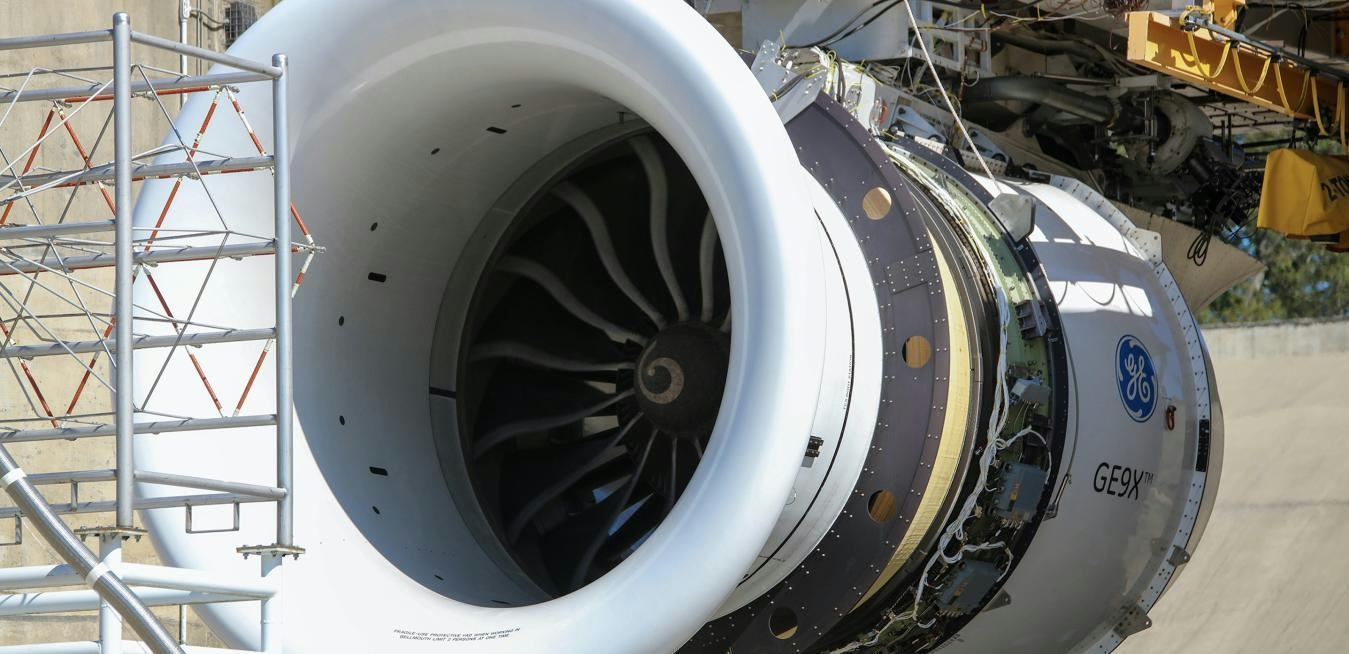
The size of a turbofan engine plays a pivotal role in its efficiency. Larger engines can process a greater volume of air, and accelerating a larger mass of air at a lower velocity is inherently more efficient. Rolls-Royce’s UltraFan, designated UF001, features a fan diameter of 140 inches, exceeding the 134-inch fan of General Electric Aviation’s GE9X, which is slated to power Boeing’s forthcoming 777X aircraft.
The GE9X, an evolution of the GE90, incorporates advanced materials such as ceramic matrix composites and achieves higher bypass and compression ratios than its predecessor, targeting a 10% improvement in fuel efficiency. In contrast, the UltraFan is engineered with a 15:1 bypass ratio and a 70:1 overall pressure ratio, compared to the GE9X’s 10:1 and 60:1 ratios respectively. Rolls-Royce asserts that the UltraFan will deliver a 25% reduction in fuel burn relative to the first-generation Trent 700, positioning it as a potential leader in engine efficiency.
Innovation and Flexibility Elevate Competitive Pressure
Beyond its impressive size, the UltraFan introduces notable flexibility through its geared architecture and variable pitch fan design. These features enable the engine to operate at optimal speeds across diverse flight conditions, eliminating the necessity for a conventional thrust reverser and improving the operability of the low-pressure ratio fan. This adaptability may establish new benchmarks for engine performance and maintenance efficiency.
Market Dynamics and GE’s Strategic Challenges
While Rolls-Royce’s technological advancements intensify competition, General Electric confronts its own challenges and opportunities. Recent tensions in U.S.-China trade relations had jeopardized GE’s ability to export engines to China’s COMAC, but a recent relaxation of restrictions has permitted shipments to resume. This development has been positively received by the market, prompting GE Aerospace to raise its profit forecast for 2025 amid increasing demand for aftermarket maintenance services.
The resumption of exports to China could bolster GE’s competitive stance against rivals such as Safran Aircraft Engines and CFM International, even as the aircraft engine market approaches a critical inflection point. Industry analysts anticipate significant shifts in the near future, with manufacturers competing vigorously for technological leadership and market share.
Outlook
As Rolls-Royce prepares to launch the UltraFan, General Electric and other competitors are closely monitoring how this new engine may transform the commercial aviation landscape. With rapid technological innovation and evolving global market dynamics, the coming years are poised to be a period of profound change for the world’s leading aircraft engine manufacturers.

Etihad Airways Suspends Airbus A380 Flights on Key Route

Aditya Birla Group Seeks Approval for Aircraft Leasing in GIFT City

Qatar Airways Highlights Innovation and Connectivity at Arabian Travel Market 2026

Hong Kong's Five-Year Plan Includes Andrew Fan's Aircraft Parts Processing Hub Proposal

ACIA Aero Leasing Delivers ATR72-600 to Air Nostrum

RTX Appoints Jill Albertelli as Head of Pratt & Whitney

TAT Technologies Joins Beyond Aero Hydrogen Aircraft Program

AURAK Study Highlights Barriers to Air Taxi Adoption in Emerging Economies

Xiamen Air Selects Altitude for 787 Maintenance at Heathrow

Etihad and Swissport Extend Global Partnership
