
Orchestrate AI insights into action

Trending
Categories
Dallas Fort Worth Airport Rises to 18th in Global Rankings Amid Advances in AI and Net-Zero Aviation
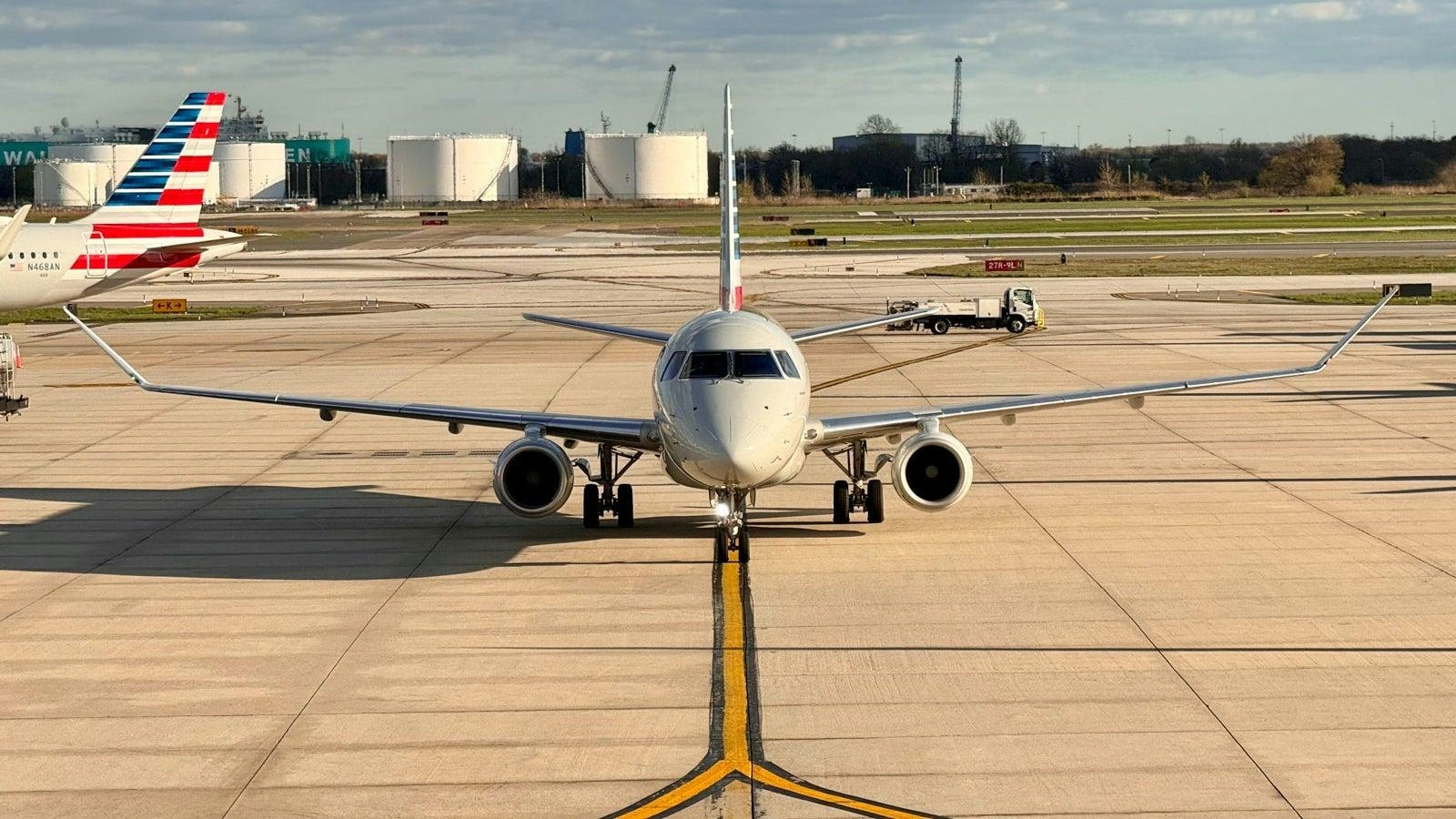
Dallas Fort Worth Airport Rises to 18th in Global Rankings Amid Advances in AI and Net-Zero Aviation
Dallas Fort Worth International Airport (DFW) has solidified its position as a global leader in aviation innovation, ascending to 18th place in the latest Travel and Tour World global airport rankings and securing the 7th position in the Americas. This achievement coincides with the ongoing transformation under the airport’s ambitious “DFW Forward” initiative, which aims to establish DFW at the forefront of smart airport technology and sustainable aviation practices.
Smart Airport Leadership and AI Integration
The 2026 rankings reflect a paradigm shift in airport evaluation, prioritizing operational intelligence and technological integration over traditional aesthetic considerations. DFW was recognized as a Smart Airport Leader due to its extensive deployment of artificial intelligence and automated systems. By embedding AI and biometric technologies into critical infrastructure, the airport has redefined standards for managing passenger flow, aircraft operations, and environmental stewardship.
Despite these advancements, the rapid expansion of AI-driven operations has led to a significant increase in electricity consumption, raising concerns about the airport’s greenhouse gas emissions. As DFW pursues its goal of net-zero aviation, industry observers are closely monitoring how the airport balances technological innovation with environmental responsibility. This scrutiny is expected to intensify as competitors strive to replicate DFW’s technological achievements while addressing their own sustainability challenges.
Operational Overhaul: The 13-Bank Flight System
In April 2026, DFW reached a significant operational milestone when American Airlines, its primary carrier, expanded its daily flight schedule from nine to thirteen banks—the largest adjustment in a decade. This restructuring aims to alleviate congestion by distributing flights more evenly throughout the day, thereby reducing pressure on security checkpoints and terminal walkways. The expanded schedule also enhances connection reliability, offering travelers a wider range of departure options and more resilient connection windows, which decreases the likelihood of missed flights. Furthermore, the smoother flow of aircraft has improved airspace efficiency, contributing to better on-time performance across the airport’s more than 930 daily departures.
Infrastructure Expansion and Modular Construction
The airport’s physical transformation is exemplified by the construction of Terminal F, a $1.6 billion project employing modular construction techniques on an unprecedented scale. Large prefabricated modules, some comparable in size to football fields, are being assembled to expedite construction and minimize disruption on-site. This innovative approach not only demonstrates engineering prowess but also supports DFW’s sustainability objectives by reducing construction waste and energy consumption.
Navigating the Future
Covering over 26.9 square miles and connecting North Texas to nearly 200 domestic and 80 international destinations, DFW’s ongoing evolution is attracting close attention from both the aviation sector and environmental advocates. As the airport continues to pioneer AI integration and sustainable practices, its capacity to manage the environmental impact of increased energy demands will be crucial. The competitive landscape is expected to intensify as other airports advance their own smart technologies and sustainability initiatives, fueling a race for leadership in the next era of global aviation.

Etihad Airways Suspends Airbus A380 Flights on Key Route

Aditya Birla Group Seeks Approval for Aircraft Leasing in GIFT City

Qatar Airways Highlights Innovation and Connectivity at Arabian Travel Market 2026

Hong Kong's Five-Year Plan Includes Andrew Fan's Aircraft Parts Processing Hub Proposal

ACIA Aero Leasing Delivers ATR72-600 to Air Nostrum

RTX Appoints Jill Albertelli as Head of Pratt & Whitney

TAT Technologies Joins Beyond Aero Hydrogen Aircraft Program

AURAK Study Highlights Barriers to Air Taxi Adoption in Emerging Economies

Xiamen Air Selects Altitude for 787 Maintenance at Heathrow

Etihad and Swissport Extend Global Partnership
