
Orchestrate AI insights into action

Trending
Categories
DGCA Introduces AI-Based eGCA 2.0 for Aviation Oversight

DGCA Introduces AI-Based eGCA 2.0 for Aviation Oversight
The Directorate General of Civil Aviation (DGCA) is preparing to launch eGCA 2.0, an advanced digital oversight platform designed to enhance regulatory processes within Indian aviation through the integration of artificial intelligence. According to tender documents reviewed by The Hindu BusinessLine, the upgraded system will focus on application design, integration planning, and risk management. It will incorporate decision-intelligence and predictive-surveillance modules aimed at improving approvals, monitoring, and overall oversight functions.
Technological Framework and Implementation Challenges
Although the DGCA has not revealed specific details regarding the AI models, vendors, or technical infrastructure, industry experts suggest that such regulatory platforms typically employ time-series anomaly detection, risk-scoring pipelines, and explainability layers to maintain auditability and transparency. Blockchain technology is occasionally considered to create immutable audit logs, but its adoption can present challenges related to integration and scalability. Critical technical tasks for the successful deployment of eGCA 2.0 include the ingestion of data from diverse flight and maintenance sources, validation of AI models, development of explainability tools, and secure management of cryptographic keys for any ledger-based components.
The introduction of eGCA 2.0 is poised to offer significant opportunities while also presenting notable challenges. Ensuring the reliability and accuracy of AI-driven oversight mechanisms will be paramount, alongside addressing cybersecurity vulnerabilities and achieving seamless integration with existing aviation IT systems. While some industry stakeholders may initially express skepticism regarding the platform’s effectiveness and security, there is cautious optimism about the potential improvements in operational efficiency and aviation safety.
Context Within Global Aviation Trends
The DGCA’s initiative aligns with a broader global movement toward the adoption of advanced AI technologies in aviation oversight. Internationally, Spain’s Enaire has developed a digitalized air traffic control system, and SITA has acquired an AI-based platform for disruption management. Meanwhile, the US Federal Aviation Administration (FAA) is actively exploring AI and machine learning applications to optimize airspace scheduling. These developments reflect growing confidence within the industry regarding the transformative potential of AI.
As the DGCA progresses with the implementation of eGCA 2.0, competitors and stakeholders are expected to observe its rollout closely. Some may accelerate their own AI initiatives to maintain a competitive advantage. Ultimately, the platform’s success will depend on its ability to provide robust, transparent, and secure oversight amid the rapidly evolving demands of the aviation sector.

Etihad Deploys Widebody Fleet to Meet Strong Demand

Korean Air Finalizes $36.2 Billion Deal with Boeing

Australia’s RFDS Queensland Section Orders Six King Air 260Cs

Korean Air Finalizes Order for 103 Boeing Jets and Engines
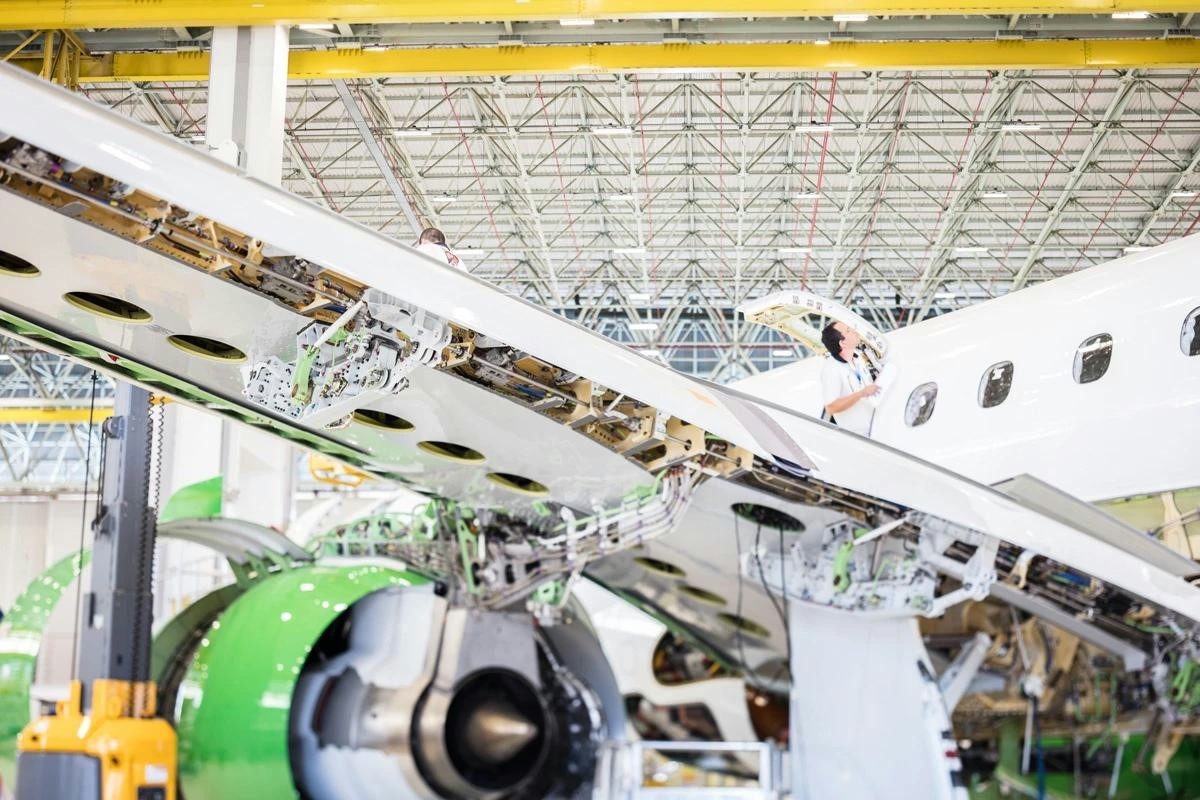
Embraer E195-E2 Features Distinctive Engine Placement Among Regional Jets

What Passengers Can Expect on Boeing’s New 777X Jet

How Ethiopian Airlines Became Africa’s Leading Carrier Amid Gulf Competition

Joby Aviation Extends Autonomous Flight Capabilities with Cross-Country Tour

Strengthening Europe's Aviation Supply Chain Amid Uncertainty

The Evolution of the Aircraft Maintenance Engineer Role
