
Orchestrate AI insights into action

Trending
Categories
Dispute Over Maintenance Between Wizz Air and Serbian Regulator Intensifies
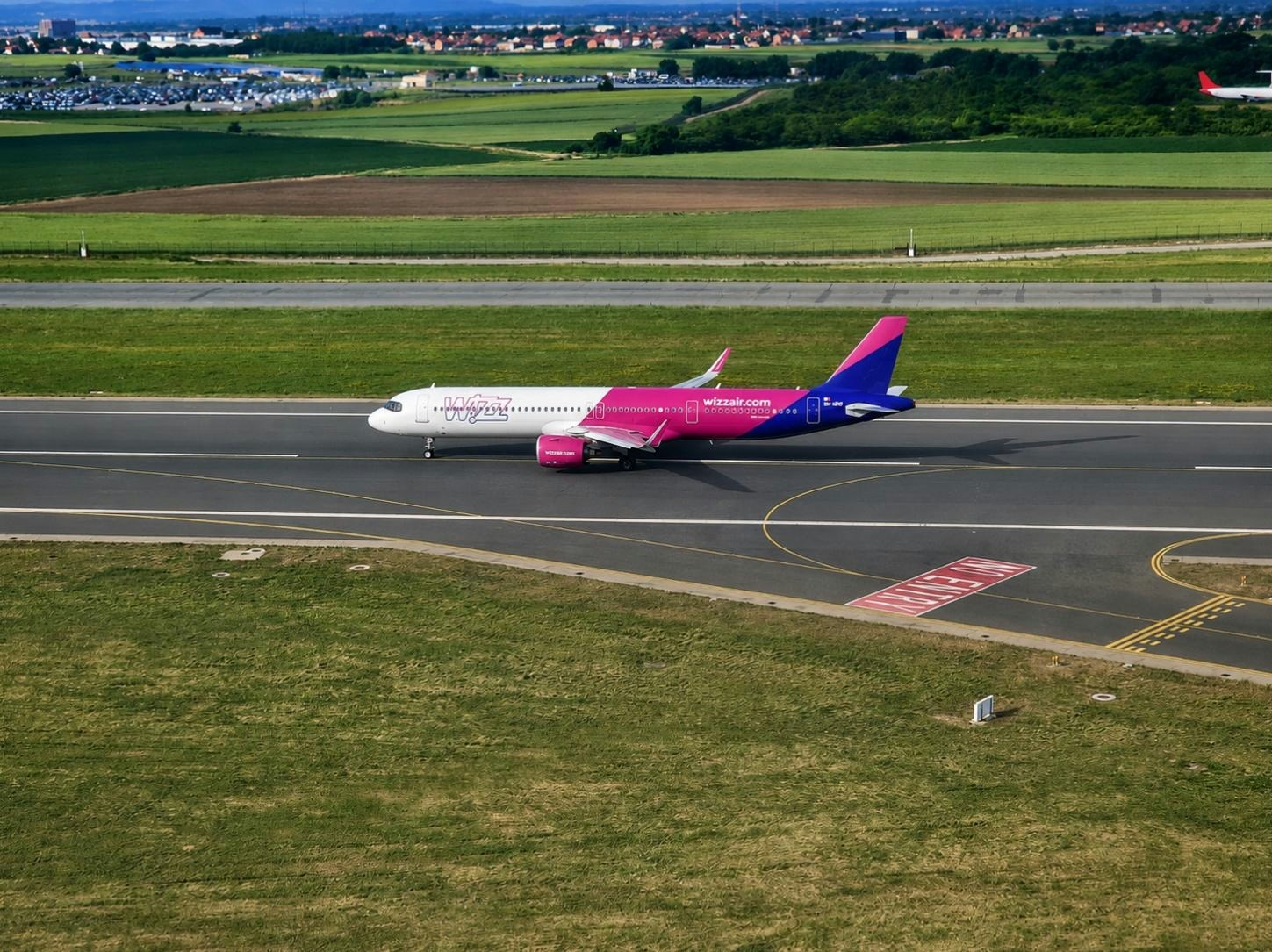
Dispute Over Maintenance Between Wizz Air and Serbian Regulator Intensifies
Allegations and Regulatory Concerns
Tensions have escalated between Wizz Air and Serbia’s Civil Aviation Directorate over aircraft maintenance practices at Belgrade Nikola Tesla Airport. The low-cost carrier has strongly denied allegations of non-compliance with local regulations amid a dispute that coincides with broader regulatory changes threatening the airline’s operations in Serbia. These changes could compel Wizz Air to close its Belgrade base by November 2026, a development the airline contends contradicts the European Common Aviation Area Agreement.
Recent reports indicate that the Serbian regulator identified Wizz Air’s use of maintenance providers at Belgrade airport who allegedly lacked the necessary local approvals. During a routine inspection, the Bulgarian firm Global Maintenance was singled out for not holding the specific Serbian certification required for line maintenance, despite possessing general technical certifications and offering services across Bulgaria, Macedonia, and Serbia. The regulator’s position is that Global Maintenance did not meet Serbia’s regulatory standards.
Compliance Efforts and Operational Impact
According to local media sources, the Civil Aviation Directorate granted Wizz Air a 30-day period to address the compliance issues, but the deadline reportedly passed without resolution. Subsequently, Wizz Air engaged a second maintenance provider, which also allegedly failed to satisfy all regulatory requirements, leading to the suspension of its license. In response, Wizz Air began deploying its own technical personnel from Hungary to conduct maintenance activities in Belgrade, a strategy that has reportedly increased the airline’s operating costs.
The dispute has now been escalated to the European Union Aviation Safety Agency (EASA) for further examination. Wizz Air issued a formal statement rejecting the allegations, emphasizing its commitment to safety and regulatory compliance. The airline asserted that it operates fully in accordance with all applicable aviation safety requirements and that every aircraft in its fleet is maintained to the highest international standards by certified personnel using approved procedures.
Wizz Air also highlighted that, following unexpected regulatory changes imposed by the Serbian Civil Aviation Directorate, it took proactive measures by deploying qualified engineering staff to Belgrade to ensure continued compliance and operational safety.
Broader Implications and Market Outlook
The regulatory developments in Serbia pose significant challenges for Wizz Air, with the potential closure of its Belgrade base threatening its market share in the country. Industry analysts suggest that this situation could create opportunities for rival low-cost carriers to expand their presence in the Serbian market. Despite the uncertainties and increased operational costs, Wizz Air maintains a robust financial outlook. The airline anticipates breaking even for the full year as revenues strengthen, even while managing near-term challenges, including those linked to the ongoing conflict in the Middle East.

Etihad Airways Suspends Airbus A380 Flights on Key Route

Aditya Birla Group Seeks Approval for Aircraft Leasing in GIFT City

Qatar Airways Highlights Innovation and Connectivity at Arabian Travel Market 2026

Hong Kong's Five-Year Plan Includes Andrew Fan's Aircraft Parts Processing Hub Proposal

ACIA Aero Leasing Delivers ATR72-600 to Air Nostrum

RTX Appoints Jill Albertelli as Head of Pratt & Whitney

TAT Technologies Joins Beyond Aero Hydrogen Aircraft Program

AURAK Study Highlights Barriers to Air Taxi Adoption in Emerging Economies

Xiamen Air Selects Altitude for 787 Maintenance at Heathrow

Etihad and Swissport Extend Global Partnership
