
Orchestrate AI insights into action

Trending
Categories
Dubai Opens First Commercial Air Taxi Vertiport
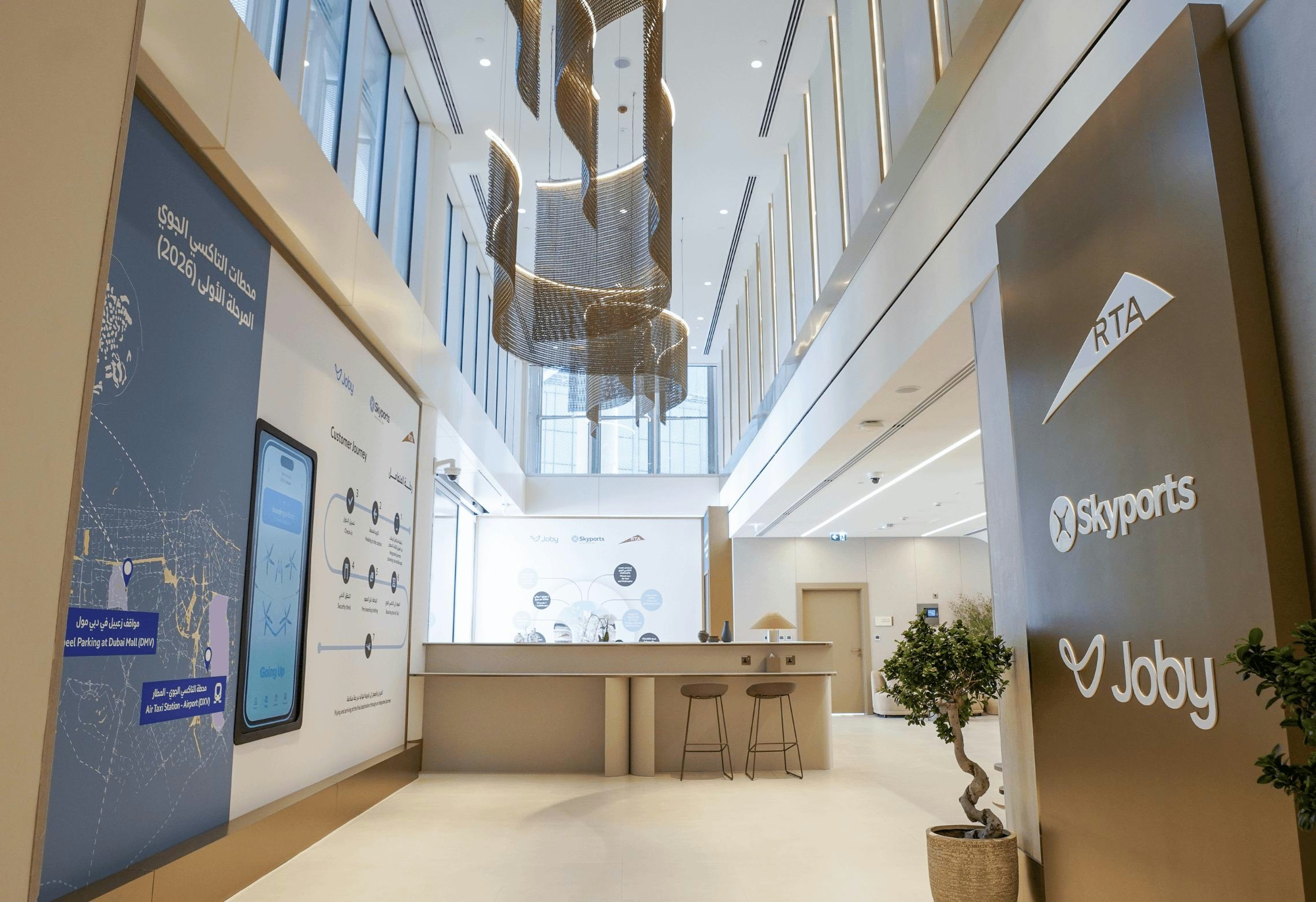
Dubai Launches First Commercial Air Taxi Vertiport
Dubai has inaugurated its first commercial air taxi vertiport, marking a pivotal advancement in the city’s pursuit of cutting-edge urban air mobility. Situated near Dubai International Airport, the newly opened four-story facility covers approximately 3,000 square meters and includes two dedicated takeoff and landing pads designed for electric vertical takeoff and landing (eVTOL) aircraft. The vertiport also features a two-level parking structure and is engineered to handle up to 170,000 passengers annually. Commercial operations are anticipated to commence by the end of 2026.
Expanding Urban Air Mobility Infrastructure
This development forms part of a larger strategy to establish a network of four vertiports throughout Dubai, with future sites planned for the city center, Palm Jumeirah, and Dubai Marina. The initiative aims to significantly reduce travel times within the city; for instance, a flight from Dubai International Airport to Palm Jumeirah is expected to take approximately 10 minutes, a substantial improvement over the current 45-minute car journey. The vertiport is equipped with state-of-the-art infrastructure, including charging stations for electric aircraft, underscoring Dubai’s commitment to sustainable and technologically advanced transportation solutions.
Dubai authorities have hailed the project as a “first of its kind,” highlighting its importance in shaping the future landscape of urban mobility. The launch coincides with a rapidly evolving competitive environment in autonomous and aerial transport. Notably, companies such as WeRide and Uber have recently introduced fully driverless robotaxi services in Dubai, signaling a broader regional shift toward autonomous mobility.
Challenges and Global Competition
Despite the promising outlook, the air taxi sector faces potential challenges stemming from ongoing legal disputes among major industry players. In the United States, Joby Aviation and Archer Aviation are engaged in legal battles, including a U.S. Trade Commission investigation into Joby for alleged import violations. These conflicts may influence global market dynamics and regulatory frameworks, potentially affecting the pace at which air taxi services are adopted in Dubai and other international markets.
In response to these challenges, competitors are intensifying efforts to secure regulatory approvals and expand their operational footprint. For example, Port San Antonio in Texas is emerging as a significant testing ground for air taxi technology through a federal pilot program, reflecting the global race to lead in urban air mobility innovation.
As Dubai advances its vertiport network, the city is not only establishing a benchmark for sustainable urban transportation but also navigating the complexities of a fast-changing and highly competitive global market.

Etihad Airways Suspends Airbus A380 Flights on Key Route

Aditya Birla Group Seeks Approval for Aircraft Leasing in GIFT City

Qatar Airways Highlights Innovation and Connectivity at Arabian Travel Market 2026

Hong Kong's Five-Year Plan Includes Andrew Fan's Aircraft Parts Processing Hub Proposal

ACIA Aero Leasing Delivers ATR72-600 to Air Nostrum

RTX Appoints Jill Albertelli as Head of Pratt & Whitney

TAT Technologies Joins Beyond Aero Hydrogen Aircraft Program

AURAK Study Highlights Barriers to Air Taxi Adoption in Emerging Economies

Xiamen Air Selects Altitude for 787 Maintenance at Heathrow

Etihad and Swissport Extend Global Partnership
