
Orchestrate AI insights into action

Trending
Categories
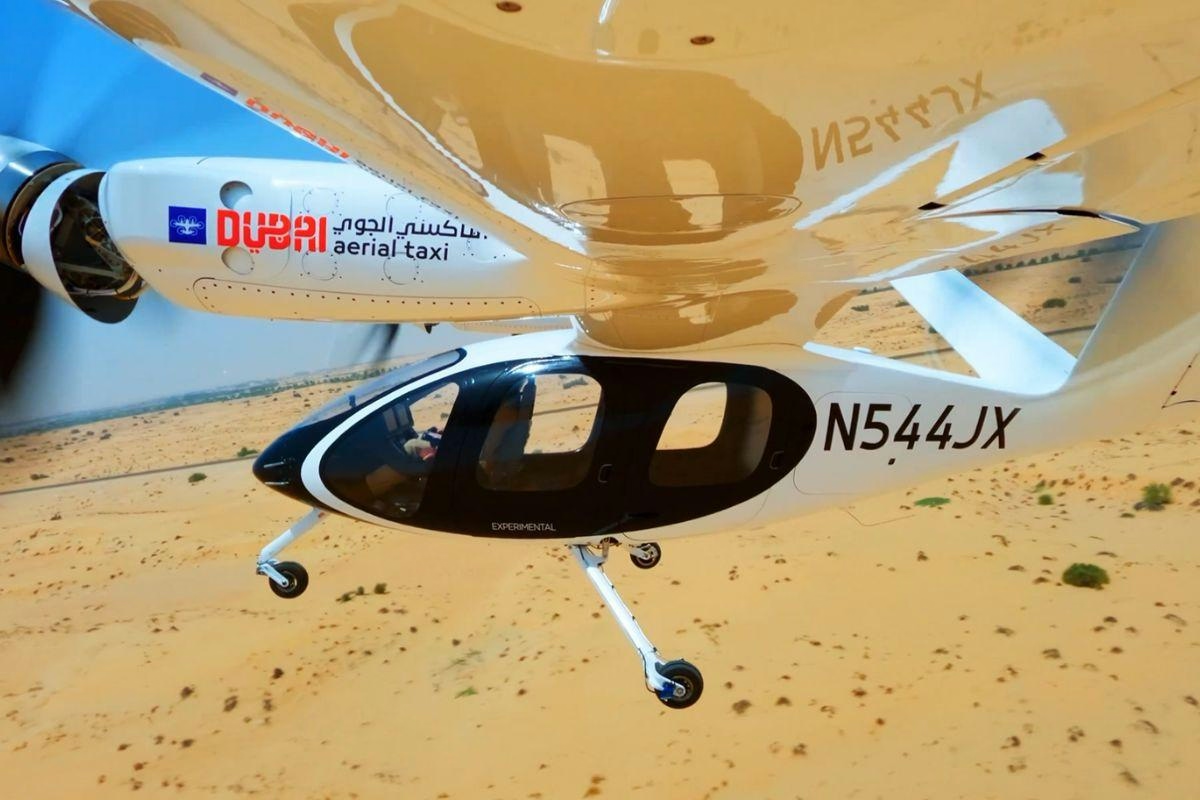
Dubai Prioritizes Public Safety Ahead of 2026 Air Taxi Launch
Dubai Prioritizes Public Safety Ahead of 2026 Air Taxi Launch
Dubai is advancing its plans to introduce air taxi services by 2026, placing a strong emphasis on public safety as a fundamental priority. The city is actively securing regulatory approvals and establishing a solid operational framework to support this ambitious initiative, even as it contends with scrutiny from industry experts and competition within the region.
Building a Robust Operational Foundation
A spokesperson for the company involved in the project, Khoury, outlined the comprehensive steps taken to ensure readiness. “We will be operating our own aircraft here in Dubai,” Khoury stated. The company is collaborating closely with the UAE’s General Civil Aviation Authority (GCAA) to obtain an Air Operator Certificate, a critical authorization that permits the transportation of passengers. To date, the team has expanded to include over 11 employees in Dubai, among them four managers. Operational infrastructure is also in place, with a maintenance, repair, and overhaul (MRO) base established at Margham and an office located at One Central. These measures collectively aim to build a strong and sustainable air taxi operation within the city.
Navigating Regulatory and Industry Challenges
Dubai’s aspiration to lead urban air mobility in the Middle East is bolstered by strategic partnerships with prominent companies such as Joby Aviation and Archer. However, the decision to prioritize launching air taxi services in the region before securing certifications in established markets like the United States and Europe has attracted criticism. Industry leaders emphasize the necessity of rigorous regulatory compliance to safeguard passenger safety and maintain public confidence, particularly given the nascent stage of the technology.
The regulatory approval process, managed by the GCAA, remains a significant challenge. Authorities are engaging closely with operators to develop safety standards and operational protocols that address the unique demands of urban air mobility. This collaborative approach is intended to mitigate concerns regarding the technology’s maturity and the sufficiency of oversight mechanisms.
Regional Competition and Safety Commitments
Competition between Dubai and Abu Dhabi to become the primary hub for commercial electric-powered air taxis in the region is intensifying. This rivalry may impact operational strategies and the speed at which safety measures are implemented, as each city strives to establish itself as a leader in the emerging industry.
Despite these pressures, Dubai’s officials and industry partners affirm that public safety will remain uncompromised. The city’s thorough preparations—including recruitment of skilled personnel, establishment of maintenance facilities, and proactive regulatory engagement—are designed to ensure a safe and dependable launch.
As the 2026 launch date approaches, Dubai’s progress will be closely monitored by industry stakeholders and the public alike, serving as a critical benchmark for the future of urban air mobility both regionally and globally.

Etihad Airways Suspends Airbus A380 Flights on Key Route

Aditya Birla Group Seeks Approval for Aircraft Leasing in GIFT City

Qatar Airways Highlights Innovation and Connectivity at Arabian Travel Market 2026

Hong Kong's Five-Year Plan Includes Andrew Fan's Aircraft Parts Processing Hub Proposal

ACIA Aero Leasing Delivers ATR72-600 to Air Nostrum

RTX Appoints Jill Albertelli as Head of Pratt & Whitney

TAT Technologies Joins Beyond Aero Hydrogen Aircraft Program

AURAK Study Highlights Barriers to Air Taxi Adoption in Emerging Economies

Xiamen Air Selects Altitude for 787 Maintenance at Heathrow

Etihad and Swissport Extend Global Partnership
