
Orchestrate AI insights into action

Trending
Categories
Emerging Technology Trends in the Airline Industry
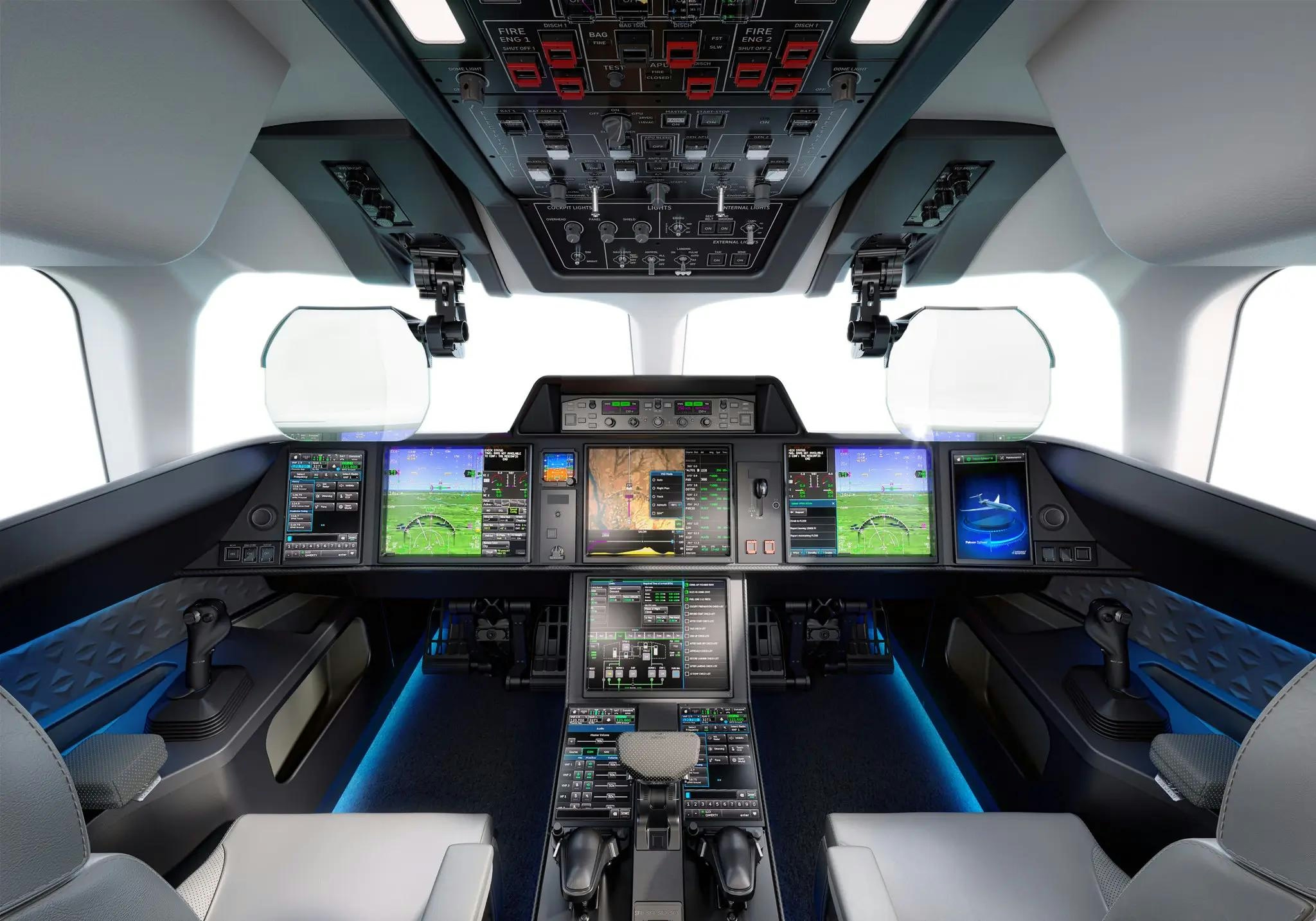
Emerging Technology Trends in the Airline Industry
The airline industry stands at a pivotal moment in its technological evolution, striving to modernize operations while retaining the legacy mainframe systems that have long formed the backbone of its infrastructure. Rather than pursuing costly and disruptive wholesale replacements, many carriers are adopting a more measured approach by integrating emerging technologies with existing mainframes. This strategy allows airlines to leverage valuable data and established systems to drive digital transformation without abandoning their foundational platforms.
Mainframe Modernization and Strategic Integration
Modernizing mainframe systems has become a critical priority as airlines seek to unlock new operational efficiencies and value. The central challenge lies in determining whether to update existing monolithic systems or to decompose them into modular components for targeted modernization. This decision is complicated by the specialized nature of airline IT infrastructure, which often depends on proprietary software and unique programming languages.
Historically, attempts to rewrite airline systems from scratch have proven both time-consuming and prohibitively expensive. Consequently, industry leaders are now favoring a hybrid approach that combines modernization with selective migration. By carefully identifying which system components are strategic differentiators and which are not, airlines can allocate resources more effectively. For nonstrategic systems, there is increasing momentum toward collaborative ecosystem models, where carriers share solutions and reduce the need to maintain distinct technology stacks individually.
Challenges in Innovation and Market Dynamics
Despite these efforts, the drive for technological advancement faces significant obstacles. According to CleanTechnica, a lack of robust market competition and insufficient policy incentives have hindered innovation among aircraft manufacturers. This stagnation is particularly troubling as the aviation sector confronts growing demands to enhance efficiency and accelerate its transition to greener technologies. The slow pace of aircraft innovation risks undermining broader industry initiatives aimed at modernization and decarbonization.
Market responses to these evolving trends have been cautious. FlightGlobal reports that airlines are closely monitoring technological developments amid recent volatility, exemplified by the turbulent second quarter of 2025. Competitor actions are also influencing the landscape; for instance, Ryanair has publicly called for reforms in European air traffic control following a radar malfunction that caused widespread disruptions. This incident, highlighted by tourism-review.com, underscores the urgent need for resilient and modernized infrastructure.
As the airline industry navigates these complex technological trends, it faces the challenge of balancing legacy system modernization, fostering innovation, and promoting collaboration on nonstrategic technologies. Achieving progress will require strategic investment, enhanced industry cooperation, and supportive regulatory frameworks to ensure that modernization efforts yield meaningful improvements in efficiency, sustainability, and passenger experience.

Etihad Airways Suspends Airbus A380 Flights on Key Route

Aditya Birla Group Seeks Approval for Aircraft Leasing in GIFT City

Qatar Airways Highlights Innovation and Connectivity at Arabian Travel Market 2026

Hong Kong's Five-Year Plan Includes Andrew Fan's Aircraft Parts Processing Hub Proposal

ACIA Aero Leasing Delivers ATR72-600 to Air Nostrum

RTX Appoints Jill Albertelli as Head of Pratt & Whitney

TAT Technologies Joins Beyond Aero Hydrogen Aircraft Program

AURAK Study Highlights Barriers to Air Taxi Adoption in Emerging Economies

Xiamen Air Selects Altitude for 787 Maintenance at Heathrow

Etihad and Swissport Extend Global Partnership
