
Orchestrate AI insights into action

Trending
Categories
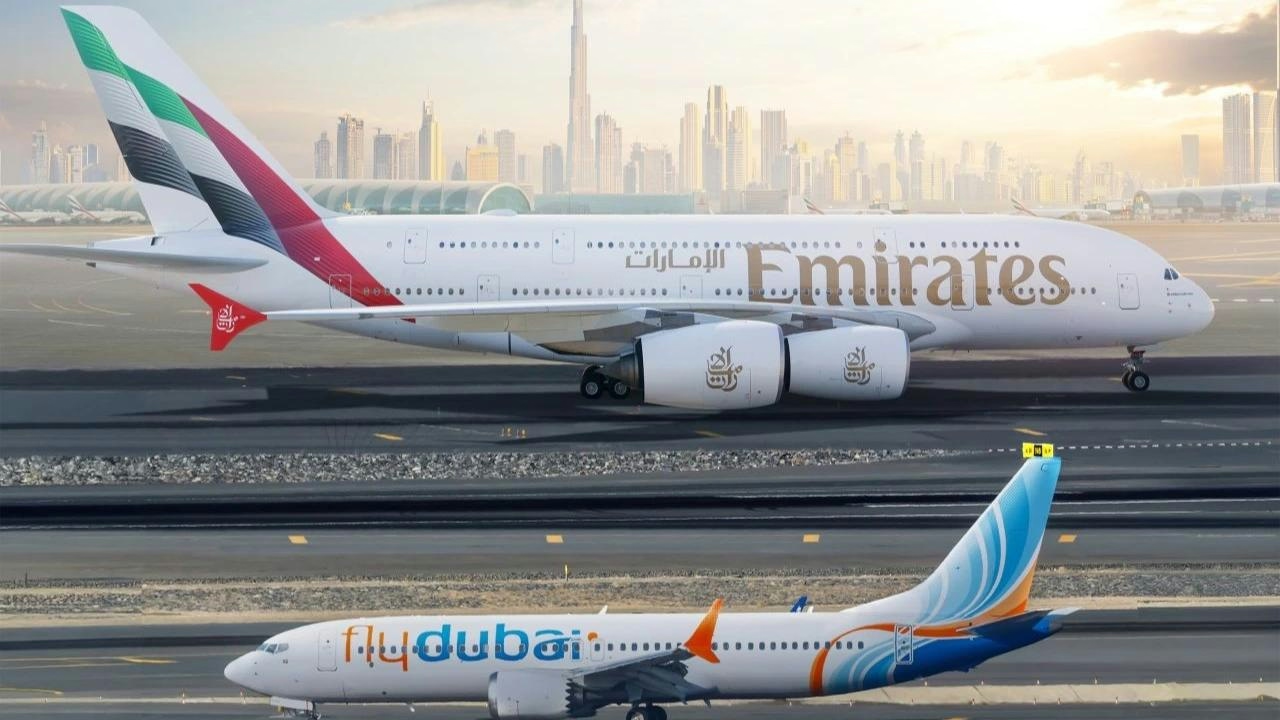
Emirates Achieves Gold Tier in JFK Fly Quiet Program
Emirates Achieves Gold Tier in JFK Fly Quiet Program
New York – Emirates Airline has been awarded the distinguished Gold Tier status in the Port Authority of New York and New Jersey’s 2024 Fly Quiet Program at John F. Kennedy International Airport. Emirates stands alone as the only carrier to attain this highest level, achieving a leading score of 92.9 and surpassing all other participating airlines. The Fly Quiet Program recognizes carriers that actively reduce aircraft noise through advanced operational procedures, quieter fleets, and responsible runway usage.
Commitment to Quieter Operations
The Gold Tier accolade underscores Emirates’ sustained partnership with the Port Authority and its dedication to exceeding the Fly Quiet Program’s rigorous standards. At JFK, one of the world’s busiest and most complex airports, Emirates’ Flight Operations team has integrated noise reduction strategies into daily operations. This achievement builds on the airline’s prior recognition in the United States, including Silver Tier status at Newark Liberty International Airport and the Chairperson’s Award at San Francisco International Airport. These honors reflect Emirates’ ongoing focus on operational efficiency, responsible performance, and positive community impact.
Emirates operates an exclusively wide-body fleet, maintaining noise margins exceeding 12 Effective Perceived Noise decibels (EPNdB) below the International Civil Aviation Organization (ICAO) Chapter 4 noise limits. The airline’s use of high-capacity, long-range aircraft enables it to transport an average of 1.75 million passenger-kilometers per sector while minimizing noise events. For example, a single Emirates Airbus A380 can carry up to 500 passengers with just one arrival and one departure, whereas smaller aircraft would require multiple flights, potentially generating more noise.
Balancing Efficiency and Environmental Responsibility
Emirates faces the ongoing challenge of balancing operational efficiency with evolving regulatory expectations and increased scrutiny regarding environmental impact. The airline’s ability to harmonize high-capacity operations with reduced noise output exemplifies how global connectivity can coexist with environmental responsibility. By optimizing flight paths, prioritizing high-capacity aircraft, and minimizing unnecessary noise, Emirates effectively reduces its environmental footprint while maintaining vital international links.
This commitment benefits communities adjacent to airports and enhances Emirates’ market position. The Gold Tier status may strengthen investor confidence in the airline’s environmental stewardship, potentially fostering positive market sentiment. In turn, this recognition could prompt competitors to accelerate their own noise reduction initiatives, intensifying industry-wide efforts toward sustainable aviation practices.
Comprehensive Noise Reduction Strategy
Emirates’ approach to noise mitigation is founded on several key principles. The airline strictly complies with Noise Abatement Departure Procedures (NADP) mandated by regulatory authorities, embedding these protocols into its standard operating procedures. It prioritizes the use of designated runways whenever feasible, balancing safety considerations with noise reduction goals. Emirates enforces mandatory reporting and review of any procedural deviations, fostering continuous improvement through data-driven oversight. The airline also invests in modernizing its wide-body fleet to meet or exceed ICAO Chapter 4 and 14 noise standards. Furthermore, Emirates actively collaborates with airport authorities, regulators, and industry groups to align on best practices in noise management.
Looking Ahead
Emirates’ attainment of Gold Tier status at JFK establishes a new benchmark for noise reduction and operational responsibility within the aviation sector. As the airline continues to refine its strategies, its leadership may catalyze broader industry shifts toward quieter, more sustainable air travel, delivering benefits to communities, investors, and the environment alike.

Etihad Airways Suspends Airbus A380 Flights on Key Route

Aditya Birla Group Seeks Approval for Aircraft Leasing in GIFT City

Qatar Airways Highlights Innovation and Connectivity at Arabian Travel Market 2026

Hong Kong's Five-Year Plan Includes Andrew Fan's Aircraft Parts Processing Hub Proposal

ACIA Aero Leasing Delivers ATR72-600 to Air Nostrum

RTX Appoints Jill Albertelli as Head of Pratt & Whitney

TAT Technologies Joins Beyond Aero Hydrogen Aircraft Program

AURAK Study Highlights Barriers to Air Taxi Adoption in Emerging Economies

Xiamen Air Selects Altitude for 787 Maintenance at Heathrow

Etihad and Swissport Extend Global Partnership
