
Orchestrate AI insights into action

Trending
Categories
Engine Fuel Cut-Off Preceded China Eastern 737-800 Crash
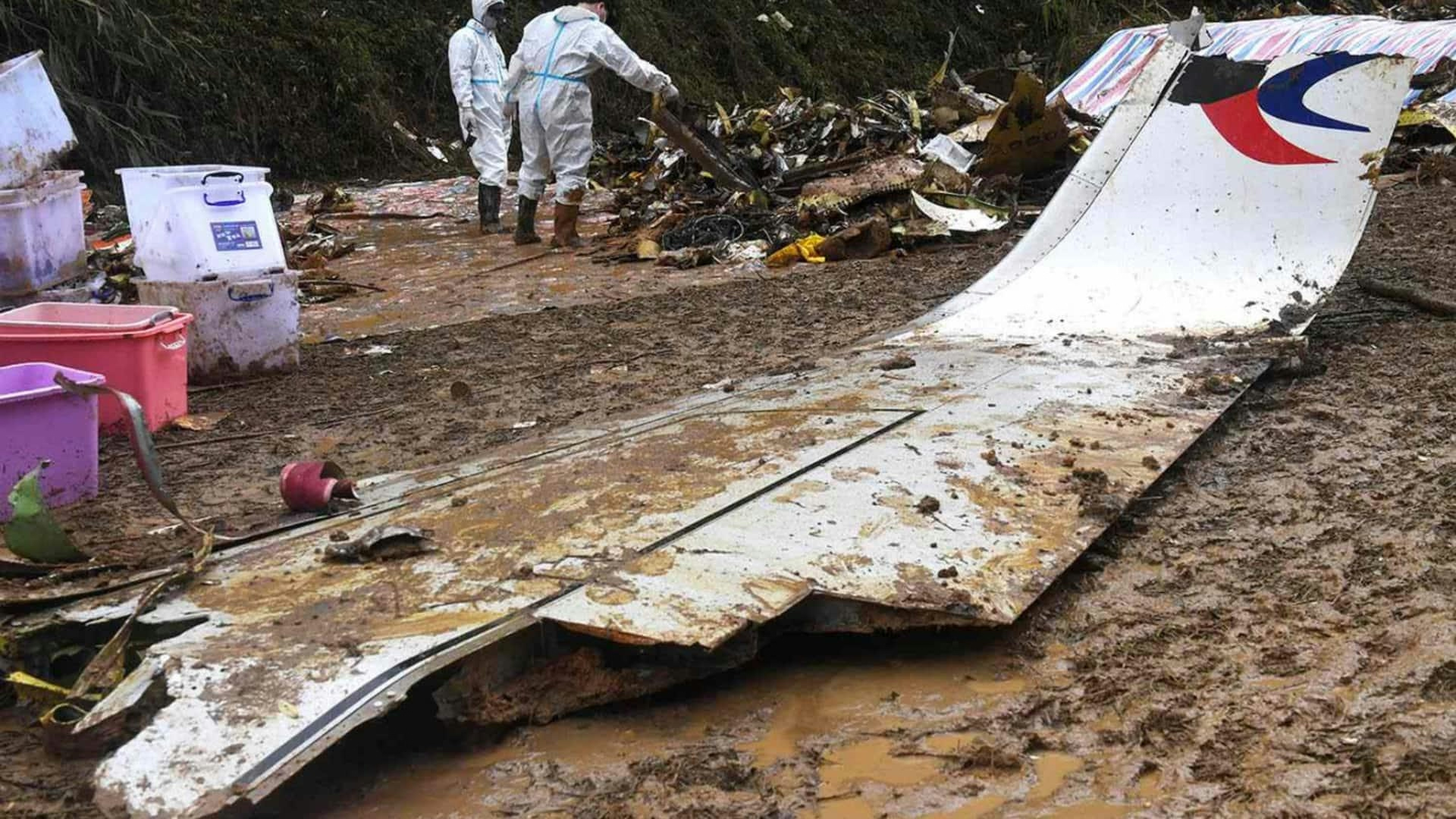
Engine Fuel Cut-Off Preceded China Eastern 737-800 Crash
Newly released documents from the United States National Transportation Safety Board (NTSB) reveal that the fuel supply to both engines of a China Eastern Airlines Boeing 737-800 was deliberately cut off seconds before the aircraft crashed in 2022. The analysis, obtained under the Freedom of Information Act (FOIA), indicates that the fuel cutoff switches were moved to the off position while the plane was cruising at 29,000 feet. This action caused an abrupt loss of engine power, triggering a steep and fatal descent.
Details of the Crash and Investigation
Flight data from the final 90 seconds of the 12 May 2022 flight, operating between Kunming and Guangzhou, shows normal operation until both engine fuel cut-off switches were activated. The aircraft, registered B-1791, then plunged 29,000 feet before crashing near Wuzhou in China’s Guangxi province, resulting in the deaths of all 123 passengers and nine crew members on board. The fuel supply was not restored during the descent.
The NTSB’s findings, based on analysis of the flight-data recorder (FDR) and cockpit-voice recorder sent to the US for examination, align with early reports suggesting the crash may have been the result of a deliberate act. The investigation raises the possibility of an intentional act, potentially a murder-suicide involving the flight crew. Sources familiar with the cockpit voice recordings indicate evidence of a struggle in the cockpit prior to the crash.
Lack of Transparency and International Concerns
Despite the severity of the findings, the Civil Aviation Administration of China (CAAC) has yet to release a comprehensive report on the incident, more than two years after the crash. Under International Civil Aviation Organization (ICAO) guidelines, a final report is typically issued within one year, providing analysis of causes and safety recommendations for the aviation community. The CAAC has cited national security concerns as justification for withholding the full report.
Correspondence included in the NTSB’s FOIA release—much of it heavily redacted—reveals US investigators pressing their Chinese counterparts for greater transparency. In a May 2022 email, NTSB investigator Sathya Silva warned the CAAC that media outlets were preparing to report the crash as a deliberate act. Subsequent emails from Silva in 2023 and 2024 continued to urge the CAAC to clarify its timeline for releasing information, noting that the NTSB would be legally required to process any FOIA requests for investigative data.
“As you can imagine, from an investigative perspective we would prefer that any data be released by the CAAC as part of the final report,” Silva wrote, underscoring the importance of coordinated disclosure.
The absence of an official report from Chinese authorities has left critical questions unanswered and raised concerns within the international aviation community regarding transparency and the timely sharing of safety lessons.

Etihad Airways Suspends Airbus A380 Flights on Key Route

Aditya Birla Group Seeks Approval for Aircraft Leasing in GIFT City

Qatar Airways Highlights Innovation and Connectivity at Arabian Travel Market 2026

Hong Kong's Five-Year Plan Includes Andrew Fan's Aircraft Parts Processing Hub Proposal

ACIA Aero Leasing Delivers ATR72-600 to Air Nostrum

RTX Appoints Jill Albertelli as Head of Pratt & Whitney

TAT Technologies Joins Beyond Aero Hydrogen Aircraft Program

AURAK Study Highlights Barriers to Air Taxi Adoption in Emerging Economies

Xiamen Air Selects Altitude for 787 Maintenance at Heathrow

Etihad and Swissport Extend Global Partnership
