
Orchestrate AI insights into action

Trending
Categories
Etihad Deploys Widebody Fleet to Meet Strong Demand

Etihad Deploys Widebody Fleet to Meet Strong Demand
Strategic Focus on High-Demand Routes
Etihad Airways is intensifying its focus on deploying widebody aircraft to routes exhibiting the strongest passenger demand, moving away from an even distribution of capacity across its network. This demand-driven approach is particularly evident in the airline’s summer 2026 schedule, where flagship Airbus A380s and Boeing 777s are concentrated on key markets such as Paris, Tokyo, and Dhaka. By aligning aircraft deployment with market demand, Etihad aims to optimize capacity utilization and enhance its competitive positioning on premium long-haul routes.
Capacity Expansion in Paris, Tokyo, and Dhaka
Paris Charles De Gaulle Airport (CDG) exemplifies Etihad’s strategic widebody deployment. Beginning July 1, 2026, the airline will operate three daily flights between Abu Dhabi and Paris, including two Airbus A380 services and one Boeing 787-9 flight. The A380, Etihad’s flagship aircraft featuring four distinct cabins—The Residence, First Apartments, Business Class, and Economy—reflects the carrier’s commitment to premium travel experiences. Chief Revenue and Commercial Officer Arik De described the double-daily A380 operation as a “statement of confidence” in the Paris market. The flight schedule, with departures at 02:35, 08:50, and 14:20 from Abu Dhabi, is designed to serve diverse passenger segments and strengthen Etihad’s share of premium and long-haul traffic between the UAE and France.
Similarly, Etihad has expanded its Tokyo Narita Airport (NRT) service with the introduction of daily A380 flights starting June 18, 2026. This deployment, which reactivates the airline’s eighth A380, responds to robust demand for premium travel on the Abu Dhabi–Tokyo route. The A380’s configuration—comprising 70 Business Class seats, 415 Economy seats, nine First suites, and The Residence—significantly enhances both overall and premium capacity. In Dhaka, the airline has established year-round Boeing 777 operations following a sold-out launch, further demonstrating its commitment to matching aircraft size with market demand. Meanwhile, routes with lower demand are served by narrowbody aircraft such as the A321LR and A320, ensuring efficient fleet utilization.
Opportunities and Challenges Ahead
Etihad’s targeted widebody deployment is driving growth in established markets, yet the airline faces several challenges. Aircraft availability remains the primary medium-term constraint, limiting the pace at which Etihad can expand its widebody operations. The carrier is also focusing on Africa and China as key growth markets for 2025, with strong bookings reported for new capacity in these regions.
External factors continue to complicate network planning. The ongoing Middle East conflict has contributed to elevated fuel costs and potential route disruptions. Additionally, competitive pressures are intensifying as rival airlines pursue fleet modernization initiatives. For instance, KLM has completed test flights of its new A350 aircraft ahead of deliveries, while BermudAir plans to replace its Embraer E-Jet fleet with Airbus A220s.
Etihad’s evolving strategy reflects a shift toward a more agile and market-responsive deployment of its widebody fleet. By concentrating capacity on routes with the strongest demand and adapting to changing market conditions, the airline seeks to maximize profitability and enhance customer satisfaction amid a challenging industry landscape.

Korean Air Finalizes $36.2 Billion Deal with Boeing
Australia’s RFDS Queensland Section Orders Six King Air 260Cs
Korean Air Finalizes Order for 103 Boeing Jets and Engines
Embraer E195-E2 Features Distinctive Engine Placement Among Regional Jets
What Passengers Can Expect on Boeing’s New 777X Jet
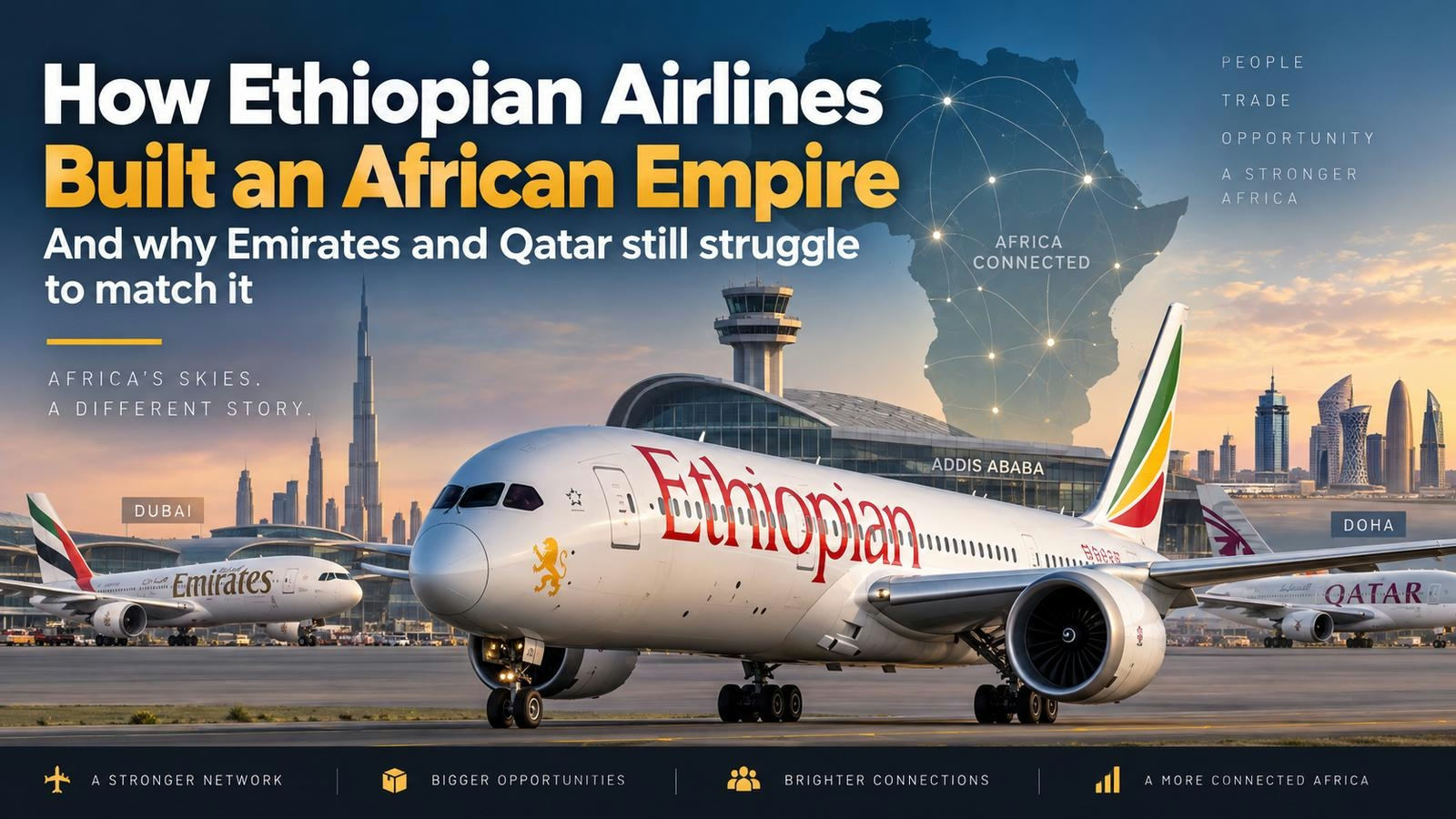
How Ethiopian Airlines Became Africa’s Leading Carrier Amid Gulf Competition
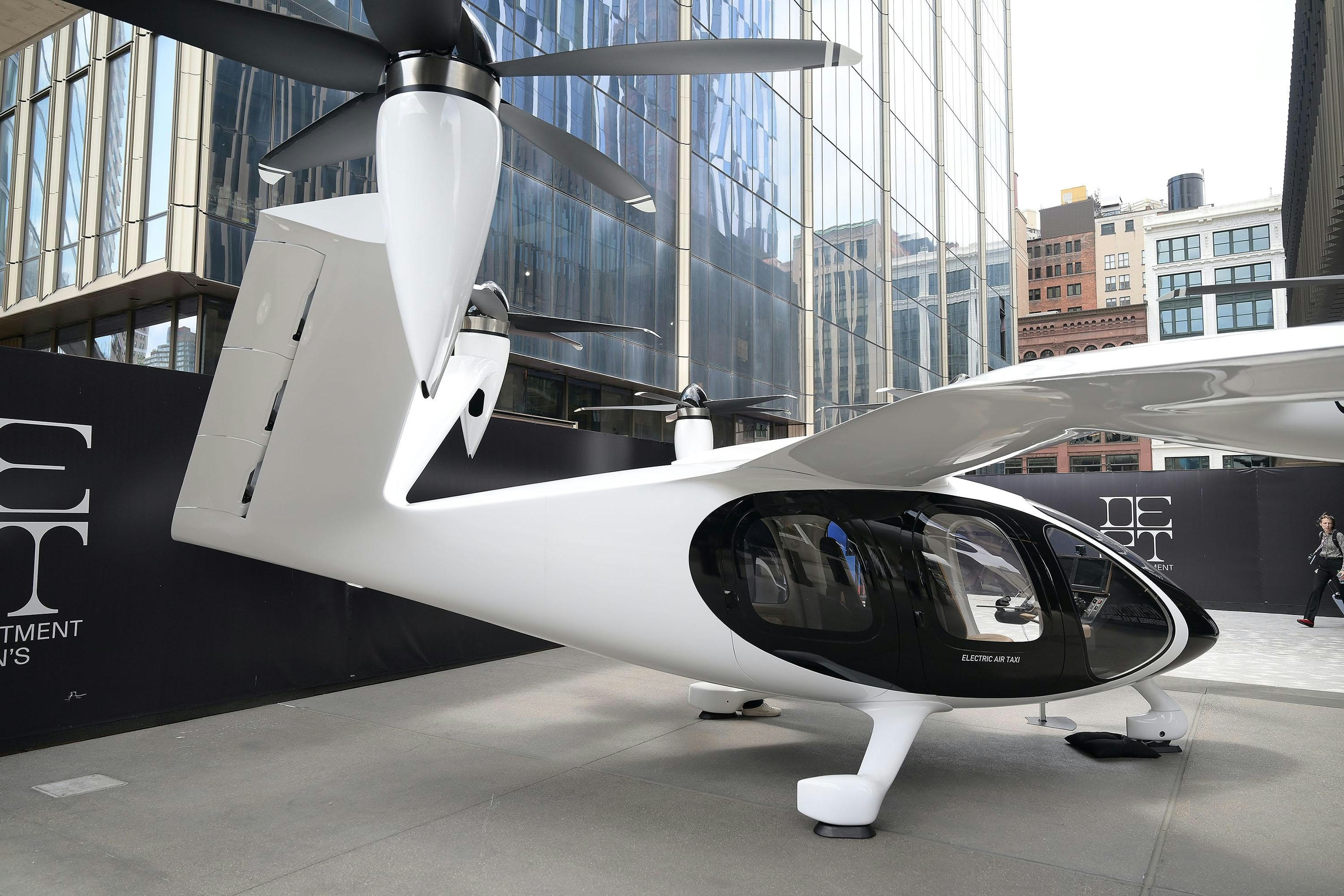
Joby Aviation Extends Autonomous Flight Capabilities with Cross-Country Tour
Strengthening Europe's Aviation Supply Chain Amid Uncertainty
The Evolution of the Aircraft Maintenance Engineer Role
He 111Z Zwilling: Twin Fuselages, Five Engines, One Pilot
