
Orchestrate AI insights into action

Trending
Categories
EVA Air, AIT, and Microsoft Expand Sustainable Aviation Fuel Agreement
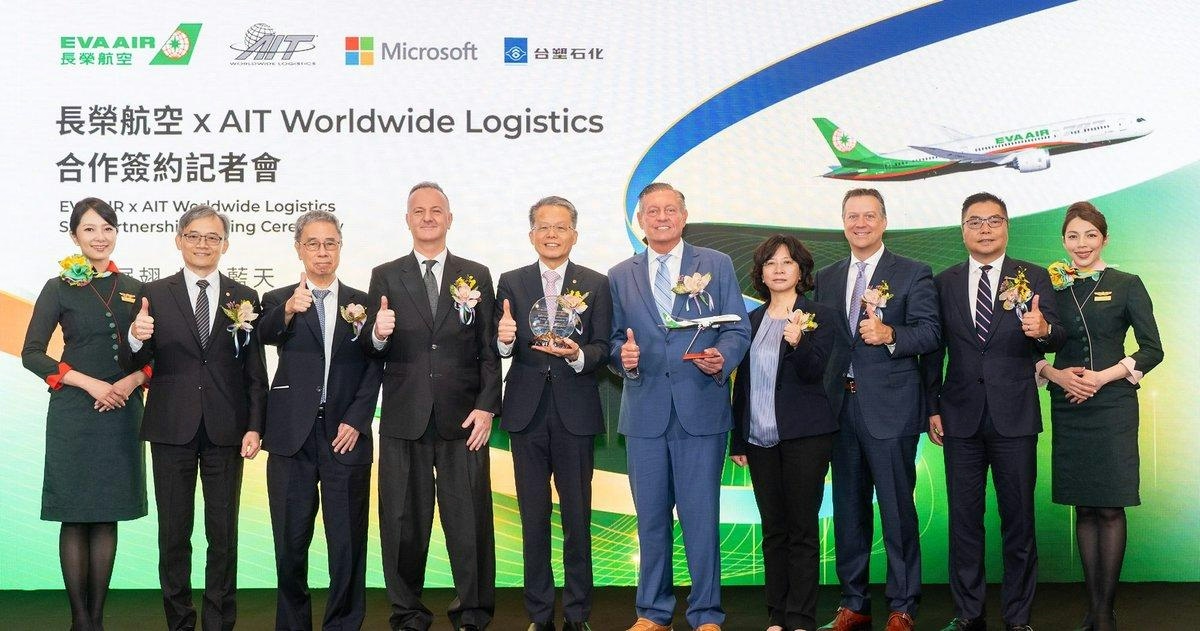
EVA Air, AIT, and Microsoft Expand Sustainable Aviation Fuel Agreement
Strengthening Commitment to Sustainable Aviation
EVA Air, in collaboration with the American Institute in Taiwan (AIT) and Microsoft, has announced an expansion of its sustainable aviation fuel (SAF) initiative, reinforcing efforts to reduce the carbon footprint of air transportation. This partnership will see flights departing from Taiwan utilizing SAF supplied by Formosa Petrochemical Corporation (FPCC). The fuel is derived from used cooking oil (UCO) and certified under the International Sustainability and Carbon Certification (ISCC) system, which ensures that both the feedstock and production processes adhere to stringent sustainability criteria.
Clay Sun, President of EVA Air, emphasized the importance of cross-sector collaboration in achieving net-zero aviation. He noted that aligning customer demand with industry capabilities can accelerate the development of the SAF market, and expressed optimism about expanding partnerships to establish lower-carbon air transportation as a global supply chain standard.
Environmental Impact and Corporate Responsibility
Sustainable aviation fuel offers a significant environmental advantage, reducing lifecycle greenhouse gas emissions by approximately 80% compared to conventional jet fuel. The environmental benefits of the SAF used in this initiative will be tracked and retired through the ISCC Credit Transfer System (CTS), an internationally recognized registry that monitors sustainability attributes. This mechanism allows Microsoft to account for Scope 3 emissions reductions associated with its air freight operations, reflecting a broader corporate trend toward addressing indirect emissions within supply chains.
Microsoft’s participation is expected to stimulate increased corporate demand for SAF, potentially encouraging wider adoption across the aviation industry and further emissions reductions. As companies intensify efforts to lower their carbon footprints, investor interest in sustainable aviation initiatives is likely to grow. This dynamic may prompt competitors to enhance their own SAF strategies or pursue similar partnerships to maintain market relevance.
Challenges and Future Outlook
Despite the positive momentum, the expansion of sustainable aviation fuel faces notable challenges. High initial production costs, logistical complexities in scaling supply, and the need to navigate regulatory frameworks across different jurisdictions remain significant obstacles. Overcoming these issues will require sustained cooperation among airlines, fuel producers, policymakers, and corporate customers.
The partnership between EVA Air, AIT, and Microsoft underscores both the potential and the difficulties inherent in transitioning to sustainable aviation. By aligning customer demand with industry resources, the initiative seeks to establish a new benchmark for lower-carbon air transportation within global supply chains.

Etihad Airways Suspends Airbus A380 Flights on Key Route

Aditya Birla Group Seeks Approval for Aircraft Leasing in GIFT City

Qatar Airways Highlights Innovation and Connectivity at Arabian Travel Market 2026

Hong Kong's Five-Year Plan Includes Andrew Fan's Aircraft Parts Processing Hub Proposal

ACIA Aero Leasing Delivers ATR72-600 to Air Nostrum

RTX Appoints Jill Albertelli as Head of Pratt & Whitney

TAT Technologies Joins Beyond Aero Hydrogen Aircraft Program

AURAK Study Highlights Barriers to Air Taxi Adoption in Emerging Economies

Xiamen Air Selects Altitude for 787 Maintenance at Heathrow

Etihad and Swissport Extend Global Partnership
