
Orchestrate AI insights into action

Trending
Categories
Finnair Invests in Next-Generation Fleet
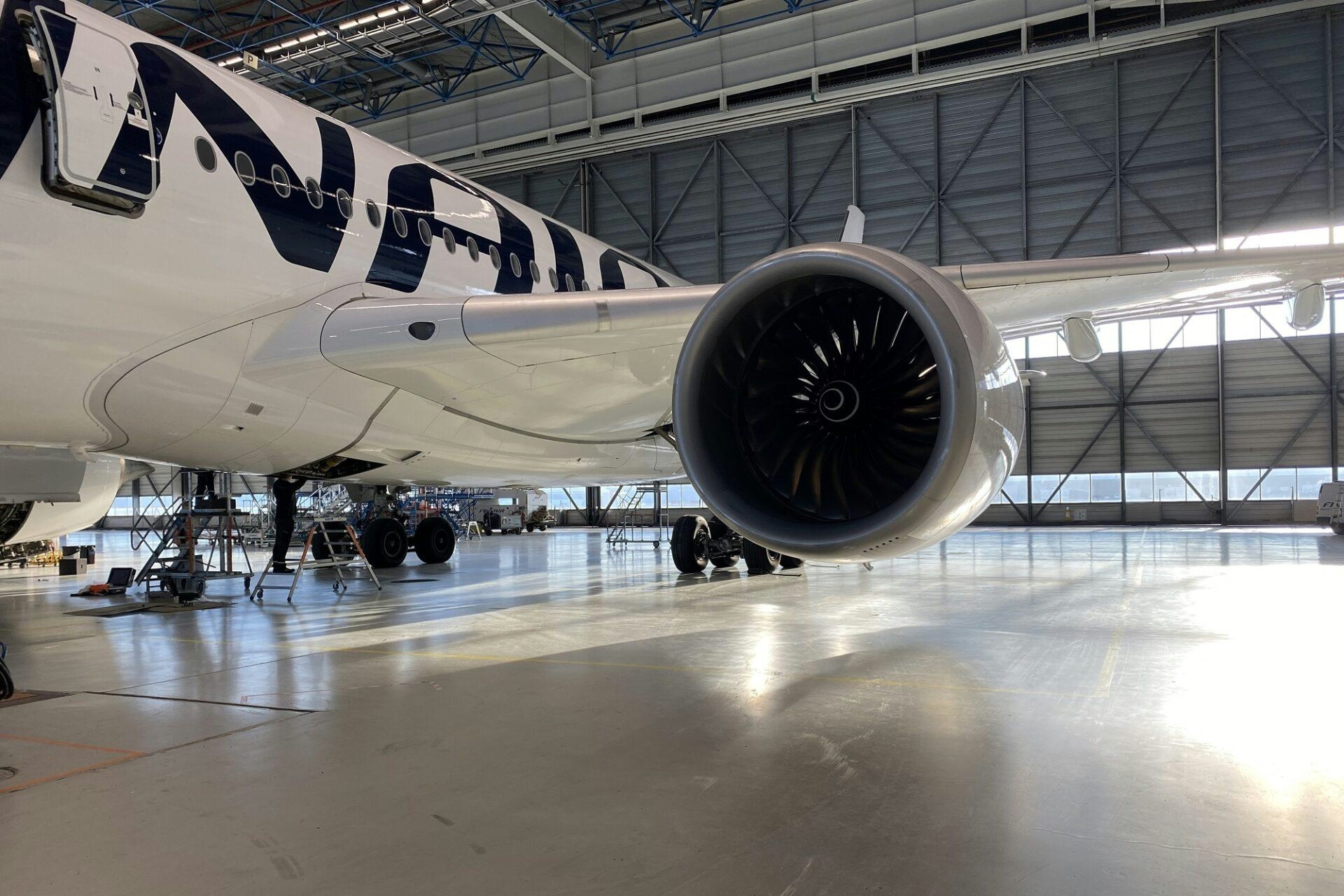
Finnair Commits to Fleet Modernization with Embraer E195-E2 Acquisition
Finnair has announced a significant fleet renewal initiative, entering into an agreement to acquire up to 46 Embraer E195-E2 aircraft. The contract comprises 18 firm orders, 16 options, and 12 purchase rights, representing one of the largest investments in the airline’s 102-year history. This acquisition is intended to gradually replace Finnair’s aging aircraft, aligning with the carrier’s strategic objectives of profitable growth and enhanced operational efficiency.
The Embraer E195-E2 was chosen for its notable improvements in fuel efficiency, offering up to 35% better performance compared to the previous-generation E190s currently in Finnair’s fleet. The aircraft is also recognized for its reliability and passenger comfort, featuring the quietest cabin in its class and a seating layout without middle seats. These characteristics support Finnair’s environmental commitments and its goal to elevate the customer experience.
Finnair’s CEO, Turkka Kuusisto, emphasized the importance of this investment, stating that the Embraer E2 will strengthen the airline’s European network and enable it to capitalize on market growth opportunities. He highlighted the aircraft’s role in enhancing competitiveness through improved reliability, versatility, and passenger comfort, while also contributing to a reduction in the airline’s CO₂ emissions. Deliveries of the 134-seat jets are expected to commence in the second half of 2027.
Strategic and Market Challenges Amid Fleet Expansion
The decision to expand the Embraer fleet comes at a time of considerable internal and external challenges for Finnair. The announcement follows a recent collective labor agreement with the airline’s pilots, raising questions about how the enlarged E190 fleet will be integrated within evolving labor relations. Furthermore, the shift from Airbus to Embraer for narrow-body aircraft renewal has attracted scrutiny from market analysts, who are assessing the potential impact on Finnair’s competitive positioning.
The broader European aviation market is undergoing rapid transformation. Competitors such as Romania’s Tarom are preparing to receive Boeing 737 MAX aircraft, while UK-based Jet2 continues to expand its operations and maintain profitability. These developments are likely to influence regional market dynamics and intensify competition.
Beyond fleet modernization, Finnair is exploring strategic opportunities to access Russian airspace, which could facilitate expansion of its Asia-Europe network. This initiative is particularly notable given the current geopolitical complexities and ongoing challenges in the North Atlantic aviation market.
As Finnair advances this next phase of its development, the investment in next-generation aircraft underscores the airline’s commitment to sustainability, enhanced passenger comfort, and long-term competitiveness amid a shifting industry landscape and complex operational environment.

Etihad Airways Suspends Airbus A380 Flights on Key Route

Aditya Birla Group Seeks Approval for Aircraft Leasing in GIFT City

Qatar Airways Highlights Innovation and Connectivity at Arabian Travel Market 2026

Hong Kong's Five-Year Plan Includes Andrew Fan's Aircraft Parts Processing Hub Proposal

ACIA Aero Leasing Delivers ATR72-600 to Air Nostrum

RTX Appoints Jill Albertelli as Head of Pratt & Whitney

TAT Technologies Joins Beyond Aero Hydrogen Aircraft Program

AURAK Study Highlights Barriers to Air Taxi Adoption in Emerging Economies

Xiamen Air Selects Altitude for 787 Maintenance at Heathrow

Etihad and Swissport Extend Global Partnership
