
Orchestrate AI insights into action

Trending
Categories
Five Aircraft Equipped with the Most Powerful Jet Engines
Five Aircraft Equipped with the Most Powerful Jet Engines
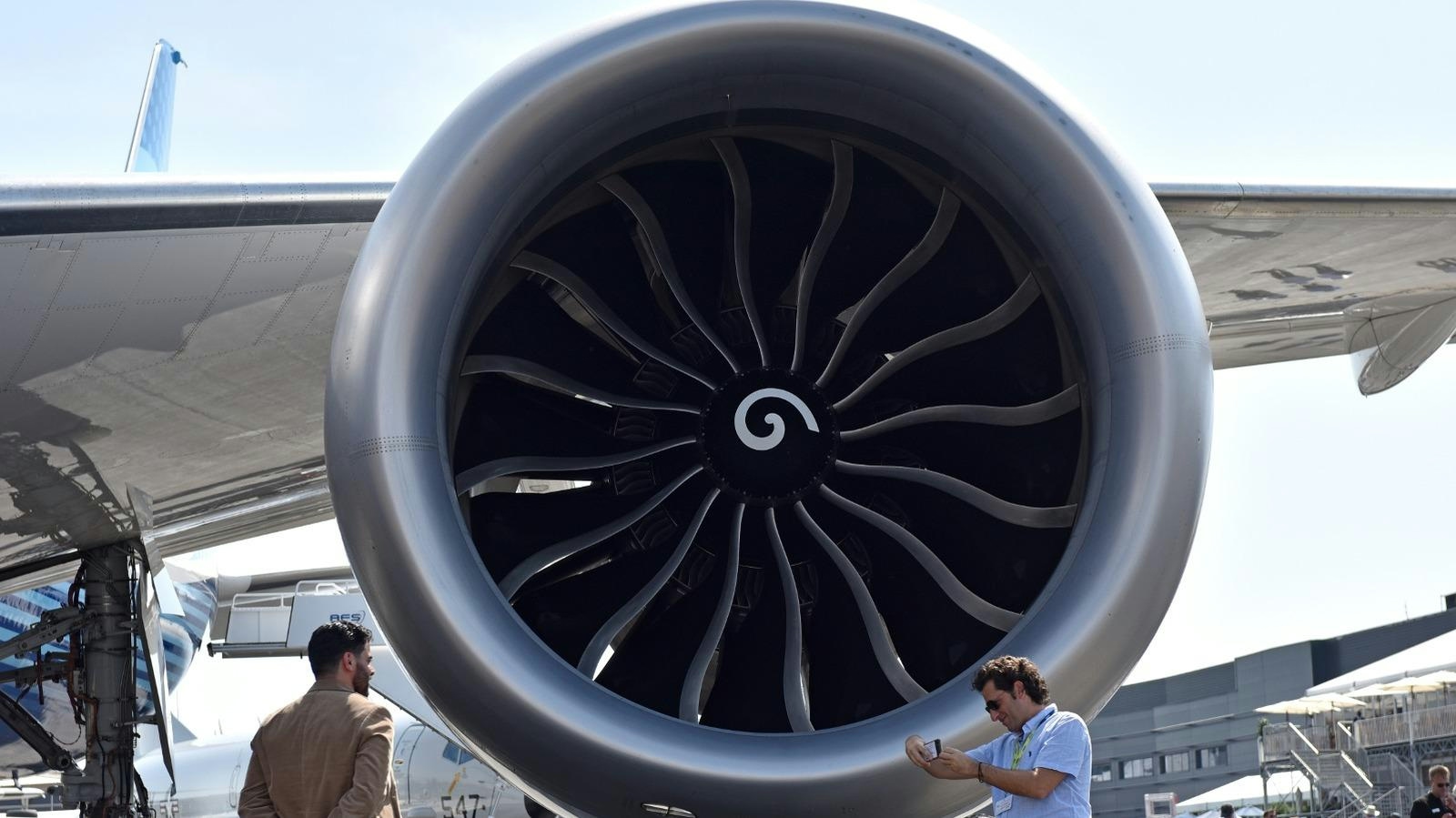
In the realm of aviation, the most powerful jet engines are not always found on the largest aircraft. While iconic giants such as the Airbus A380 and Boeing 747 dominate in size, their four-engine configurations often feature engines with less individual thrust compared to the largest twin-engine jets. The industry’s shift toward twin-engine commercial airliners reflects significant advances in engine reliability and thrust capabilities, making two engines more efficient and cost-effective than four.
Historically, aircraft like the Boeing B-52 Stratofortress employed eight smaller engines, a necessity dictated by the limited power and reliability of early jet technology. Modern military and commercial aircraft designs, however, favor fewer but more powerful engines, a trend driven by technological progress and evolving operational requirements.
This article highlights five aircraft equipped with the most powerful jet engines, focusing on the highest certified thrust variants for each model.
Airbus A380 – 84,100 Pounds of Thrust
The Airbus A380 holds the distinction of being the world’s largest commercial passenger aircraft. Despite its immense size, its four engines—either the Engine Alliance GP7000 or the Rolls-Royce Trent 900 series—deliver less thrust individually than those on leading twin-engine jets. The most powerful variant, the Rolls-Royce Trent 980-84, is certified at 84,100 pounds of thrust. However, most A380s operate with lower-rated engines, and airlines seldom specify the exact variant installed. Airbus once considered an even larger A380-900 model, but those plans never came to fruition, and it remains uncertain whether engine manufacturers would have developed more powerful versions to support such an aircraft.
Airbus A350-1000 – 97,000 Pounds of Thrust
Powered exclusively by the Rolls-Royce Trent XWB-97, the Airbus A350-1000 features engines rated at 97,000 pounds of thrust. This makes it one of the most powerful twin-engine aircraft currently in service, exemplifying the industry’s transition toward fewer, more capable engines that balance performance with efficiency.
Industry Challenges and Market Dynamics
The pursuit of increasingly powerful and efficient jet engines presents ongoing challenges for manufacturers. Supply chain constraints have recently impacted production, as evidenced by Airbus’s pressure on Pratt & Whitney regarding engine shortages for the A320 family. Such disruptions can affect production timelines and airline operations globally.
Demand for advanced propulsion technologies continues to drive innovation across the industry. Established manufacturers and emerging companies alike are developing new engine designs to meet evolving market needs. For instance, Hartzell and Cirrus are advancing their engine technologies, while CFM International’s choice of Singapore for RISE engine airport trials underscores the global competition to develop next-generation propulsion systems.
Simultaneously, the competitive landscape is being reshaped by the emergence of electric and hydrogen-powered aircraft. Startups such as Vaeridion are planning test flights for clean-energy planes as early as 2027, compelling traditional engine manufacturers to adapt their strategies and forge new partnerships in response to this shift.
As the aviation sector continues to evolve, the quest for more powerful, reliable, and sustainable engines remains a central force shaping both the aircraft in operation and the innovation driving the industry forward.

Etihad Airways Suspends Airbus A380 Flights on Key Route

Aditya Birla Group Seeks Approval for Aircraft Leasing in GIFT City

Qatar Airways Highlights Innovation and Connectivity at Arabian Travel Market 2026

Hong Kong's Five-Year Plan Includes Andrew Fan's Aircraft Parts Processing Hub Proposal

ACIA Aero Leasing Delivers ATR72-600 to Air Nostrum

RTX Appoints Jill Albertelli as Head of Pratt & Whitney

TAT Technologies Joins Beyond Aero Hydrogen Aircraft Program

AURAK Study Highlights Barriers to Air Taxi Adoption in Emerging Economies

Xiamen Air Selects Altitude for 787 Maintenance at Heathrow

Etihad and Swissport Extend Global Partnership
