
Orchestrate AI insights into action

Trending
Categories
FTAI Aviation Introduces New SCI Business Model
FTAI Aviation Introduces New SCI Business Model
Strategic Shift and Market Impact
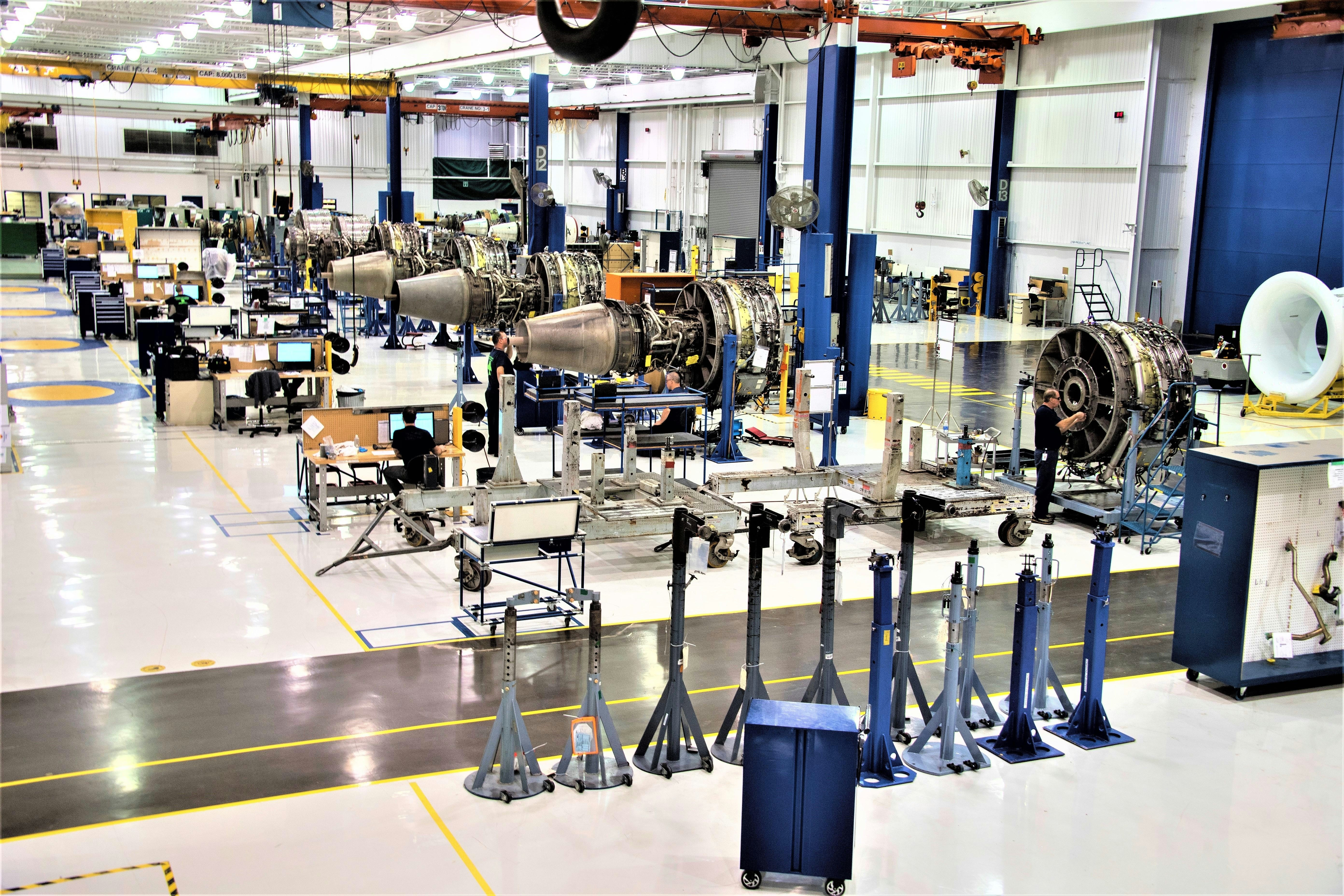
FTAI Aviation (NASDAQ: FTAI), a specialist in narrow-body aircraft parts, repair, and leasing, has swiftly secured a 9% share of its market through the implementation of an innovative SCI (Service, Component, Integration) business model. This approach, which centers on advanced technologies such as 3D printing, has accelerated production timelines and reduced costs, establishing a new standard for efficiency and innovation within the aviation aftermarket sector.
At the heart of FTAI Aviation’s strategy is the integration of 3D printing alongside other advanced manufacturing techniques. These technologies enable the production of complex, customizable components and streamline repair processes, significantly enhancing product quality and responsiveness to customer demands. This technological adoption has allowed the company to shorten production cycles and improve operational agility.
Vertical Integration and Operational Efficiency
A fundamental aspect of the SCI model is FTAI Aviation’s pursuit of greater vertical integration. By expanding its in-house repair capabilities, the company aims to reduce dependence on third-party repair providers, which often represent a bottleneck in the industry. This strategic move is designed to achieve an ambitious 60-day turnaround time for module repairs, a benchmark that, if realized, would further differentiate FTAI Aviation from its competitors.
The market has responded positively to these developments. Following strong second-quarter financial results, an analyst upgrade contributed to a 3% increase in the company’s stock price. While competitors have yet to issue formal responses, FTAI Aviation’s emphasis on vertical integration and advanced manufacturing techniques may prompt a reassessment of operational strategies across the sector.
Challenges and Future Outlook
Despite its rapid growth, FTAI Aviation faces challenges in scaling its SCI business model. Maintaining swift turnaround times and mitigating delays associated with external repair partners will be critical to preserving its competitive advantage. The company’s continued focus on innovation and process improvement will be essential in addressing these obstacles.
By adopting cutting-edge technologies and prioritizing vertical integration, FTAI Aviation has positioned itself as a leader in the narrow-body aircraft parts market. As the industry evolves, the company’s commitment to efficiency, adaptability, and customer-centric solutions is expected to remain central to its ongoing growth and influence.

Etihad Airways Suspends Airbus A380 Flights on Key Route

Aditya Birla Group Seeks Approval for Aircraft Leasing in GIFT City

Qatar Airways Highlights Innovation and Connectivity at Arabian Travel Market 2026

Hong Kong's Five-Year Plan Includes Andrew Fan's Aircraft Parts Processing Hub Proposal

ACIA Aero Leasing Delivers ATR72-600 to Air Nostrum

RTX Appoints Jill Albertelli as Head of Pratt & Whitney

TAT Technologies Joins Beyond Aero Hydrogen Aircraft Program

AURAK Study Highlights Barriers to Air Taxi Adoption in Emerging Economies

Xiamen Air Selects Altitude for 787 Maintenance at Heathrow

Etihad and Swissport Extend Global Partnership
