
Orchestrate AI insights into action

Trending
Categories
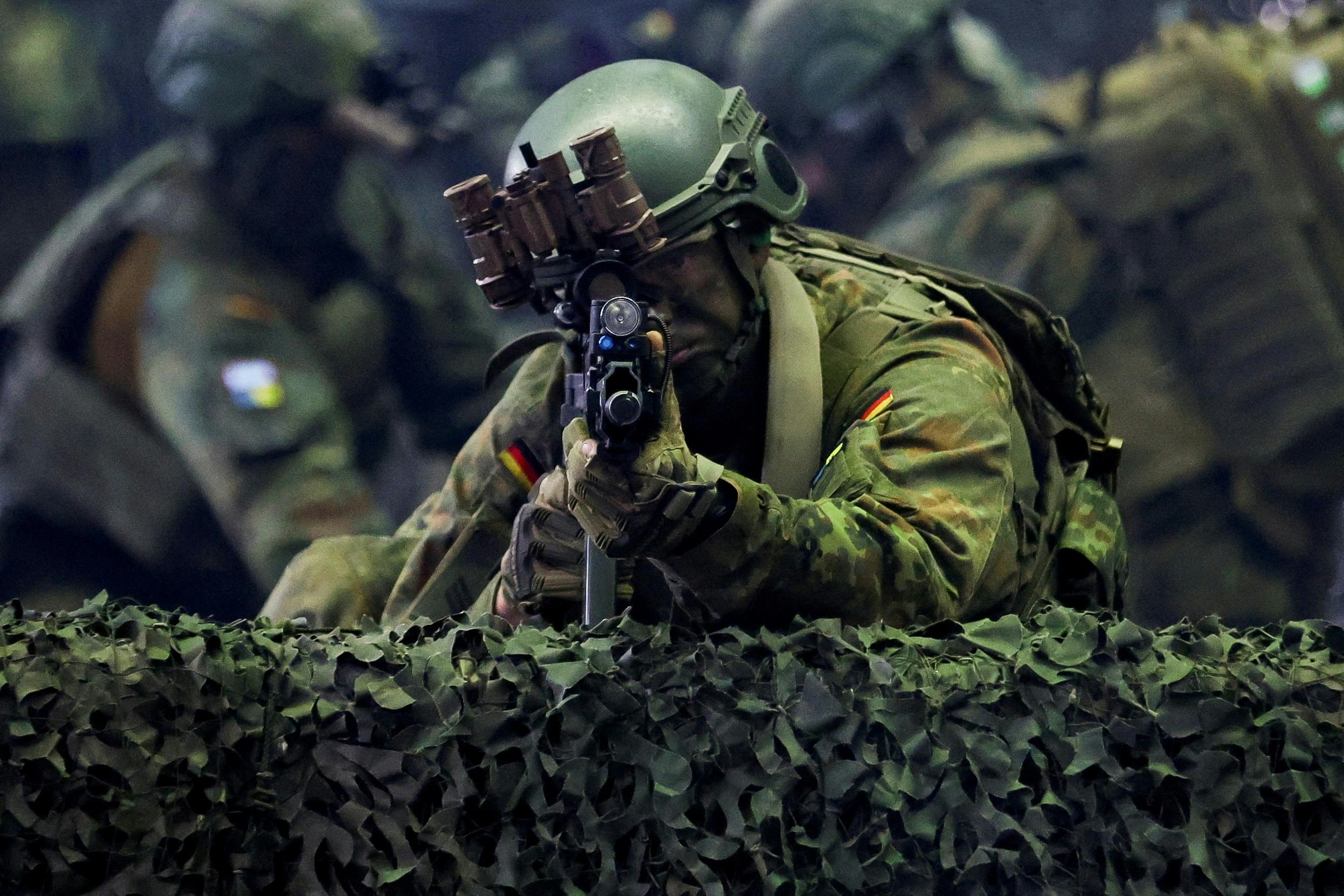
Germany Advances Military Use of Artificial Intelligence
Germany Advances Military Use of Artificial Intelligence
Europe Surpasses U.S. in Defense Procurement Spending
For the first time since World War II, Europe is projected to outspend the United States on military equipment procurement in 2025, signaling a significant shift in global defense dynamics. According to Aviation Week Network, Europe’s 19 leading defense spenders—including Turkey and Ukraine—are expected to allocate $180.1 billion to military procurement this year, surpassing the U.S. total of $175.6 billion. This development is driven by rapid technological innovation, with Germany emerging as a central figure in this transformation.
Gundbert Scherf, cofounder of the German drone manufacturer Helsing, likened Europe’s current defense innovation surge to the Manhattan Project, which was pivotal in establishing the United States as a superpower during World War II. While analysts caution that Europe still faces considerable challenges in matching the overall military strength of the U.S., the accelerating pace of technological advancement suggests that innovation may increasingly compensate for differences in scale.
Germany’s Strategic Embrace of AI and Defense Modernization
As Europe’s largest economy, Germany is positioning itself at the forefront of this defense evolution. In a series of interviews conducted by Reuters with executives, investors, and policymakers, it became clear that the German government views artificial intelligence and startup-driven technologies as essential components of its defense strategy. To facilitate this, Berlin is actively streamlining bureaucratic processes to foster direct collaboration between startups and military leadership.
On July 23, the German federal cabinet approved draft legislation aimed at expediting the country’s armament efforts. Economics Minister Katherina Reiche emphasized the urgency of expanding weapons production, stating, “We need more weapons, and we need them faster.” The proposed law seeks to apply to all military goods, bypassing traditionally lengthy tender procedures to enable swifter procurement. Defense Minister Boris Pistorius described the legislation as a “groundbreaking law” and a “quantum leap” for Germany’s defense capabilities.
This policy shift marks a departure from Germany’s historically cautious defense posture, shaped by the legacy of Nazi militarism and a strong pacifist ethos. Traditionally reliant on U.S. security guarantees and favoring incremental improvements, Germany is now moving decisively to modernize its forces amid growing uncertainty about continued American military support.
Challenges and Implications of AI Integration in Defense
Germany’s ambition to integrate artificial intelligence into its military apparatus presents significant challenges, particularly in adapting procurement systems to keep pace with rapid technological change. The defense technology market is expected to become increasingly competitive as firms accelerate investments in AI and seek closer partnerships with both military institutions and startups. This intensifying competition will likely heighten attention to ethical considerations and regulatory compliance, as governments grapple with the complex implications of deploying AI in warfare.
As Germany advances its military modernization, the broader European defense landscape is set for profound transformation. This evolution will be defined not only by increased spending but also by a strategic race to harness cutting-edge technologies that could reshape the future of warfare.

Etihad Airways Suspends Airbus A380 Flights on Key Route

Aditya Birla Group Seeks Approval for Aircraft Leasing in GIFT City

Qatar Airways Highlights Innovation and Connectivity at Arabian Travel Market 2026

Hong Kong's Five-Year Plan Includes Andrew Fan's Aircraft Parts Processing Hub Proposal

ACIA Aero Leasing Delivers ATR72-600 to Air Nostrum

RTX Appoints Jill Albertelli as Head of Pratt & Whitney

TAT Technologies Joins Beyond Aero Hydrogen Aircraft Program

AURAK Study Highlights Barriers to Air Taxi Adoption in Emerging Economies

Xiamen Air Selects Altitude for 787 Maintenance at Heathrow

Etihad and Swissport Extend Global Partnership
