
Orchestrate AI insights into action

Trending
Categories
Has China Upgraded J-20A Stealth Fighters with WS-15 Engines?
Has China Upgraded J-20A Stealth Fighters with WS-15 Engines?
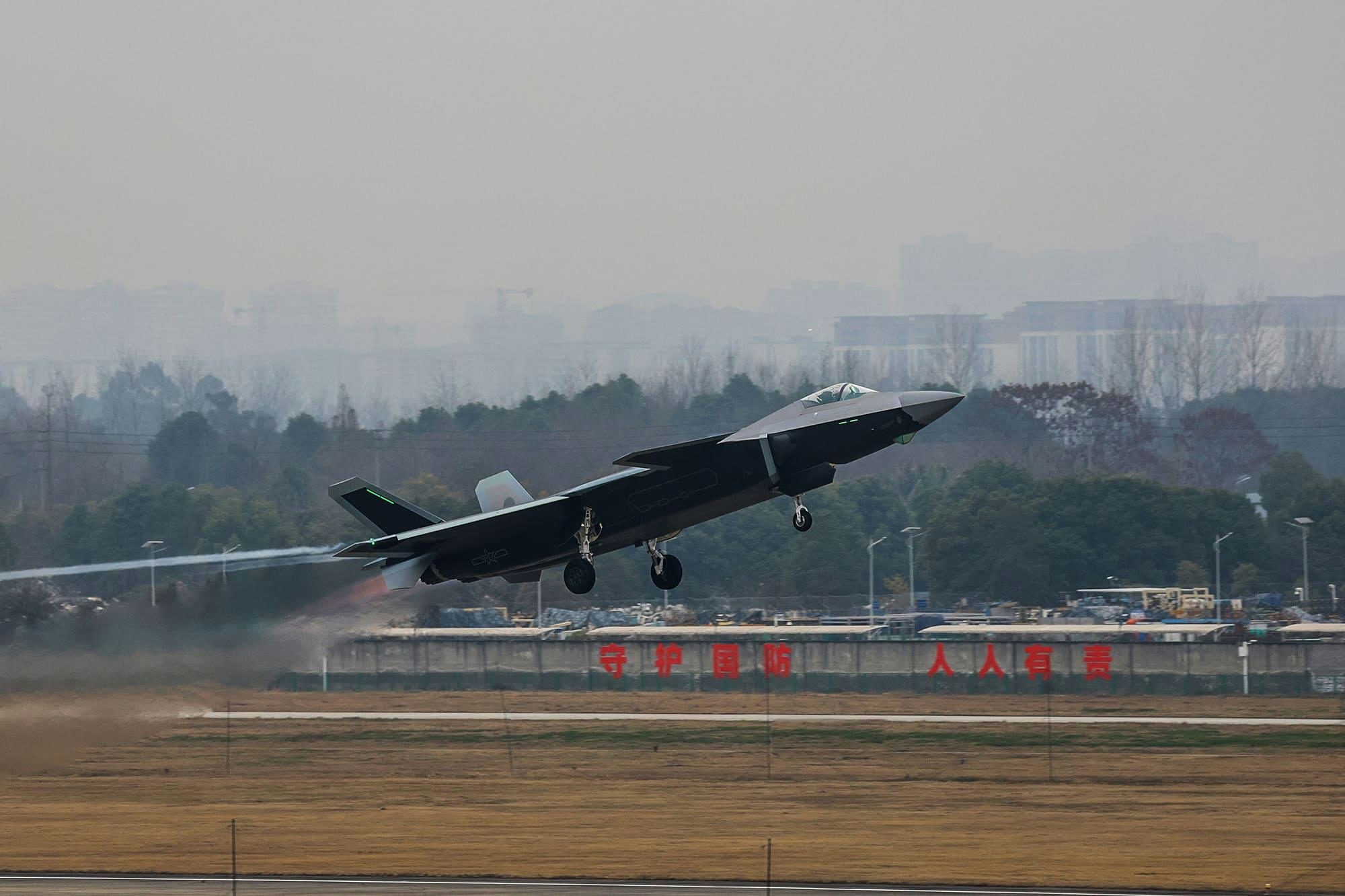
Beijing has recently released new footage depicting flight tests of what appear to be upgraded J-20A stealth fighters, intensifying speculation that these aircraft are now equipped with the long-awaited WS-15 high-thrust engines alongside enhanced avionics. The video, shared by state news agency Xinhua, features prototypes of the J-20A, an advanced variant of China’s original J-20 stealth fighter.
Visual Evidence and Technical Enhancements
The footage shows at least three J-20A jets, each coated in a yellow zinc-chromate primer, taxiing on a runway. This primer is commonly used in the Chinese aerospace industry during the pre-delivery testing phase to protect the airframe before the application of final stealth coatings. The J-20, a twin-engine heavy stealth fighter, entered service in 2017. Since then, China has pursued continuous improvements to the platform, with the J-20A reportedly incorporating upgrades in aerodynamic design, avionics, and propulsion systems.
The potential integration of the WS-15 engine is particularly noteworthy. This engine is expected to deliver greater thrust and improved maneuverability, which could significantly narrow the technological gap between China’s stealth fighters and advanced U.S. aircraft. The WS-15’s successful deployment would mark a major milestone in China’s indigenous engine development, a field that has historically posed challenges for the country’s aerospace ambitions.
Strategic Context and Global Implications
This development occurs amid escalating competition in military aviation technology. The United States is preparing to deploy the B-21 Raider, a next-generation stealth bomber, with initial operational capability expected in January 2026. The B-21 program carries a projected production contract exceeding $100 billion, underscoring Washington’s commitment to maintaining air superiority. This advancement is likely to spur further innovation in Chinese fighter technology as Beijing seeks to counterbalance U.S. capabilities.
In response to China’s progress, the U.S. military is intensifying its own modernization efforts. The U.S. Navy has adopted the F-35A stealth fighter, and the Pentagon is placing increased emphasis on nuclear posture and long-range strike capabilities. These strategic adjustments reflect broader concerns about preserving a technological edge in the face of China’s rapid air force modernization.
China’s pursuit of the WS-15 engine upgrade for the J-20A highlights the ongoing arms race in stealth technology. As both nations invest heavily in next-generation aircraft, other countries may also escalate military spending and seek advanced fighter jets to remain competitive. This evolving landscape underscores the high stakes and rapid innovation that are shaping the future of aerial combat.

Etihad Airways Suspends Airbus A380 Flights on Key Route

Aditya Birla Group Seeks Approval for Aircraft Leasing in GIFT City

Qatar Airways Highlights Innovation and Connectivity at Arabian Travel Market 2026

Hong Kong's Five-Year Plan Includes Andrew Fan's Aircraft Parts Processing Hub Proposal

ACIA Aero Leasing Delivers ATR72-600 to Air Nostrum

RTX Appoints Jill Albertelli as Head of Pratt & Whitney

TAT Technologies Joins Beyond Aero Hydrogen Aircraft Program

AURAK Study Highlights Barriers to Air Taxi Adoption in Emerging Economies

Xiamen Air Selects Altitude for 787 Maintenance at Heathrow

Etihad and Swissport Extend Global Partnership
