
Orchestrate AI insights into action

Trending
Categories
Honeywell Aerospace Raises 2026 Outlook Following Spin-Off
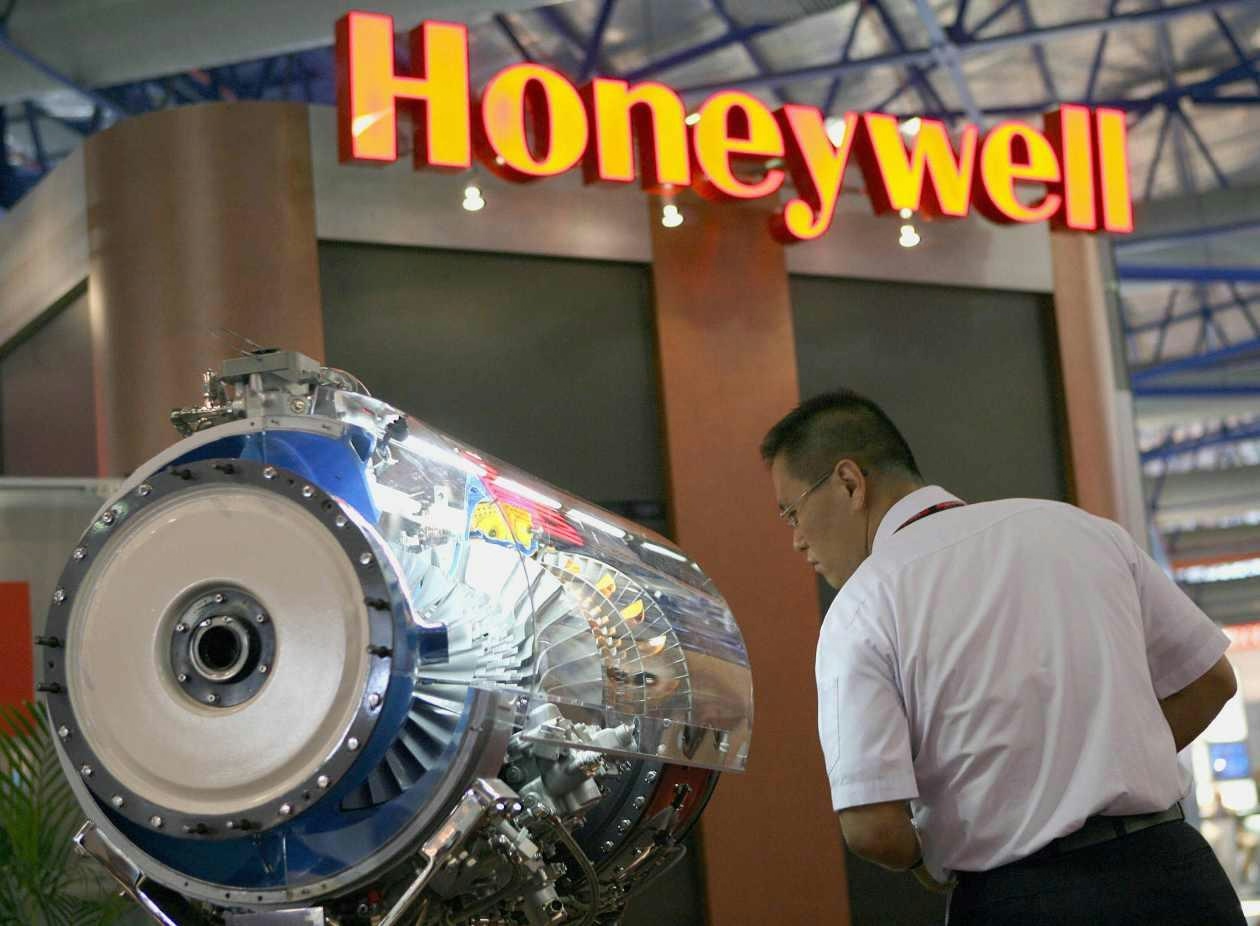
Honeywell Aerospace Raises 2026 Outlook Following Spin-Off
Honeywell Aerospace has reported a 5% year-over-year increase in second-quarter sales, marking a positive start as an independent company following its separation from Honeywell International. The company’s backlog expanded by 9% to $18.2 billion, supported by an 8% rise in orders over the past twelve months, driven largely by robust demand in the defence and space segment.
Financial Performance and Updated Guidance
In its updated full-year 2026 guidance, Honeywell Aerospace raised projections for organic sales and pro forma standalone adjusted EBIT, while also introducing adjusted earnings per share guidance. The company maintained its free cash flow outlook for the second half of the year. Despite these improvements, adjusted EBIT declined by 7%, impacted by approximately $100 million in separation-related costs and inventory obsolescence charges.
Commercial aftermarket sales increased 8% to $2.0 billion, fueled by broad-based demand and higher business aviation flight hours. Commercial original equipment sales rose 6% to $700 million, and defence and space revenue grew 3% to $1.8 billion. The latter was supported by stronger domestic demand but tempered by supply constraints and reduced international volumes.
Challenges Amid Independence
As Honeywell Aerospace embarks on its independent journey, it faces significant challenges, particularly in supply chain execution and dependence on specialty materials, which have contributed to persistent supply constraints. The company also remains exposed to the cyclical nature of commercial aerospace demand, adding an element of uncertainty to its outlook. These factors led to a downward revision of its 2026 forecast, triggering a notable decline in share prices and eliciting mixed responses from the market.
The company is currently prioritizing deliveries to key customers Boeing and Airbus, a strategy that may affect its higher-margin aftermarket business. Competitor reactions to Honeywell Aerospace’s new direction have yet to become clear.
CEO Jim Currier characterized the spin-off as a pivotal milestone, underscoring the company’s commitment to strengthening its supply chain, accelerating growth, and meeting its 2030 financial targets. As Honeywell Aerospace navigates this transition, its ability to manage supply chain challenges and balance competing priorities across its business segments will remain under close scrutiny from investors and industry analysts alike.

Etihad Airways Suspends Airbus A380 Flights on Key Route

Aditya Birla Group Seeks Approval for Aircraft Leasing in GIFT City

Qatar Airways Highlights Innovation and Connectivity at Arabian Travel Market 2026

Hong Kong's Five-Year Plan Includes Andrew Fan's Aircraft Parts Processing Hub Proposal

ACIA Aero Leasing Delivers ATR72-600 to Air Nostrum

RTX Appoints Jill Albertelli as Head of Pratt & Whitney

TAT Technologies Joins Beyond Aero Hydrogen Aircraft Program

AURAK Study Highlights Barriers to Air Taxi Adoption in Emerging Economies

Xiamen Air Selects Altitude for 787 Maintenance at Heathrow

Etihad and Swissport Extend Global Partnership
