
Orchestrate AI insights into action

Trending
Categories
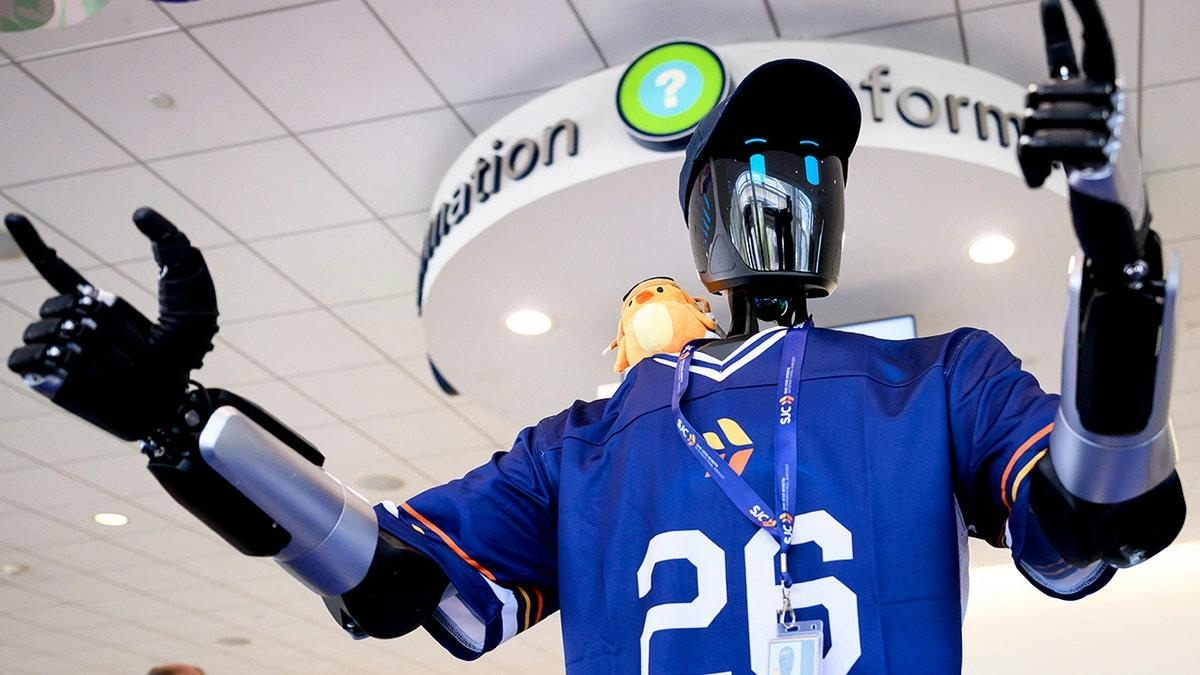
Humanoid Robot Causes Flight Delay at California Airport
Humanoid Robot Causes Flight Delay at California Airport
Unusual Passenger Sparks Safety Concerns
OAKLAND, Calif. — A Southwest Airlines flight from Oakland to San Diego was delayed by more than an hour on Thursday due to an unexpected passenger: a humanoid robot named Bebop. Owned by Elite Event Robotics, Bebop was traveling for a work-related event and initially captivated fellow passengers with a brief demonstration before boarding. However, once secured in its seat, airline staff raised concerns regarding the robot’s power source, triggering a safety investigation.
Representatives from Elite Event Robotics, Eily and Chana Ben-Abraham, explained that Southwest Airlines personnel questioned the type and size of Bebop’s lithium battery. The situation escalated when it was determined that the battery exceeded the airline’s maximum allowable size for carry-on devices. Consequently, the battery was confiscated, and the aircraft was held on the runway while safety protocols were implemented.
Industry Challenges and Regulatory Implications
Southwest Airlines confirmed that the oversized lithium battery was the cause of the delay. This incident highlights the growing challenges airlines face in accommodating unconventional passengers such as robots, underscoring the need for updated regulations and protocols to address emerging technologies in commercial air travel. Passengers endured the hour-long delay as airline staff worked to resolve the issue and ensure compliance with safety standards.
The event has sparked broader discussions about how airlines and regulatory bodies might adapt to the increasing presence of advanced robotics and other non-traditional cargo in passenger cabins. As technology continues to evolve, the aviation industry must consider new frameworks to manage safety without impeding innovation.
Looking Ahead for Bebop’s Travels
Elite Event Robotics is actively working to recover the confiscated battery in time for Bebop’s next scheduled appearance. Chana Ben-Abraham stated, “We’re overnighting batteries to Chicago tomorrow to hopefully be able to fulfill the next event request.” Despite the setback, the company remains optimistic about Bebop’s future travels, with plans for the robot to be present at an event on Sunday.
Eily Ben-Abraham also noted that Bebop’s weight has been reduced to under 100 pounds, which should facilitate easier navigation through airports. “I shouldn’t have to worry about actually, like, walking him through the terminals,” she remarked.
After the delay, the flight eventually departed, leaving passengers with a unique travel experience and raising important questions about how the aviation industry will integrate robots and other advanced technologies into everyday travel.

Etihad Airways Suspends Airbus A380 Flights on Key Route

Aditya Birla Group Seeks Approval for Aircraft Leasing in GIFT City

Qatar Airways Highlights Innovation and Connectivity at Arabian Travel Market 2026

Hong Kong's Five-Year Plan Includes Andrew Fan's Aircraft Parts Processing Hub Proposal

ACIA Aero Leasing Delivers ATR72-600 to Air Nostrum

RTX Appoints Jill Albertelli as Head of Pratt & Whitney

TAT Technologies Joins Beyond Aero Hydrogen Aircraft Program

AURAK Study Highlights Barriers to Air Taxi Adoption in Emerging Economies

Xiamen Air Selects Altitude for 787 Maintenance at Heathrow

Etihad and Swissport Extend Global Partnership
