
Orchestrate AI insights into action

Trending
Categories
Kazakhstan Advances as Regional Travel Hub with SCAT Airlines’ Boeing MRO Facility and Fleet Expansion
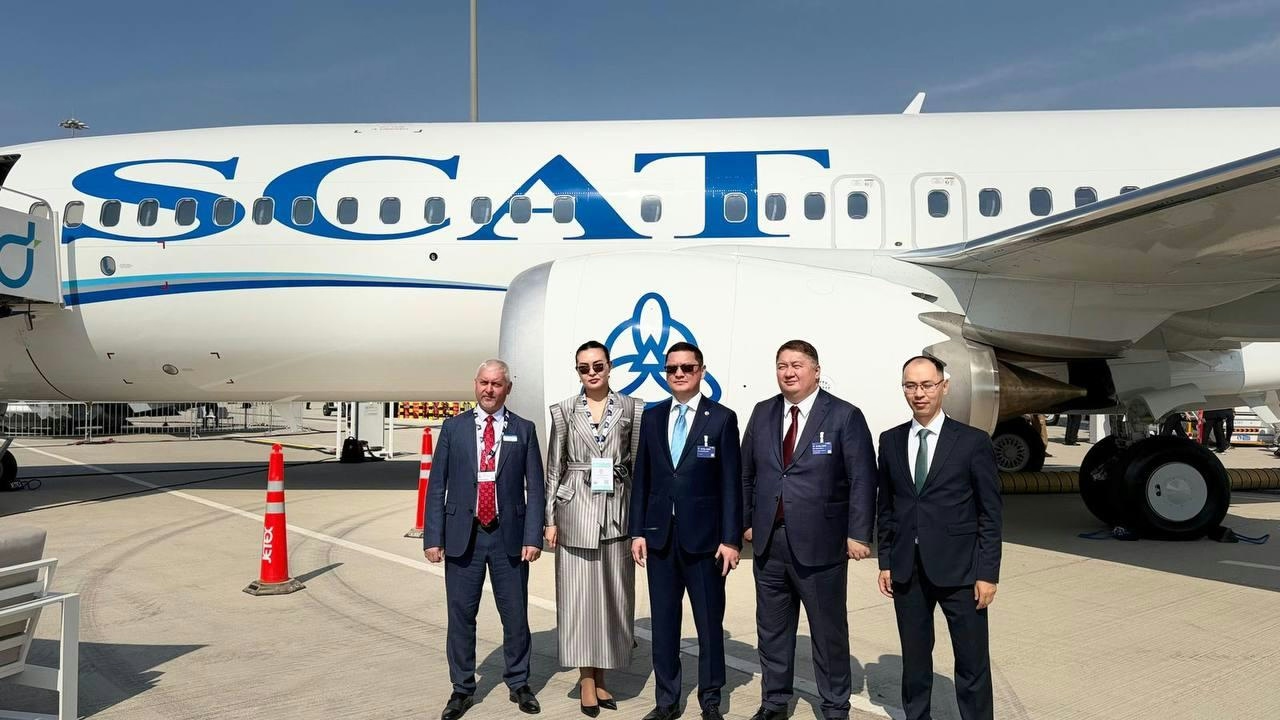
Kazakhstan Advances as Regional Travel Hub with SCAT Airlines’ Boeing MRO Facility and Fleet Expansion
Kazakhstan is taking significant steps to establish itself as a central travel hub in Central Asia, driven by SCAT Airlines’ plans to develop a Boeing Maintenance, Repair, and Overhaul (MRO) facility at Shymkent International Airport alongside an expansion of its fleet. This strategic move aims to enhance the airline’s operational capabilities while supporting Kazakhstan’s broader vision of becoming a pivotal player in the region’s aviation sector.
Strategic Development of Boeing MRO Facility
SCAT Airlines, one of Kazakhstan’s leading carriers with a predominantly Boeing fleet, has long served key domestic and international routes. The airline is now exploring the creation of a cutting-edge MRO facility in partnership with Boeing, which would enable aircraft maintenance to be conducted domestically rather than relying on foreign service centers. This development is expected to bring substantial benefits not only to SCAT Airlines but also to other regional carriers, positioning Kazakhstan as a vital aviation maintenance hub in Central Asia.
The proposal for the MRO center was a focal point during a recent high-level meeting between Kazakh President Kassym-Jomart Tokayev and Boeing executives in the United States. The collaboration promises to introduce world-class technical expertise to Kazakhstan’s aviation infrastructure, ensuring the SCAT fleet remains in optimal condition. Moreover, the facility is anticipated to attract regional and international airlines seeking cost-effective and efficient maintenance services, thereby enhancing Kazakhstan’s strategic standing in the global aviation market.
Challenges and Market Dynamics
Despite these promising developments, Kazakhstan’s ambition to become a regional travel hub faces several challenges. The aviation industry in Central Asia is marked by intense competition, with neighboring countries investing heavily in their own infrastructure to capture a larger share of regional air traffic. Additionally, ongoing supply chain disruptions and volatile fuel prices continue to complicate efforts to expand fleets and improve operational efficiency. In response, airlines across the region are prioritizing fleet modernization and forming strategic partnerships to navigate these complexities.
Market responses to SCAT Airlines’ initiatives have been significant, with increased interest from regional travelers and airlines seeking dependable maintenance solutions. Competitors are likely to respond by upgrading their facilities or adjusting routes and services to protect their market positions. Recent industry data highlights the critical role of modernization and collaboration as airlines adapt to shifting market conditions.
As SCAT Airlines advances its MRO facility and fleet expansion plans, Kazakhstan stands to enhance regional connectivity, stimulate tourism growth, and bolster its economy. The ultimate success of these initiatives will depend on the country’s ability to overcome industry challenges while leveraging emerging opportunities within the rapidly evolving aviation landscape.

Etihad Airways Suspends Airbus A380 Flights on Key Route

Aditya Birla Group Seeks Approval for Aircraft Leasing in GIFT City

Qatar Airways Highlights Innovation and Connectivity at Arabian Travel Market 2026

Hong Kong's Five-Year Plan Includes Andrew Fan's Aircraft Parts Processing Hub Proposal

ACIA Aero Leasing Delivers ATR72-600 to Air Nostrum

RTX Appoints Jill Albertelli as Head of Pratt & Whitney

TAT Technologies Joins Beyond Aero Hydrogen Aircraft Program

AURAK Study Highlights Barriers to Air Taxi Adoption in Emerging Economies

Xiamen Air Selects Altitude for 787 Maintenance at Heathrow

Etihad and Swissport Extend Global Partnership
