Image

Orchestrate AI insights into action

Join the AeroGenie waitlist today!

Trending

Categories

Low-Altitude Economy Requires Institutional Support
March 13, 2026By ePlane AI
Low-Altitude Economy Requires Institutional Support
0
0
Low-Altitude Economy
China Aviation Policy
Industrial Clusters

Low-Altitude Economy Requires Institutional Support

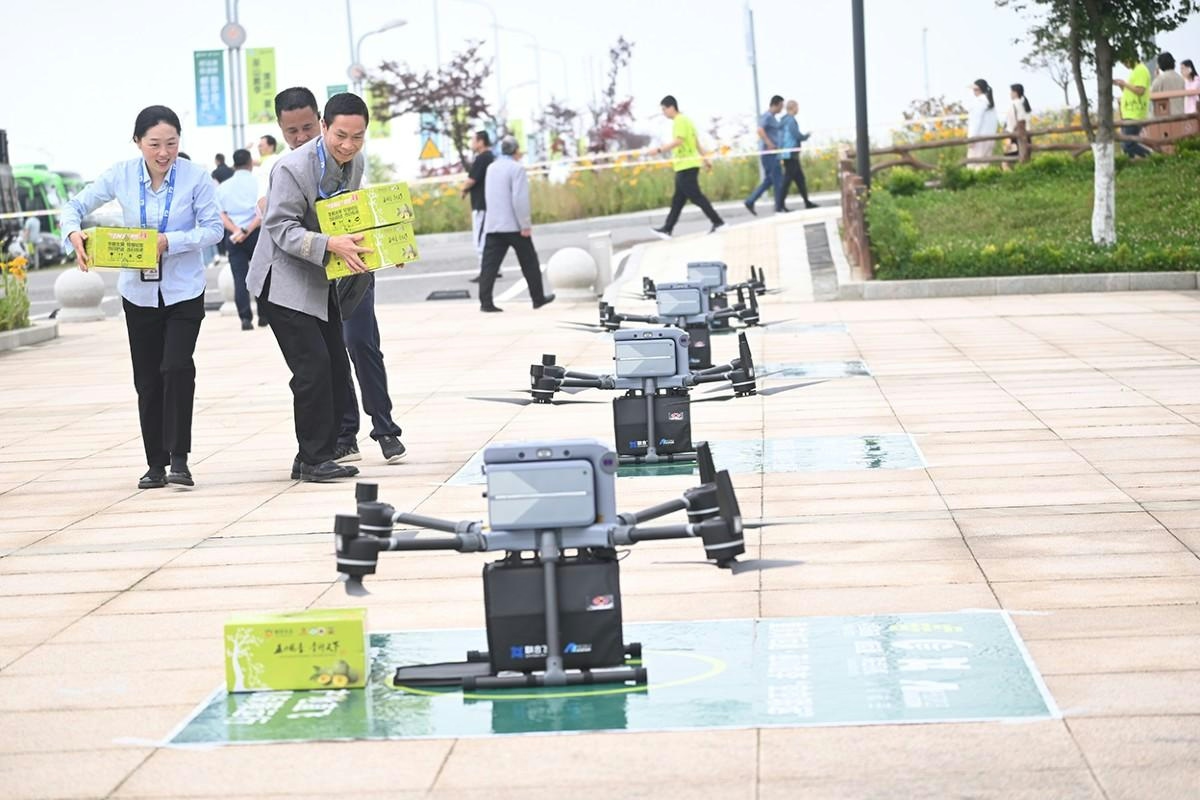
China’s forthcoming 15th Five-Year Plan (2026-2030) marks a significant strategic shift by elevating the low-altitude economy to an independent priority alongside other emerging sectors such as new energy, new materials, and aerospace. Previously subsumed under the broader category of strategic emerging industries during the 14th Five-Year Plan (2021-2025), the low-altitude economy is now recognized for its distinct potential and the need for coordinated, large-scale development efforts.

Strategic Importance and Technological Foundations

The low-altitude economy represents a new frontier of productive forces, integrating cutting-edge technologies from aerospace, smart manufacturing, new energy, and artificial intelligence. Its extensive industrial chains and diverse application scenarios position it to exceed one trillion yuan (approximately $145 billion) in market size within the next five years, fostering regionally diversified economic growth. However, realizing this ambitious target requires systematic planning focused on breakthroughs in core technologies, talent development, and the construction of a robust industrial ecosystem.

Indigenous innovation is critical to enhancing resilience amid global uncertainties and to sustaining high-quality growth. The sector’s advancement hinges on rapid technological progress in unmanned aerial vehicles (UAVs) and electric vertical takeoff and landing aircraft (eVTOLs). These technologies depend on continued improvements in flight control systems, high-energy-density batteries, and reliable electric propulsion. Recent advancements in lithium metal batteries, which offer significant gains in energy density and performance, exemplify the technological strides that could reshape the global low-altitude economy.

Institutional Challenges and Policy Imperatives

Despite promising technological developments, the growth of the low-altitude economy faces structural challenges that require strong institutional support. Experiences from other markets, such as Brazil, where aviation industry leaders have pointed to regulatory and infrastructural barriers, highlight the risks of underdeveloped frameworks impeding sectoral expansion. This underscores the necessity for China to establish robust institutional mechanisms and policy frameworks to unlock the full potential of the low-altitude economy.

To maintain global competitiveness, China must increase investment in indigenous research and consolidate resources to build a secure, coordinated innovation system. Addressing critical bottlenecks—such as redundant flight control chips, high-precision LiDAR, and advanced battery materials—is essential. Accelerating the commercialization of technological achievements and enhancing self-reliance across the entire industry chain will be pivotal in this regard.

Green Development and Innovation Ecosystem

Green development remains a central pillar of China’s strategy, aligned with its dual-carbon goals. The international race to develop green aviation technologies has intensified, with traditional lithium battery systems facing inherent energy density limitations. Consequently, the pursuit of both electrification and hydrogen-based solutions is imperative. Promoting higher-density batteries, advancing airworthiness certification, and commercializing electric aircraft for urban mobility, emergency rescue, and logistics are critical steps forward. Concurrently, intensified research into hydrogen storage, transportation, and utilization is necessary to support sustainable growth.

An effective technology transfer mechanism is equally vital. Establishing a demand-driven, full-chain innovation model through testing bases and demonstration zones can facilitate the integration of new technologies into practical applications. Data-driven feedback loops will help shorten commercialization cycles and refine business models. Collaboration between universities and enterprises can tailor research to regional needs, accelerating scalable and sustainable development.

Workforce Development and Infrastructure Preparation

The sector’s success also depends on cultivating a workforce of composite, innovative, and highly skilled professionals. Addressing talent gaps in aerospace engineering, intelligent control, and airspace management requires closer integration between industry and education, updated curricula, and diversified training mechanisms. Preparing traditional infrastructure, including vertiports and energy supply stations, alongside fostering a coordinated innovation ecosystem, will be essential for the sustainable expansion of China’s low-altitude economy.

Market responses to emerging technologies remain cautious, as evidenced by significant outflows from Bitcoin ETFs, reflecting institutional hesitancy toward new markets. This further highlights the critical role of strong institutional support in nurturing confidence and stability within the low-altitude economy.

More news
AI Handles Nearly One in Three Airline Customer Conversations on Facebook, Emplifi Research Finds

AI Handles Nearly One in Three Airline Customer Conversations on Facebook, Emplifi Research Finds

AI Resolves Nearly One-Third of Airline Customer Conversations on Facebook, Emplifi Research Shows **NEW YORK, July 29, 2026** – Airlines are increasingly leveraging artificial intelligence to manage customer service interactions, with new research from Emplifi revealing that AI now independently resolves up to 31% of direct-message conversations on Facebook for airlines. Published in Emplifi’s *State of Airline Social Customer Care 2026* benchmark report, the findings underscore the airline industry's leadership in digital customer support, responding up to 21 times faster than the average brand amid surging social media volumes. Rising Demand and Digital Transformation in Airline Customer Service The airline sector is preparing for another record-breaking year, with Airports Council International projecting 10.2 billion passengers in 2026 and anticipating global passenger volumes to nearly double by 2045. This rapid growth intensifies the demand for fast, personalized support across digital channels, as travelers increasingly expect real-time assistance throughout their journeys. Airlines are not only automating routine inquiries but also enhancing customer care by equipping agents with richer contextual information, enabling seamless and timely support during critical moments. Susan Ganeshan, Chief Marketing Officer at Emplifi, emphasized that airlines excelling during peak travel periods are transforming customer care through AI. “They’re using AI to fundamentally transform customer care, enabling teams to resolve routine inquiries instantly and provide agents with richer customer context. This ensures passengers receive fast, seamless support when it matters most,” she stated. The report also highlights a shift in customer service channel preferences. Instagram has surpassed Facebook as the busiest platform for airline customer care, now handling more than three times the volume of direct message conversations. As service requests grow more complex during peak periods, leading airlines are combining AI automation with human expertise to maintain high service standards at scale. Challenges and Market Dynamics Surrounding AI Adoption Despite the benefits, the rapid integration of AI in customer service presents challenges, particularly regarding security. Recent incidents, such as the Google AI chatbot security flaw identified by cybersecurity firm Varonis, highlight the critical need for robust safeguards as AI systems become more embedded in customer interactions. The market response has been swift, with companies like Amazon doubling AI-referred purchases and competitors such as Google expanding their AI market share, reflecting both the opportunities and increased scrutiny facing AI-driven solutions. The financial stakes are significant. Trustpilot reports that poor AI experiences could jeopardize £9 billion in UK online retail sales, underscoring the necessity for seamless and reliable AI systems in customer-facing roles. Consumer expectations are evolving accordingly; Emplifi’s research indicates that 51% of consumers prioritize issue resolution over whether support is provided by a human or AI, signaling a shift toward valuing speed and effectiveness above the nature of the technology itself. Ganeshan further noted, “Passengers interact with airlines across dozens of digital touchpoints before ever contacting support. The best customer experiences come from giving both AI and service teams a complete view of that journey, leading to faster results, more personalized support, and more resilient operations—especially when travel peaks put every system to the test.” As airlines continue to innovate, balancing automation, human expertise, and security will be essential to meeting rising customer expectations and sustaining growth in an increasingly digital travel environment.
Issues Identified in Engines of Boeing 787, 747-8, and 737 MAX

Issues Identified in Engines of Boeing 787, 747-8, and 737 MAX

Issues Identified in Engines of Boeing 787, 747-8, and 737 MAX Advances and Challenges in Engine Design Modern commercial jet engines stand as some of the most sophisticated engineering achievements in aviation, delivering notable improvements in noise reduction, fuel efficiency, and emissions compared to earlier models. Boeing has been at the forefront of these innovations, particularly with the introduction of engine chevrons—serrated edges on the nacelles of engines fitted to aircraft such as the 787 Dreamliner and 747-8. These chevrons were engineered to reduce noise by smoothing the mixing of exhaust gases with ambient air, resulting in quieter operations during takeoff and landing. However, this acoustic advantage came with a trade-off, as the altered airflow caused a slight decrease in engine efficiency, marginally affecting thrust and fuel consumption. While Boeing initially promoted the use of chevrons, Airbus opted against incorporating this technology in its aircraft, citing concerns over the balance between noise reduction and engine performance. Over time, Boeing itself reassessed the widespread application of chevrons, choosing to exclude them from its newest aircraft models in favor of alternative noise mitigation methods that do not compromise efficiency. Technical Setbacks and Regulatory Developments Beyond design considerations, Boeing has encountered technical difficulties with its latest engines. The GE9X engine, developed for the forthcoming 777-9, has experienced durability issues significant enough to halt aircraft deliveries temporarily. This pause highlights the inherent complexities in developing next-generation propulsion systems that must satisfy rigorous reliability and performance criteria. In a positive regulatory development, the Federal Aviation Administration (FAA) has reinstated Boeing’s full authority to issue airworthiness certificates for both the 737 MAX and 787 models. This restoration reflects renewed confidence in Boeing’s quality control and manufacturing standards. The market has responded favorably to this decision, anticipating increased aircraft deliveries and a strengthened competitive position for Boeing. Market Implications and Industry Outlook Although competitors have yet to respond decisively to Boeing’s recent progress, industry analysts suggest that resolving engine and certification challenges could bolster Boeing’s standing relative to rivals such as Airbus. As Boeing continues to navigate technical and regulatory hurdles, its capacity to innovate while upholding safety and efficiency standards will be critical to sustaining its leadership in the commercial aviation sector.
AerCap Holdings Reports Second-Quarter 2026 Results and Raises Outlook

AerCap Holdings Reports Second-Quarter 2026 Results and Raises Outlook

AerCap Holdings Reports Second-Quarter 2026 Results and Raises Outlook **Dublin, July 29, 2026** – AerCap Holdings N.V. (NYSE: AER), a prominent global aviation leasing company, announced strong financial results for the second quarter of 2026, accompanied by an upward revision of its full-year earnings guidance. The performance underscores the company’s robust position amid sustained demand in the aviation leasing market. Financial Performance and Operational Highlights AerCap reported a net income of $726 million, equivalent to $4.59 per share, for the quarter. Adjusted net income was notably higher at $811 million, or $5.14 per share. Reflecting confidence in its business trajectory, the company raised its full-year 2026 adjusted earnings per share (EPS) guidance to approximately $16.80, excluding any further gains from asset sales. Chief Executive Officer Aengus Kelly emphasized the strength of AerCap’s business model and the ongoing demand for premium aviation assets. He highlighted the company’s global platform, disciplined capital allocation, and active portfolio management as key factors enabling AerCap to capitalize on market opportunities. Kelly also pointed to sustained air travel demand and aircraft supply constraints as drivers of long-term shareholder value. During the quarter, AerCap achieved a return on equity of 16%, with an adjusted return on equity of 18%. The company completed asset sales totaling $1.4 billion, generating $223 million in gains and achieving a 20% unlevered gain-on-sale margin, representing 1.7 times book value on equity. Operating cash flow reached $1.5 billion, while capital expenditures amounted to $1.9 billion, including investments in 25 aircraft, five engines, and three helicopters. AerCap repurchased 4.9 million shares for $691 million in the quarter, bringing year-to-date buybacks to over $1.4 billion. The adjusted debt-to-equity ratio stood at 2.05 to 1 as of June 30, 2026, and book value per share increased 16% year-over-year to $119.21. Additionally, the company placed a new order for 15 Boeing 787 aircraft, with deliveries scheduled between 2030 and 2033. Revenue Growth and Market Activity Total revenues and other income for the quarter rose 15% year-over-year to $2.17 billion. This growth was driven by a 5% increase in total lease revenue and a significant rise in gains from asset sales. Basic lease rents amounted to $1.68 billion, while maintenance rents and other receipts surged 54% to $177 million. AerCap signed 120 lease agreements, completed 33 purchase transactions, and arranged $2.2 billion in financing during the quarter, reflecting strong market demand and operational momentum. Industry Challenges and Market Outlook Despite the positive results and outlook, AerCap faces potential challenges that could affect future performance. Risks include the possibility of aircraft oversupply, which may exert downward pressure on lease rates, and financial stress among airline customers. The competitive environment is intensifying, with companies such as Herc Holdings increasing their presence in the aviation leasing sector. Broader macroeconomic factors also pose uncertainties. Geopolitical tensions, rising fuel costs, inflationary pressures, and fluctuating air travel demand could impact AerCap’s operations in the coming quarters. Nevertheless, the market has responded favorably to AerCap’s performance, signaling confidence in the company’s strategic direction and execution. About AerCap AerCap Holdings N.V. is a leading global lessor of aircraft, engines, and helicopters, serving a diverse international customer base. The company remains focused on disciplined capital allocation and active portfolio management to enhance shareholder value within a dynamic and evolving industry landscape.
Bird Aviation Signs Long-Term Maintenance Deal with easyJet

Bird Aviation Signs Long-Term Maintenance Deal with easyJet

Bird Aviation Secures Long-Term Maintenance Agreement with easyJet Amid Industry Uncertainty Bird Aviation has formalized a long-term maintenance agreement with easyJet to provide base maintenance services for the airline’s Airbus A320-family fleet. This new contract, which extends an established partnership between the two companies, will see Bird Aviation operate two maintenance lines at its Larnaca, Cyprus facility for an initial seven-year period, with an option to extend for an additional three years. The deal reinforces the strategic importance of Bird Aviation’s Larnaca base in supporting easyJet’s maintenance operations and ensures continuity in servicing the airline’s fleet. Context of the Agreement and Market Implications The timing of the agreement is significant, as easyJet is currently engaged in negotiations with a U.S. investment firm over a potential $7.3 billion takeover. This development introduces uncertainty regarding the airline’s future financial stability and operational priorities, which could impact the long-term dynamics of the maintenance partnership. Market responses have been mixed; some investors regard the deal as a prudent measure to secure essential maintenance support, while others remain cautious about easyJet’s prospects under prospective new ownership. Competitors are closely observing the situation. Airlines such as Ryanair may view the agreement as a sign of easyJet consolidating its market position, while others might seek to capitalize on any operational disruptions stemming from the ongoing takeover discussions. The broader European aviation sector is also contending with external pressures, including rising oil prices driven by renewed conflicts in the Gulf region, which threaten to alter the competitive environment for carriers and their service providers. Bird Aviation’s Role and Industry Position Founded in 2016, Bird Aviation provides EASA-certified maintenance, repair, and overhaul (MRO) services and employs over 260 staff members. The company supports several major airlines across Europe and the surrounding region. This latest agreement with easyJet is expected to offer a stable framework for heavy maintenance services amid the evolving challenges facing the aviation industry. As both Bird Aviation and easyJet navigate a period of considerable change, the long-term maintenance deal highlights their mutual commitment to operational reliability and strategic collaboration, even as external factors continue to influence the future trajectory of European aviation.
Willis Lease Finance and Pratt & Whitney Sign Five-Year Engine Storage and Lease Return Agreement

Willis Lease Finance and Pratt & Whitney Sign Five-Year Engine Storage and Lease Return Agreement

Willis Lease Finance and Pratt & Whitney Enter Five-Year Engine Storage and Lease Return Agreement Willis Lease Finance Corporation (NASDAQ: WLFC), a prominent lessor of commercial aircraft engines and provider of global aviation services, has formalized a five-year agreement with Pratt & Whitney, an RTX business, to deliver comprehensive engine storage and lease return services. This collaboration encompasses a broad spectrum of engine models, including the PW1100G-JM, PW1500G, PW1900G, PW4000, and IAE AG V2500. The services will be conducted at Willis Lease’s strategically located facilities in Coconut Creek, Florida, and Bridgend, Wales. Strengthening a Long-Standing Partnership This agreement builds upon the companies’ longstanding relationship, leveraging the technical expertise and rigorous quality standards of the Willis Engine Repair Center® (WERC®), a subsidiary of WLFC. WERC®’s advanced technical capabilities, combined with its Maintenance & Storage Training (MTA) programs, are expected to support the expansion of WLFC’s engine storage capacity, thereby addressing Pratt & Whitney’s increasing aftermarket service requirements. Austin C. Willis, Chief Executive Officer of WLFC, emphasized the significance of the partnership, stating, “This agreement reflects the confidence Pratt & Whitney has placed in our team, facilities, and technical capabilities. Over the past year, we have worked closely together to align operational requirements, demonstrating the strength of WERC®’s existing technical capabilities. We are pleased to further expand our relationship and help meet the evolving demands of the global aftermarket.” Navigating Industry Challenges Amid Market Volatility The timing of this agreement coincides with ongoing volatility in the aviation sector. Both companies face a range of challenges, including market fluctuations, regulatory changes impacting airline operations, and broader economic uncertainties stemming from global events such as geopolitical conflicts, terrorism, and the COVID-19 pandemic. These factors have the potential to influence demand for engine leasing and storage services, affect stock valuations, and complicate efforts to meet evolving customer needs. Furthermore, competition within the engine leasing and aftermarket services market is intensifying, as rivals seek to capitalize on industry trends and mitigate risks associated with engine ownership and leasing. Despite these uncertainties, the partnership aligns with WLFC’s strategic objective to expand its integrated aviation services portfolio, reinforcing its role as a trusted single-source partner for airlines, engine manufacturers, and maintenance providers worldwide. WLFC’s comprehensive offerings include engine and aircraft leasing, trading, asset management, and end-of-life solutions, delivered through subsidiaries such as Willis Mitsui & Co. Asset Management Limited and Willis Aeronautical Services, Inc. Additionally, through WERC®, Jet Centre by Willis, and Willis Aviation Services Limited, the company provides engine maintenance, aircraft disassembly, storage, and ground handling services. While the agreement is anticipated to enhance the market positions of both companies within the global aftermarket, WLFC has cautioned that forward-looking statements are inherently subject to risks and uncertainties. Actual outcomes may vary materially due to changing market conditions and unforeseen developments.
Why AI Trustworthiness Depends on Its Surrounding Systems

Why AI Trustworthiness Depends on Its Surrounding Systems

Why AI Trustworthiness Depends on Its Surrounding Systems Artificial intelligence is becoming an essential component of aviation’s operational framework, particularly across the Asia-Pacific region. AI technologies are already enhancing aircraft sequencing, predictive maintenance, situational awareness, and the management of increasingly complex air traffic systems. As AI integration deepens, the critical question shifts from the sophistication of AI itself to whether it can be trusted in environments where safety, security, and operational continuity are paramount. This distinction is especially important in aviation, where technology is evaluated through a lens far more stringent than in most other industries. Unlike consumer AI applications, which can tolerate occasional errors, mission-critical aviation systems demand predictable and reliable performance. When AI supports pilots, air traffic controllers, and airport operators, trust is not merely desirable—it is an operational imperative. Trust in AI: A Systems Challenge Current discussions about AI often focus on model performance metrics such as scale, reasoning capabilities, and benchmark achievements. However, in aviation, technical excellence alone does not suffice. Airlines, airports, and air navigation service providers prioritize how AI behaves under adverse conditions—when weather deteriorates, communications falter, sensor inputs fluctuate, or rapid decisions are required. The deployment of AI in aviation necessitates systems that are not only accurate but also predictable and resilient. Trustworthiness must be engineered into the entire operational ecosystem, not just the AI model. AI systems in aviation do not function in isolation; they interact continuously with radar and sensor data, avionics, communication networks, cybersecurity frameworks, air traffic management platforms, and, critically, the human operators responsible for decision-making. The reliability of the overall system depends on the seamless integration and robust performance of these interconnected elements in real-world scenarios. Emerging Challenges: Security, Integration, and Accountability The pursuit of trustworthy AI introduces complex challenges, particularly as AI systems become integrated with existing Public Key Infrastructure (PKI) and as the adoption of agentic AI accelerates. The advent of post-quantum cryptography (PQC) is prompting a reassessment of cryptographic standards to ensure security against emerging quantum threats. These developments are driving demand for more resilient security architectures and heightened scrutiny of AI deployment within critical infrastructure. In response, industry competitors are developing advanced tools and frameworks to enhance PKI management, while international organizations such as the International Telecommunication Union (ITU) have established focus groups dedicated to ensuring the trustworthiness and accountability of agentic AI systems. These efforts highlight that building trusted AI is fundamentally a systems engineering challenge. It extends beyond improving model accuracy to encompass trusted data sources, resilient communications, secure architectures, rigorous validation processes, and meaningful human oversight. Singapore’s Role in Shaping Trusted AI Singapore is emerging as a leader in defining trusted AI for operational environments. Earlier this year, the government designated aviation as one of its National AI Missions, recognising that challenges in aircraft sequencing, air traffic management, and airport operations offer valuable testbeds for AI innovation. With the expansion of Changi Airport through Terminal 5 and increasing passenger volumes, the emphasis is not only on capacity growth but also on maintaining safe, resilient, and efficient automated operations. Singapore’s integrated aviation ecosystem—comprising regulators, airlines, airport operators, air navigation service providers, and technology firms—creates a unique collaborative environment for developing and testing new approaches to AI trustworthiness. Ultimately, the question in aviation is not whether an AI model alone can be trusted, but whether the entire operational system remains trustworthy once AI is incorporated. Trust in aviation is engineered into the system as a whole, ensuring safety, security, and continuity amid rapid technological advancement.
Third Russian Airliner Aborts Flight After Fire Alert This Summer

Third Russian Airliner Aborts Flight After Fire Alert This Summer

Third Russian Airliner Aborts Flight After Fire Alert This Summer Incident Overview On July 29, an S7 Airlines Airbus A320 was compelled to return to Novosibirsk shortly after takeoff following an engine fire warning, according to Russia’s Eastern Interregional Transport Investigative Directorate. The aircraft, carrying 160 passengers and six crew members, safely landed at Tolmachevo Airport without any reported injuries. Authorities have initiated a preliminary investigation into potential violations of aviation safety regulations. Investigators confirmed that a fire occurred in one of the engines during the flight, but the crew successfully extinguished it before landing. S7 Airlines announced that affected passengers would continue their journey to Krasnodar aboard a replacement aircraft. Context and Industry Implications This incident represents the third engine-related emergency involving a Russian passenger airliner since the start of the summer, raising significant concerns about the reliability and safety of Russian aircraft. The recurrence of such events is expected to prompt heightened scrutiny from aviation authorities and may undermine passenger confidence in Russian carriers. Industry analysts suggest that competing airlines might respond by emphasizing their own safety protocols and issuing public reassurances to maintain traveler trust. The latest emergency follows two similar occurrences earlier this summer. On June 22, a Red Wings Sukhoi Superjet 100 lost the cowling of one of its engines during a flight from Yekaterinburg to Astana. Just days prior, on June 17, a Smartavia Boeing 737-800 returned to Sochi after an engine failure was reported during a flight to Arkhangelsk. Broader Challenges in Russian Aviation These repeated incidents have intensified discussions regarding the overall state of Russian aviation maintenance and operational standards. The sector continues to grapple with challenges stemming from aircraft shortages, spare parts deficits, and maintenance difficulties exacerbated by international sanctions. In response to these mounting issues, Ukraine’s Foreign Intelligence Service recently disclosed plans by Rostec, Russia’s state-owned defense conglomerate, to merge several aviation companies—including Red Wings and SkyGates—into a single holding company aimed at better managing the crisis within the civil aviation sector. As investigations proceed, this series of emergencies is likely to fuel ongoing debate about the safety standards and long-term viability of Russia’s commercial aviation industry.
President Li Highlights Cooperation with Brazil in Aviation, Rare Earths, and Beauty Sectors

President Li Highlights Cooperation with Brazil in Aviation, Rare Earths, and Beauty Sectors

President Li Highlights Cooperation with Brazil in Aviation, Rare Earths, and Beauty Sectors During a high-level business roundtable held in São Paulo on the 28th, President Lee Jae-myung emphasized the significant potential for enhanced economic collaboration between Korea and Brazil. The event convened over 40 senior government officials and business leaders from both nations, including prominent figures such as Hyundai Motor Group Chairman Chung Eui-sun, Brazilian Vice President Geraldo Alckmin, Federation of Korean Industries Chairman Ryu Jin, and Hanjin Group Chairman Walter Cho. The discussions centered on strengthening partnerships across key industries, with a focus on aviation, critical minerals, and the beauty sector. Strategic Areas for Collaboration President Lee identified three primary sectors for bilateral cooperation: the joint development of next-generation commercial aircraft, supply chain integration in critical minerals—particularly rare earths—and expansion within the beauty industry. He articulated a vision in which Korean and Brazilian business leaders collaborate to establish their countries as leading forces in aircraft manufacturing, critical mineral supply chains, and the global beauty market. “If business leaders from both countries join forces, Korea and Brazil can grow together as an aircraft manufacturing powerhouse, as important partners in supply chain cooperation, and ultimately as leaders in the global beauty market,” Lee stated. A key outcome of the roundtable was the signing of seven memorandums of understanding (MOUs) between Korean and Brazilian institutions and companies. Among these, Korea Aerospace Industries (KAI) and Brazil’s Embraer committed to cooperation on commercial aircraft and aerospace projects. They plan to convene their first detailed meeting within two months to outline the scope of their collaboration. Embraer, recognized globally alongside Boeing and Airbus as a top aircraft manufacturer, will partner with KAI to advance commercial aviation, aircraft structural development, and future air mobility solutions. KAI President Kim Jong-chul highlighted the company’s existing role in supplying wing structures and electric vertical takeoff and landing (eVTOL) aircraft components to Embraer. He expressed a desire to evolve this relationship beyond transactional exchanges into a strategic partnership characterized by shared technology and risk. Critical Minerals and Market Dynamics The roundtable also addressed the increasing strategic importance of critical minerals, with a particular focus on rare earth elements. Brazil is emerging as a potential alternative supplier to China in this market, yet both countries face significant challenges in establishing an industrial chain capable of processing these minerals into higher-value products. The successful development of this sector in Brazil will depend on securing adequate financing, obtaining necessary permits, and fostering international partnerships. Market observers are closely monitoring Brazil’s progress, as China may intensify efforts to maintain its dominance, while other nations accelerate their strategies to secure critical mineral supplies. Hyundai’s Green Hydrogen Ambitions in Brazil Hyundai Motor Group Chairman Chung Eui-sun announced the company’s intention to expand its presence in Brazil’s green hydrogen market, building on a decade of operations in the country. Hyundai, currently the fourth-largest automaker in Brazil, plans to collaborate with local partners on green hydrogen production, the adoption of hydrogen-powered trucks, and the development of small modular reactors. These initiatives align with Brazil’s broader decarbonization goals and national energy strategies. Hyundai and its affiliates will also explore new opportunities in hydrogen and renewable energy sectors, aiming to broaden the market for hydrogen mobility. When questioned about Hyundai’s sales prospects in Brazil, Chung acknowledged the competitive environment, noting, “We still have a long way to go. China is also stepping up its local marketing these days.” This remark underscores the intensifying competition as both Korea and China seek to deepen their economic ties with Brazil.
Qatar Airways Uses Retired Widebodies to Replace Grounded Airbus A350s

Qatar Airways Uses Retired Widebodies to Replace Grounded Airbus A350s

Qatar Airways Reactivates Retired Widebodies Amid Airbus A350 Grounding Qatar Airways has confronted a significant operational challenge following the grounding of a substantial portion of its Airbus A350 fleet. The Doha-based carrier, which operates a hub-and-spoke model centered on Hamad International Airport, was compelled to reactivate several retired and stored widebody aircraft to mitigate the sudden capacity shortfall. This move underscores the airline’s strategic adaptability amid an unprecedented regulatory and technical crisis. The A350 Grounding and Its Impact The crisis originated in mid-2021 when Qatari aviation authorities detected accelerated paint cracking and peeling on the composite fuselages of the airline’s A350 aircraft. Subsequent inspections revealed exposed expanded copper foil, a critical anti-static mesh, raising serious airworthiness concerns, particularly given the region’s extreme temperature fluctuations. As a result, the Qatari Civil Aviation Authority mandated the immediate withdrawal of 13 A350s, a number that eventually increased to 29 grounded aircraft. This abrupt loss of nearly 30 frontline widebodies severely disrupted Qatar Airways’ extensive network, which connects major global markets including North America, Europe, East Asia, and Australasia. The grounding threatened both passenger services and the airline’s substantial belly-freight operations, forcing reductions or cancellations of daily widebody frequencies. Narrowbody aircraft such as the Airbus A320 family were unable to compensate due to their limited range, cargo capacity, and premium seating configurations. Furthermore, the global backlog of new widebody deliveries precluded the immediate introduction of replacement aircraft. Strategic Redeployment of Legacy Aircraft In response, Qatar Airways reactivated legacy Airbus A330s and, notably, returned the Airbus A380 superjumbo to service in December 2021. The A380, previously retired and considered a financial liability during the pandemic, was reinstated as a critical asset to address the capacity gap. While this strategy provided a necessary stopgap, operating older, less fuel-efficient aircraft inevitably increased maintenance costs and reduced operational efficiency compared to newer models. This reliance on legacy widebodies comes at a time when competitors are aggressively modernizing their fleets. Brazilian carrier Gol plans to double its widebody capacity with new Airbus A330-900s, Riyadh Air is expanding with Boeing 787 Dreamliners and Airbus A350-1000s, and Scandinavian Airlines (SAS) has ordered 18 A330neos as part of a broader fleet renewal strategy. These developments are poised to intensify competition on key international routes, exerting pricing pressure and challenging Qatar Airways’ market position. Qatar Airways’ swift redeployment of retired widebodies highlights its operational resilience. However, as the aviation industry increasingly prioritizes fuel efficiency and innovation, the carrier’s dependence on older aircraft may represent a temporary measure in a rapidly evolving market landscape.
Executive Says Flying Cars Are Nearing Reality

Executive Says Flying Cars Are Nearing Reality

Flying Cars Poised to Enter the Market Soon, Says Industry Executive A California-based company is on the verge of bringing flying electric cars to consumers, with deliveries anticipated within the next year or possibly even sooner. Jim Dukhovny, CEO and co-founder of Alef Aeronautics, disclosed that his Silicon Valley startup has engineered lightweight, versatile vehicles priced at approximately $300,000 each. Innovative Design and Operational Details Dukhovny described the vehicle as functioning like a conventional car when on the road, featuring a largely mesh body designed to cover its propellers. Unlike traditional automobiles, the car is powered by four small engines mounted on the wheels rather than a single engine. He emphasized the safety of the design, asserting that it is “safer than any traditional aircraft, and it’s safer than any traditional car—mathematically,” during an interview on “Jesse Weber Live.” However, Dukhovny clarified that these vehicles will not be able to take off from congested traffic areas at will. Instead, they must launch from designated “safe areas,” such as the side of highways. The concept involves flying over traffic and then landing in another safe zone before rejoining the road to continue driving. The Growing Race for Urban Air Mobility Alef Aeronautics is entering a competitive and rapidly evolving market, where companies like Joby Aviation, Archer Aviation, and China’s Xpeng are all striving to capture a share of the anticipated urban air mobility sector. Investor sentiment has been largely optimistic, with many forecasting swift expansion once regulatory and infrastructure challenges are addressed. Despite the enthusiasm, significant obstacles remain. Securing regulatory approval from the Federal Aviation Administration (FAA) is a critical barrier, alongside the need to develop infrastructure for takeoff and landing beyond traditional airports. The industry is marked by both competition and collaboration; for instance, Archer Aviation has been involved in legal disputes while also partnering with defense technology firm Anduril Industries. Other players are advancing as well. Beta Technologies recently completed test flights under a U.S. government pilot program and aims to obtain FAA certification for its electric vertical takeoff and landing (eVTOL) aircraft by 2028. As these developments unfold, industry leaders like Dukhovny remain confident that the era of flying cars transitioning from science fiction to everyday reality is approaching rapidly.
line









