
Orchestrate AI insights into action

Trending
Categories
Lubricants for Aircraft Engines: Ensuring Performance and Reliability
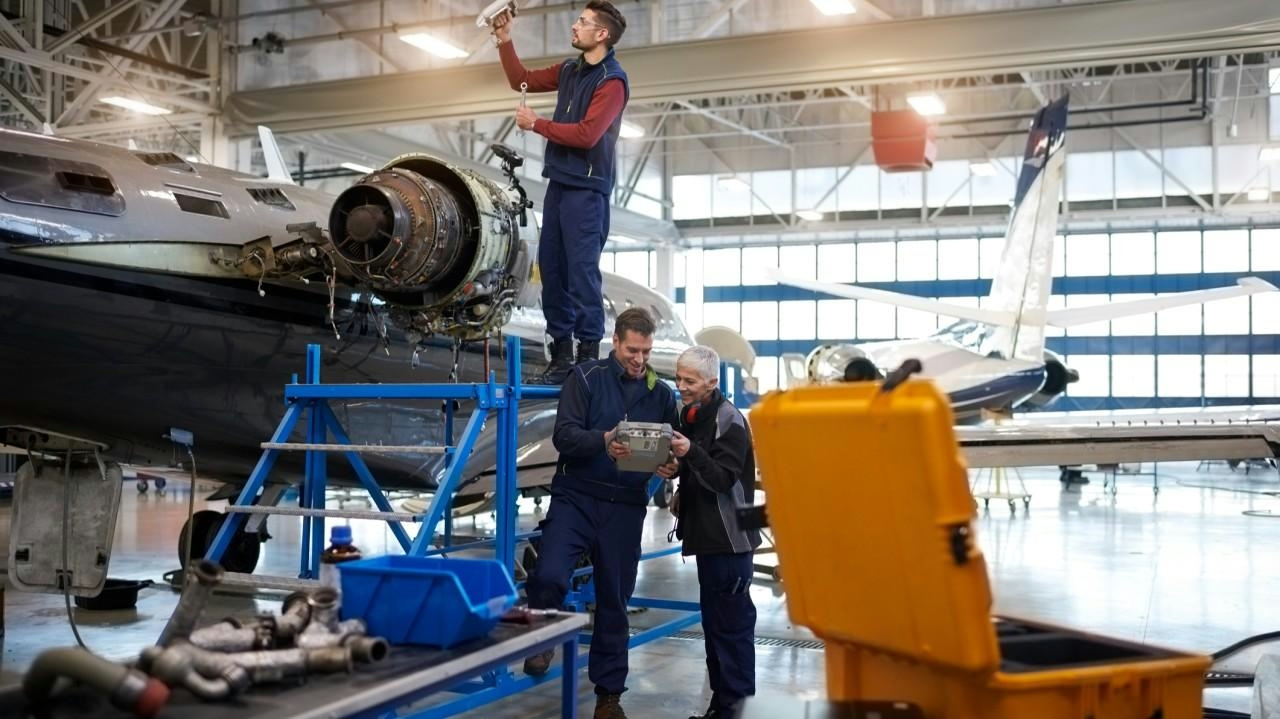
Lubricants for Aircraft Engines: Ensuring Performance and Reliability
The global aviation lubricant market is anticipated to experience steady growth, with forecasts projecting a compound annual growth rate (CAGR) of 6% from 2025 to 2031. This expansion is driven by increasing demand for both commercial and military aircraft, rising air passenger traffic, and the continuous need for high-performance lubricants that enhance aircraft efficiency, safety, and maintenance intervals.
Aviation lubricants play a crucial role in reducing friction, minimizing wear, and ensuring the reliable operation of vital aircraft components. Recent advancements in lubricant technology, particularly in synthetic and bio-based formulations, are contributing significantly to market growth. These innovations are becoming increasingly important as the industry contends with challenges such as supply chain disruptions caused by transportation delays, tariffs, and embargoes that affect the availability of raw materials.
Market Segmentation and Regional Trends
The aviation lubricant market is categorized by type, base oil, application, and aircraft type. Types include hydraulic fluids, engine oils, greases, and other specialized lubricants. Base oils are divided into mineral, synthetic, and bio-based varieties. Applications cover engine systems, hydraulic systems, landing gear, airframes, and other components. The market also distinguishes between commercial and military aircraft sectors.
Regionally, North America maintains a leading position, supported by a strong aerospace manufacturing industry and substantial defense expenditure. Meanwhile, the Asia-Pacific region is projected to register the fastest growth, propelled by expanding commercial aviation fleets and significant investments in airport infrastructure development.
Industry Dynamics and Competitive Landscape
Prominent companies operating in the aviation lubricant market include The Chemours Company, Total SA, Exxon Mobil Corporation, Nye Lubricants Inc, Eastman Chemical Company, Phillips 66 Company, Shell, Park Electrochemical Corp, and Zodiac Aerospace. These firms are prioritizing product innovation, strategic collaborations, and the development of sustainable lubricant solutions to consolidate their market presence. The transition toward synthetic and bio-based lubricants is particularly noteworthy, reflecting increasing regulatory pressures and environmental concerns.
Emerging Challenges and Opportunities
The sector faces several emerging challenges, notably supply chain disruptions that have intensified scrutiny on engine durability. This is especially relevant for advanced engines such as GE Aerospace’s LEAP, which operate under harsh and dusty conditions. In response, competitors are accelerating efforts to develop more durable and efficient lubricants that comply with evolving regulatory standards and preserve market share.
Regulatory developments are also influencing the market landscape. The U.S. Federal Aviation Administration’s (FAA) initiative to phase out leaded aviation petrol by the end of 2030 is expected to affect lubricant compatibility requirements and may lead to higher operating costs for aircraft owners. This regulatory shift is anticipated to stimulate further innovation in lubricant formulations to ensure compatibility and performance with new fuel types.
Additionally, the commercial aerospace parts sector is witnessing increased private equity activity, driven by aging aircraft fleets and persistent supply chain bottlenecks. This trend is likely to impact demand for high-quality lubricants as operators seek to extend aircraft service life and optimize maintenance strategies.
Outlook
With a growing focus on aircraft performance, safety, and sustainability, the aviation lubricant market is positioned for consistent growth through 2031. Technological advancements, rising aircraft deliveries, and regulatory changes are creating new opportunities for manufacturers and suppliers globally. As the industry adapts to these evolving challenges, high-performance lubricants will remain indispensable to ensuring the reliability and efficiency of modern aircraft.

Etihad Airways Suspends Airbus A380 Flights on Key Route

Aditya Birla Group Seeks Approval for Aircraft Leasing in GIFT City

Qatar Airways Highlights Innovation and Connectivity at Arabian Travel Market 2026

Hong Kong's Five-Year Plan Includes Andrew Fan's Aircraft Parts Processing Hub Proposal

ACIA Aero Leasing Delivers ATR72-600 to Air Nostrum

RTX Appoints Jill Albertelli as Head of Pratt & Whitney

TAT Technologies Joins Beyond Aero Hydrogen Aircraft Program

AURAK Study Highlights Barriers to Air Taxi Adoption in Emerging Economies

Xiamen Air Selects Altitude for 787 Maintenance at Heathrow

Etihad and Swissport Extend Global Partnership
