
Orchestrate AI insights into action

Trending
Categories
Lufthansa Group Joins Major Airlines in AI-Driven Aviation Transformation
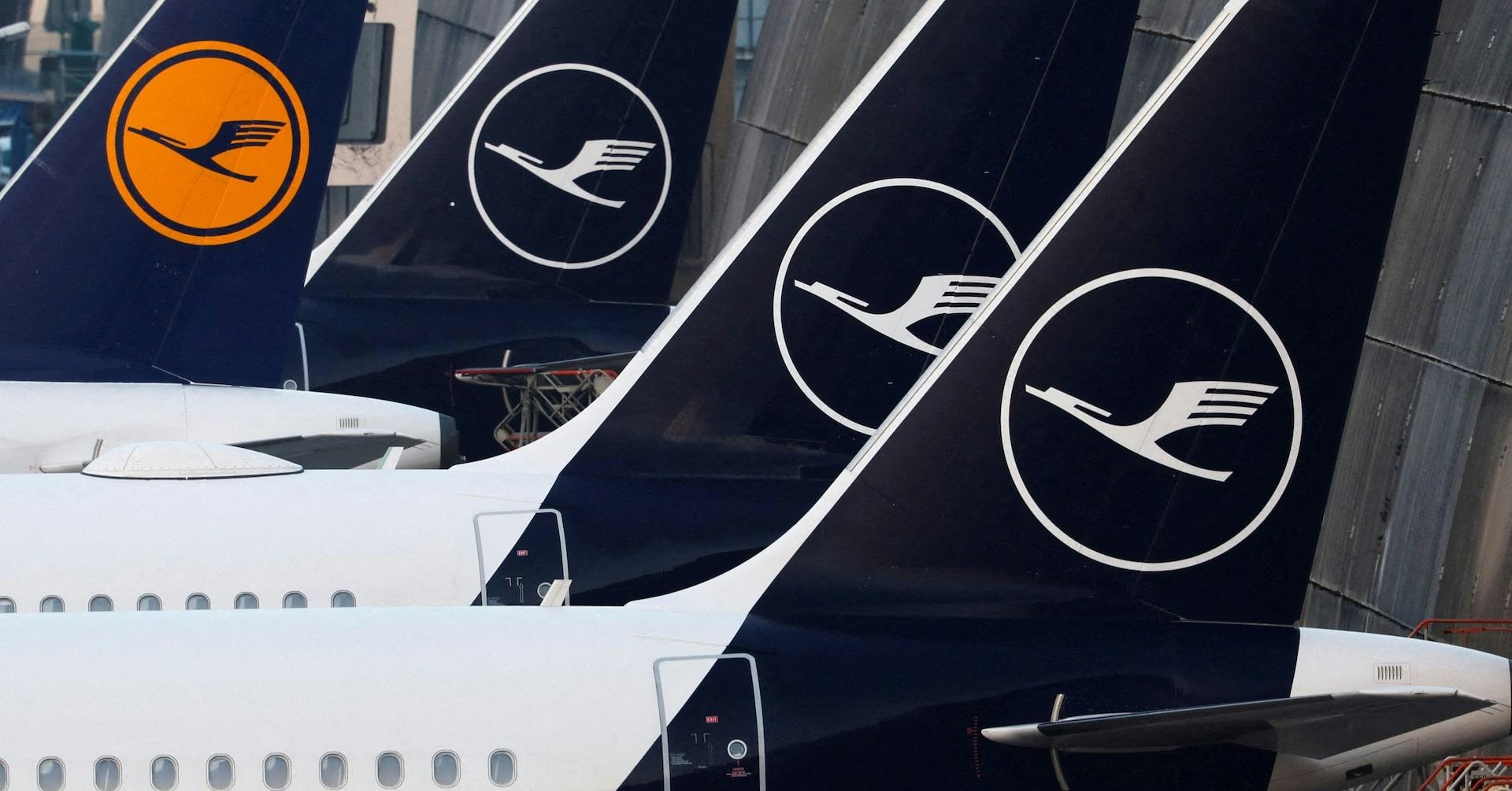
Lufthansa Group Joins Major Airlines in AI-Driven Aviation Transformation
Embracing Artificial Intelligence Across Operations
Lufthansa Group has positioned itself alongside leading carriers such as Air France-KLM, Emirates, American Airlines, and Delta Air Lines in advancing a comprehensive transformation of the aviation industry through artificial intelligence (AI). As airlines worldwide accelerate the integration of AI technologies, the sector is undergoing a strategic shift from traditional manual processes to autonomous management systems aimed at enhancing operational efficiency, reducing delays, and strengthening overall resilience.
Distinguished as one of the most proactive adopters, Lufthansa Group has embedded AI extensively across customer service, predictive maintenance, and network-wide scheduling. These sophisticated systems enable the airline to respond to operational disruptions in real time, thereby minimizing cascading delays throughout its international network. The group’s AI capabilities also extend to its subsidiaries, including Swiss, Austrian Airlines, and ITA Airways, facilitating the optimization of millions of customer interactions and maintenance workflows.
Industry experts emphasize that the deployment of predictive maintenance AI and autonomous operational platforms is becoming indispensable as airlines contend with surging passenger demand, tighter aircraft utilization, and increasing pressure to improve punctuality. AI-driven systems now possess the ability to forecast technical failures, automate disruption recovery, and coordinate airport operations with minimal human intervention. The advent of “Agentic AI” represents a critical milestone, empowering intelligent systems to independently reassign gates, reorganize crew schedules, and notify passengers proactively before disruptions escalate.
Challenges Amidst AI Integration and Operational Adjustments
Despite its advances in AI-driven transformation, Lufthansa Group faces significant challenges. The airline recently announced the removal of Lufthansa CityLine’s capacity and the grounding of six widebody aircraft as part of efforts to address profitability concerns amid rising fuel costs and geopolitical instability. These measures, coupled with a reduction of 20,000 flights, have drawn attention to the ongoing difficulties the industry faces regarding sustainability and climate impact. Market analysts suggest that such operational cutbacks may invite scrutiny of Lufthansa’s environmental commitments, while competitors like KLM confront similar pressures to consolidate and adapt to evolving market conditions.
The growing reliance on data-driven decision-making highlights the critical importance of robust data coordination to ensure the success of these substantial IT investments. With global load factors projected to reach record highs in 2026, AI integration is widely regarded as foundational to airline competitiveness, profitability, and operational stability. Aviation specialists contend that the industry is entering a new era in which AI systems will independently manage scheduling, crew coordination, maintenance planning, and disruption recovery—potentially redefining the future landscape of international air travel.
Analysts warn that airlines slow to adopt AI technologies may face difficulties maintaining profitability and punctuality, encountering increased delays, higher maintenance costs, and greater customer dissatisfaction. As Lufthansa Group and its peers continue to advance AI-driven innovation, the aviation sector stands on the cusp of its most significant operational revolution in modern history—one that will challenge the equilibrium between technological progress, financial sustainability, and environmental responsibility.

Etihad Airways Suspends Airbus A380 Flights on Key Route

Aditya Birla Group Seeks Approval for Aircraft Leasing in GIFT City

Qatar Airways Highlights Innovation and Connectivity at Arabian Travel Market 2026

Hong Kong's Five-Year Plan Includes Andrew Fan's Aircraft Parts Processing Hub Proposal

ACIA Aero Leasing Delivers ATR72-600 to Air Nostrum

RTX Appoints Jill Albertelli as Head of Pratt & Whitney

TAT Technologies Joins Beyond Aero Hydrogen Aircraft Program

AURAK Study Highlights Barriers to Air Taxi Adoption in Emerging Economies

Xiamen Air Selects Altitude for 787 Maintenance at Heathrow

Etihad and Swissport Extend Global Partnership
