
Orchestrate AI insights into action

Trending
Categories
MagniX Advances NASA Partnership to Electrify Aviation Amid Budget Challenges
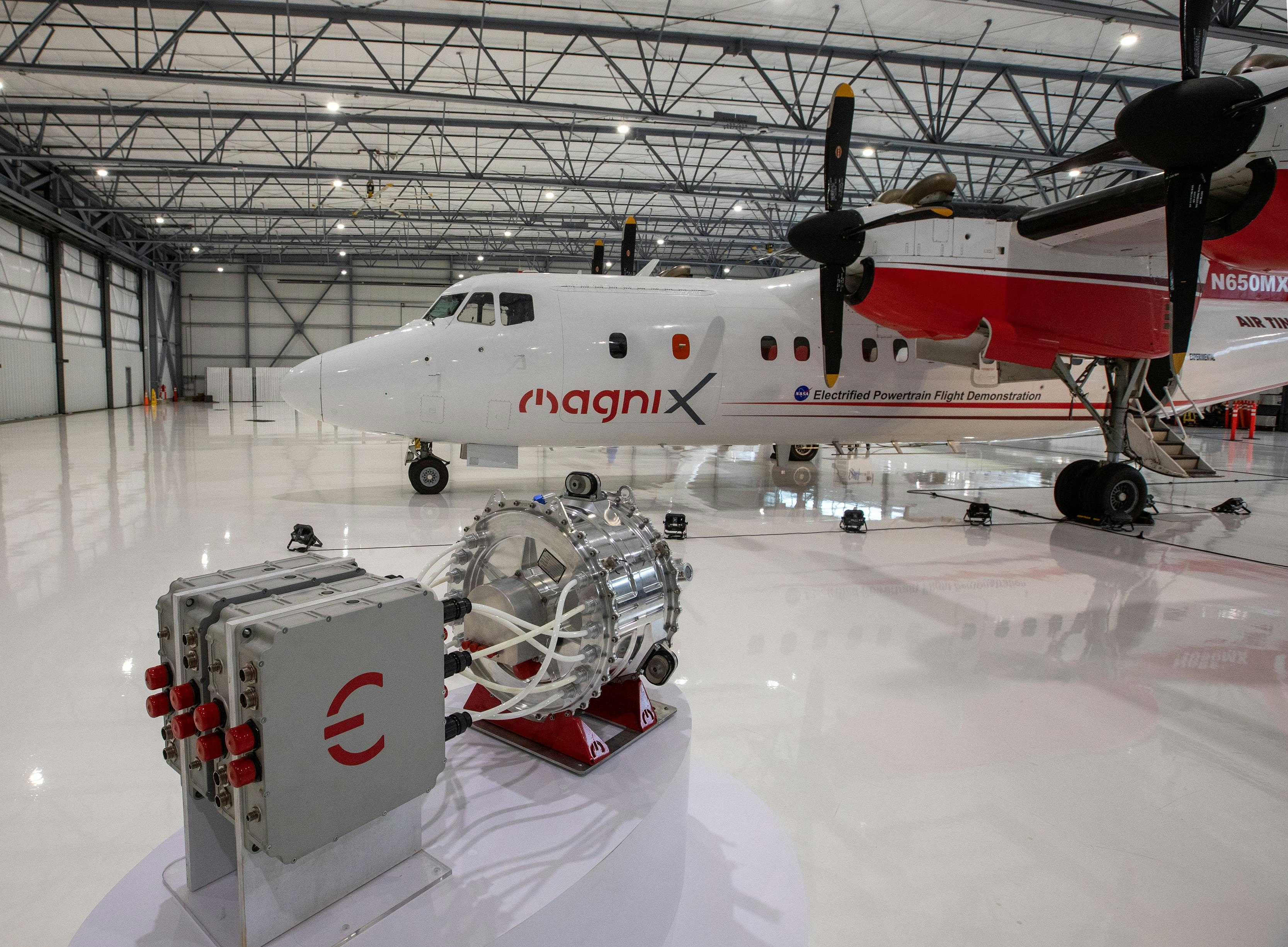
MagniX Advances NASA Partnership to Electrify Aviation Amid Budget Challenges
Navigating Financial Uncertainty in Aeronautics Research
The momentum toward green aviation is accelerating, yet significant challenges persist, particularly in the face of proposed federal budget cuts that threaten NASA’s aeronautics research programs. Among these initiatives is the Electrified Powertrain Flight Demonstration (EPFD), a critical project aimed at advancing sustainable aviation technologies. The potential reduction in funding has raised concerns throughout the aerospace sector, as it could delay or even halt projects essential to the development of electric propulsion systems.
MagniX, a leading company in electric propulsion, remains committed to its collaboration with NASA despite these financial uncertainties. The firm’s work on hybrid-electric propulsion demonstrators is integral to the EPFD’s objectives. However, the looming budget constraints cast doubt on the future pace and scale of these efforts. Should funding be curtailed, the progress toward cleaner, more efficient aircraft could be significantly impeded, undermining broader environmental and economic goals.
Market and Competitive Implications
Investor confidence has been shaken by the possibility of NASA scaling back its focus on advanced air mobility and discontinuing support for nuclear thermal propulsion technology. This uncertainty threatens to affect MagniX’s ability to secure investment and sustain its competitive edge in a rapidly evolving market. Meanwhile, competitors such as Electra Aero are closely monitoring the situation, poised to exploit any openings in the hybrid-electric propulsion space. The shifting funding landscape is intensifying competition, as companies vie to lead the transition toward sustainable aviation.
The High Stakes of Electrifying Aviation
Despite these obstacles, the imperative to electrify aviation remains compelling. Electric propulsion systems promise substantial reductions in carbon emissions, addressing urgent climate challenges while fostering economic growth through new employment and business opportunities. By reducing dependence on fossil fuels, these technologies offer a cleaner, quieter, and more cost-effective alternative to conventional jet engines.
The transformative potential of electric propulsion extends beyond aircraft design, with the capacity to reshape the global aviation industry. For MagniX and its partners, the path forward may be fraught with fiscal challenges, but their commitment to innovation and sustainability continues to drive progress toward a greener future for aviation.

Etihad Airways Suspends Airbus A380 Flights on Key Route

Aditya Birla Group Seeks Approval for Aircraft Leasing in GIFT City

Qatar Airways Highlights Innovation and Connectivity at Arabian Travel Market 2026

Hong Kong's Five-Year Plan Includes Andrew Fan's Aircraft Parts Processing Hub Proposal

ACIA Aero Leasing Delivers ATR72-600 to Air Nostrum

RTX Appoints Jill Albertelli as Head of Pratt & Whitney

TAT Technologies Joins Beyond Aero Hydrogen Aircraft Program

AURAK Study Highlights Barriers to Air Taxi Adoption in Emerging Economies

Xiamen Air Selects Altitude for 787 Maintenance at Heathrow

Etihad and Swissport Extend Global Partnership
