
Orchestrate AI insights into action

Trending
Categories
MAI Cargo Convertiplane Features Eight Engines and 500 kg Payload Capacity
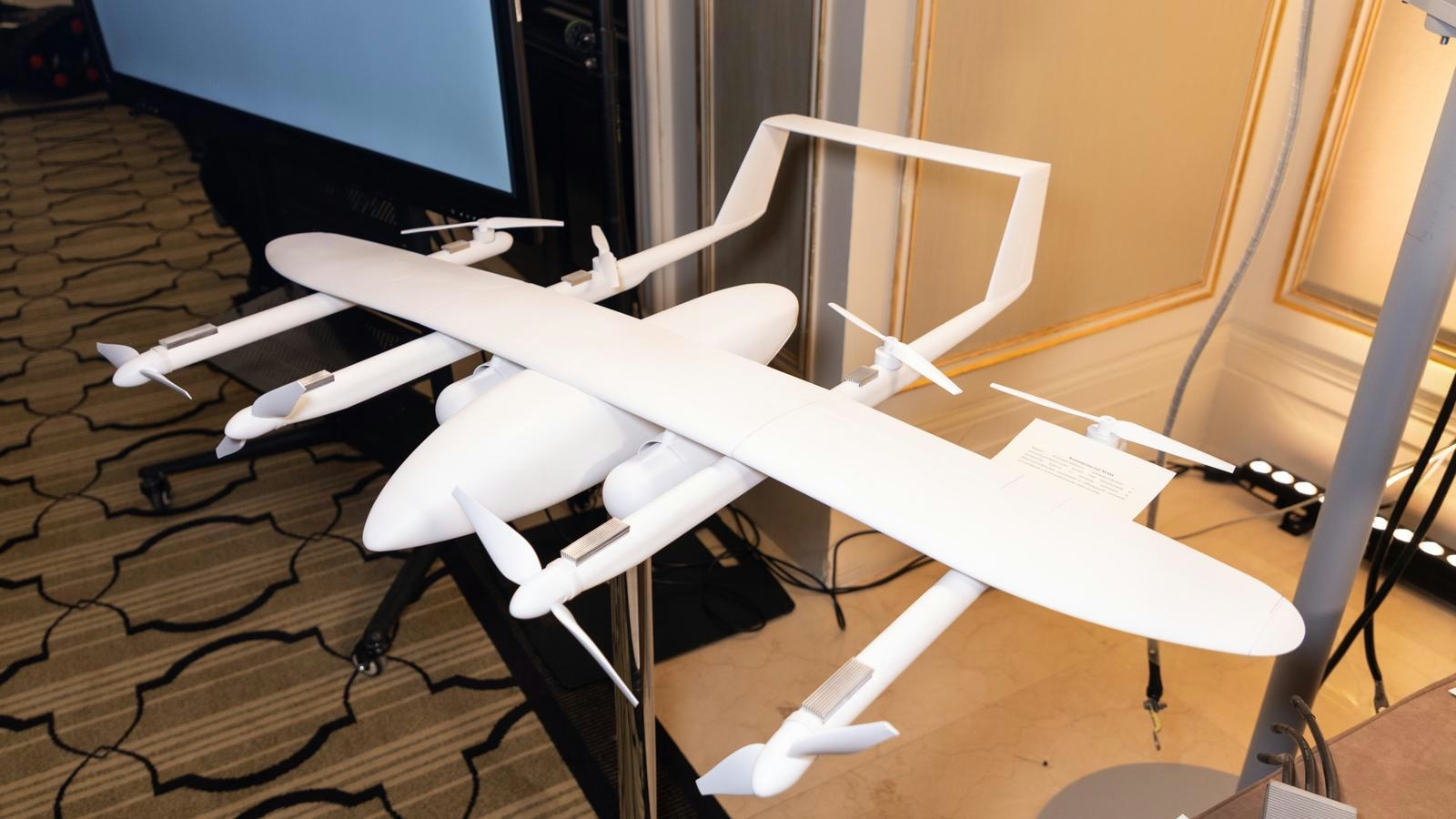
MAI Introduces Eight-Engine Cargo Convertiplane with 500 kg Payload Capacity
The Moscow Aviation Institute (MAI) has unveiled a new unmanned cargo convertiplane designed to carry payloads exceeding 500 kilograms. This innovative aircraft is distinguished by its eight-engine configuration, featuring four rotatable units that enable vertical take-off and landing (VTOL) alongside efficient horizontal flight. This hybrid design sets the convertiplane apart from traditional fixed-wing aircraft and standard multicopters, combining the operational flexibility of both.
Advanced Propulsion and Design Features
The convertiplane’s propulsion system is notably sophisticated, with eight engines distributed across the airframe. Two engine nacelles equipped with hybrid power plants are integrated into the wings, enhancing the aircraft’s performance. The rotatable engines facilitate a seamless transition from vertical ascent to forward flight, merging the advantages of multicopters’ VTOL capabilities with the speed and range typical of fixed-wing aircraft.
With a payload capacity surpassing 500 kilograms, the MAI convertiplane targets a market segment beyond that of typical small commercial quadcopters and multicopters. It retains the critical benefit of VTOL operation, eliminating the need for runways, while offering significantly greater cargo capacity suitable for logistics and transport applications.
Challenges and Industry Implications
Despite its promising design, the convertiplane faces several challenges. The complexity of operating eight engines is expected to increase both development and maintenance costs, which may affect its commercial viability. Regulatory approval will be a crucial hurdle, as aviation authorities adapt to this emerging class of cargo convertiplanes. Furthermore, the integration of advanced avionics will be essential to ensure safe and efficient autonomous operations.
Industry experts anticipate that traditional aviation stakeholders may approach the new platform with skepticism, questioning its reliability and cost-effectiveness. Meanwhile, competitors in the electric vertical takeoff and landing (eVTOL) and cargo drone sectors may respond by accelerating their own development programs, forming strategic partnerships, or pursuing acquisitions to strengthen their market positions in this rapidly evolving field.
MAI has yet to release detailed information regarding the convertiplane’s first flight, operational range, speed, or the technical specifications of its power plant. As the project progresses, it will attract close attention from industry insiders and potential customers seeking advanced solutions for cargo transport.

Etihad and Swissport Extend Global Partnership

Sepehran Airlines B737 Returns to Mashhad After Tyre and Engine Issues

Etihad Deploys Widebody Fleet to Meet Strong Demand

Korean Air Finalizes $36.2 Billion Deal with Boeing

Australia’s RFDS Queensland Section Orders Six King Air 260Cs

Korean Air Finalizes Order for 103 Boeing Jets and Engines

Embraer E195-E2 Features Distinctive Engine Placement Among Regional Jets

What Passengers Can Expect on Boeing’s New 777X Jet

How Ethiopian Airlines Became Africa’s Leading Carrier Amid Gulf Competition

Joby Aviation Extends Autonomous Flight Capabilities with Cross-Country Tour
