
Orchestrate AI insights into action

Trending
Categories
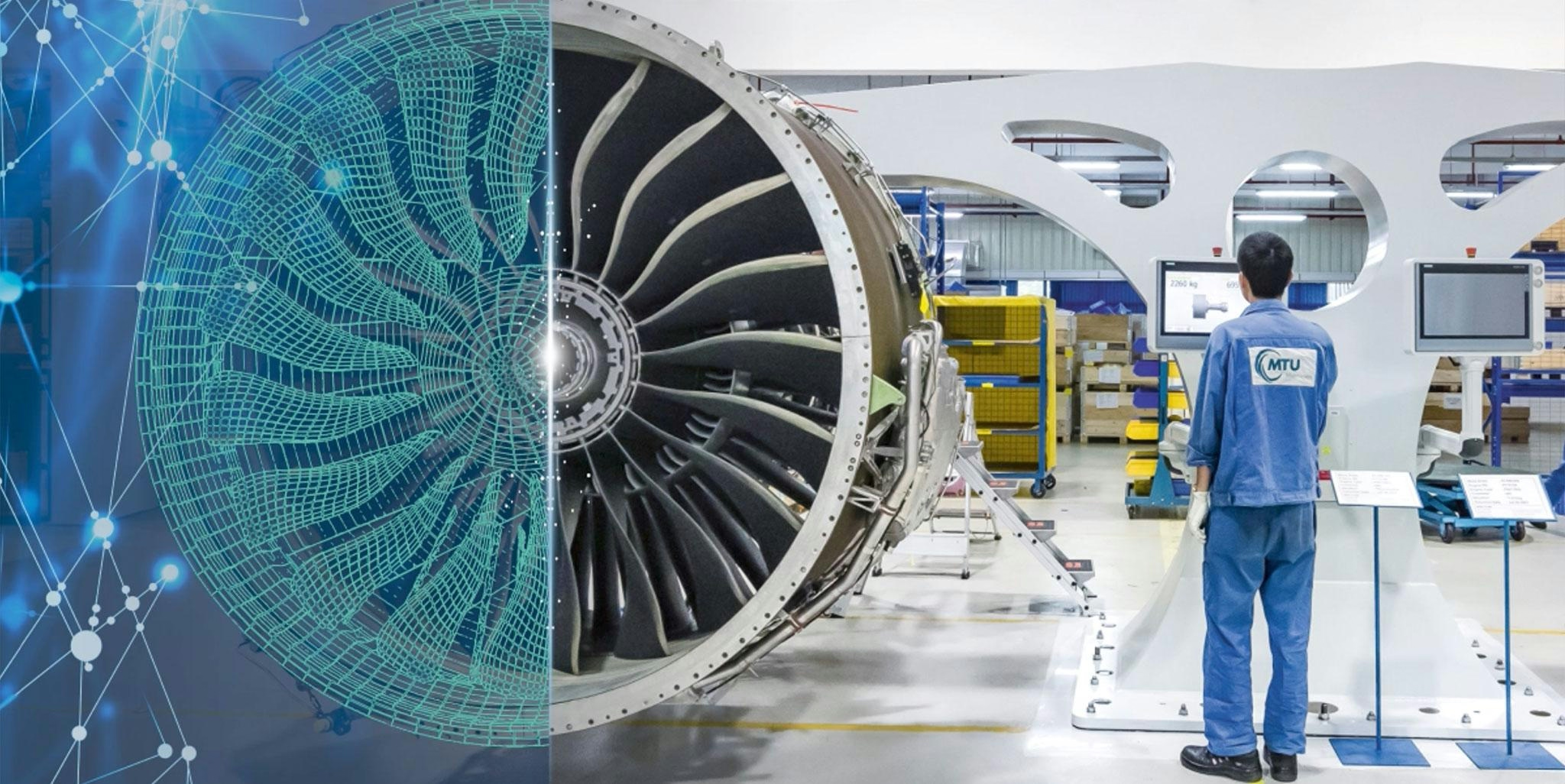
MTU Aero Engines and the Future of Aviation
MTU Aero Engines and the Future of Aviation
MTU Aero Engines is increasingly establishing itself as a central figure in the evolution of aviation technology, spearheading advancements that range from high-efficiency jet engines to next-generation maintenance solutions and hydrogen-ready propulsion systems. As the aviation sector undergoes a profound transformation, airlines are under growing pressure to reduce emissions, lower operating costs, and ensure fleet reliability amid persistent supply chain challenges. In this shifting landscape, engine manufacturers have emerged as critical influencers in both commercial and military aviation.
While industry giants such as Airbus and Boeing often capture public attention, MTU Aero Engines operates at the core of the aviation ecosystem, powering and servicing a substantial portion of the global aircraft fleet. Unlike companies that market directly to consumers, MTU functions as a comprehensive technology and services provider, encompassing engine design, manufacturing, and lifecycle support for some of the most vital propulsion systems worldwide.
A Layered Approach to Propulsion
MTU’s impact is founded on a multi-tiered product strategy. At the forefront is its role as a key risk- and revenue-sharing partner in advanced engine programs, particularly within the narrow-body aircraft segment. Notably, MTU contributes to Pratt & Whitney’s geared turbofan (GTF) family, which powers aircraft such as the Airbus A320neo, A220, and Embraer E2. These engines have achieved significant fuel-burn reductions compared to earlier models, with MTU responsible for designing and producing critical components including high-speed low-pressure turbines and sections of the high-pressure compressor.
In addition to its involvement in cutting-edge engines, MTU maintains a strong presence in legacy programs. The V2500 engine, widely used in earlier A320-family aircraft, continues to generate steady revenue through both manufacturing and ongoing maintenance services. Beyond narrow-body aircraft, MTU extends its expertise to wide-body engine collaborations, contributing modules and support to powerplants such as the GE9X and Rolls-Royce Trent series, thereby securing a foothold in the long-haul market.
Maintenance as a Strategic Platform
A cornerstone of MTU’s business model is its extensive global maintenance, repair, and overhaul (MRO) network, which includes specialized facilities across Europe, North America, and Asia. This high-margin, recurring-revenue platform positions MTU not merely as a manufacturer but as a vital service provider, addressing airlines’ critical demands for operational reliability and efficiency. The company’s MRO capabilities underpin its long-term relationships with customers and reinforce its role in sustaining fleet performance.
Navigating a Competitive and Evolving Market
Looking forward, MTU Aero Engines confronts a complex and rapidly evolving market environment. The commercial aircraft fleet is projected to double by 2044, driving unprecedented demand for engine replacements and the development of sustainable propulsion technologies. Concurrently, the competitive landscape is intensifying. Industry consolidation is underway, with major players like Boeing and Airbus acquiring key suppliers such as Spirit AeroSystems to enhance their aerostructure and engine capabilities, thereby reshaping market dynamics.
MTU also faces formidable rivals. Rolls-Royce has demonstrated strong market momentum, underscored by a recent surge in stock value and significant defense contracts. Meanwhile, GE Aerospace continues to set high standards with its focus on durability and maintenance excellence for its LEAP engine family. Amid these pressures, regulatory demands for decarbonization and the aviation sector’s shift toward fuel-efficient aircraft place sustainability at the forefront of industry priorities. MTU’s investments in sustainable aviation technologies are therefore essential to preserving its competitive edge.
Despite these challenges, MTU Aero Engines is positioning itself as an indispensable partner for the future of aviation. Its combination of engineering expertise, global service infrastructure, and commitment to innovation ensures that it remains a key player as the industry advances toward greater efficiency and sustainability. Investors and industry observers alike are closely monitoring MTU’s progress as it navigates this transformative period.
Comments

Etihad Airways Suspends Airbus A380 Flights on Key Route

Aditya Birla Group Seeks Approval for Aircraft Leasing in GIFT City

Qatar Airways Highlights Innovation and Connectivity at Arabian Travel Market 2026

Hong Kong's Five-Year Plan Includes Andrew Fan's Aircraft Parts Processing Hub Proposal

ACIA Aero Leasing Delivers ATR72-600 to Air Nostrum

RTX Appoints Jill Albertelli as Head of Pratt & Whitney

TAT Technologies Joins Beyond Aero Hydrogen Aircraft Program

AURAK Study Highlights Barriers to Air Taxi Adoption in Emerging Economies

Xiamen Air Selects Altitude for 787 Maintenance at Heathrow

Etihad and Swissport Extend Global Partnership
