
Orchestrate AI insights into action

Trending
Categories
NASA Study Points to Smoother Air Taxi Rides
NASA Study Points to Smoother Air Taxi Rides
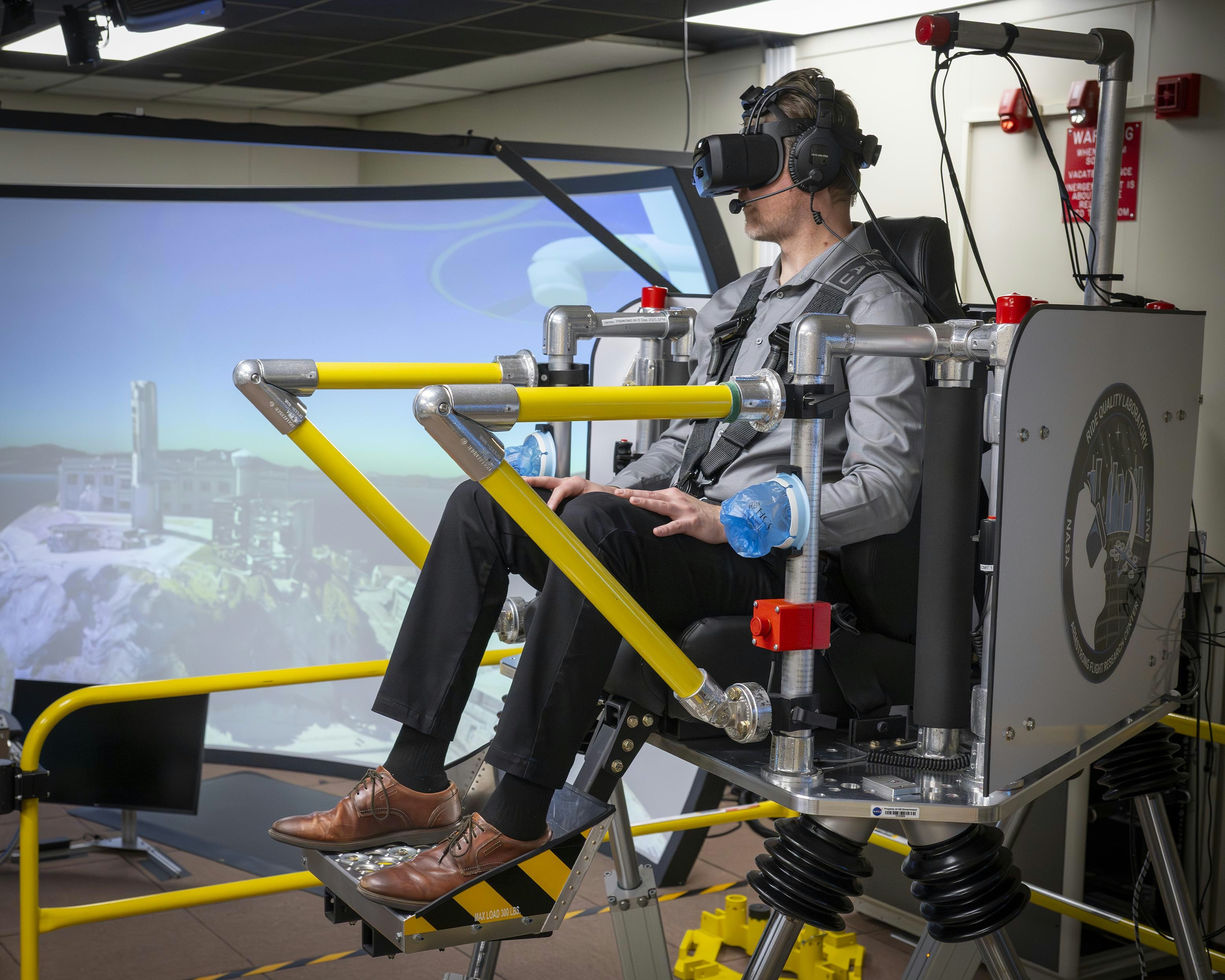
As the air taxi industry prepares for commercial deployment, NASA has conducted a comprehensive study to better understand passenger comfort during urban air travel. Air taxis—small, vertical-takeoff-and-landing aircraft intended for short trips within cities—face significant challenges in gaining public acceptance, with ride quality emerging as a critical factor. At NASA’s Armstrong Flight Research Center in Edwards, California, researchers have employed a virtual reality passenger ride quality simulator to investigate how sudden aircraft motions impact traveler experience.
Investigating Passenger Comfort Through Simulation
Volunteers, including NASA employees, participated in a series of simulated flights designed to replicate the abrupt shifts and tilts that air taxis might encounter in operation. These virtual experiences involved four levels of aircraft motion, encompassing pitching, rolling, tilting, and rapid climbs or dives on routes such as the virtual journey between downtown San Francisco and Alcatraz Island. Participants were asked to rate their comfort and indicate their willingness to fly under similar real-world conditions.
The study revealed that sudden and sharp movements—particularly pitching, rolling, and rapid acceleration—can significantly diminish passenger comfort. While some individuals tolerated moderate motion changes, others found even these unsettling. These findings suggest that contemporary travelers may have lower tolerance for rough flight conditions compared to airline passengers of previous decades, underscoring the importance of smooth ride quality for the success of air taxis.
Implications for Air Taxi Design and Industry Development
Using the data collected, NASA developed models that correlate specific aircraft motions with passenger comfort and willingness to fly. These models are expected to inform future air taxi design and operational strategies, enabling manufacturers and operators to identify and mitigate maneuvers that could be perceived as too jarring. Curtis Hanson, lead researcher at NASA Armstrong, emphasized the significance of these insights, stating that the study helps establish passenger comfort thresholds for aggressive flight motions and supports predictions about how air taxis should operate to ensure a pleasant experience.
The research arrives amid ongoing challenges for the air taxi sector, including regulatory approval, safety considerations, and technological constraints. Consumer acceptance, driven largely by comfort and perceived advantages over traditional transportation, will be crucial in shaping market dynamics. In response, industry players may intensify research and development efforts or pursue strategic partnerships to enhance their offerings.
NASA’s findings have the potential to influence aircraft design, operational protocols, and industry standards, thereby facilitating the emergence of air taxis as a viable and attractive mode of urban transportation in the near future.

Etihad Deploys Widebody Fleet to Meet Strong Demand

Korean Air Finalizes $36.2 Billion Deal with Boeing

Australia’s RFDS Queensland Section Orders Six King Air 260Cs

Korean Air Finalizes Order for 103 Boeing Jets and Engines

Embraer E195-E2 Features Distinctive Engine Placement Among Regional Jets

What Passengers Can Expect on Boeing’s New 777X Jet

How Ethiopian Airlines Became Africa’s Leading Carrier Amid Gulf Competition

Joby Aviation Extends Autonomous Flight Capabilities with Cross-Country Tour
Strengthening Europe's Aviation Supply Chain Amid Uncertainty
The Evolution of the Aircraft Maintenance Engineer Role
