
Orchestrate AI insights into action

Trending
Categories
New Competitors Transforming the Private Aircraft MRO Industry

New Competitors Transforming the Private Aircraft MRO Industry
The private aircraft Maintenance, Repair, and Overhaul (MRO) sector is undergoing significant transformation, driven by shifting industry demands, technological progress, and the emergence of new market entrants. A recent report published on ResearchAndMarkets.com highlights that the global private aircraft MRO market, valued at USD 29.44 billion in 2025, is expected to expand to USD 45.47 billion by 2032, reflecting a compound annual growth rate of 6.4%.
Market Drivers: Wealth Creation and Rising Demand
One of the primary forces behind this expansion is the influx of new wealth generated by technology ventures, particularly AI startups and aerospace companies such as SpaceX. This surge in capital has stimulated increased demand for private jets, fundamentally altering the MRO landscape. Market brokers have observed heightened activity, with firms like Jefferies expressing a more optimistic outlook on the sector’s prospects. The robust demand environment has attracted a wave of new competitors, intensifying rivalry and challenging established industry players.
In response, incumbent companies are adopting aggressive strategies to defend and grow their market share. For example, AAR Corp. is pursuing acquisitions and leveraging its supply chain capabilities to capitalize on the momentum within the aerospace aftermarket. This competitive environment is fostering innovation and prompting the evolution of service offerings across the sector.
Strategic Evolution and Digital Transformation
The private aircraft MRO industry is evolving beyond traditional repair and maintenance services, increasingly emphasizing strategic uptime, regulatory compliance, and operational excellence—standards historically associated with commercial aviation. Digital maintenance solutions have become a core expectation, with providers integrating electronic records, aircraft health monitoring systems, and predictive analytics into their service models.
Key developments include the adoption of integrated MRO software platforms and digital task cards, the enhancement of data pipelines to support real-time decision-making, and the modernization of cabin and avionics systems to meet growing connectivity and compliance requirements. These technological advancements enable providers to offer comprehensive maintenance and modification packages, thereby differentiating their services in an increasingly crowded marketplace.
Workforce and Supply Chain Challenges
The industry is also confronting workforce challenges as experienced technicians retire, leading to labor shortages. In response, companies are investing in training programs and mobile maintenance solutions designed to optimize hangar capacity and operational efficiency. Concurrently, resilient supply chains and strategic sourcing have become critical priorities, particularly as providers navigate ongoing disruptions amid rising demand.
Impact of U.S. Tariffs and Contracting Adjustments
The introduction of U.S. tariffs in 2025 is further reshaping the private aircraft MRO market. Although these tariffs do not always directly target aviation parts, they have influenced material costs and prompted providers to adopt a more comprehensive approach to total-cost analysis. This has led to a reevaluation of inventory management strategies and the implementation of clearer contract terms, including escalation clauses and surcharge mechanisms, to mitigate potential supply chain disruptions.
Outlook
With new wealth driving demand, accelerated digital transformation, and intensifying competitive pressures, the private aircraft MRO industry is positioned for sustained growth and innovation. Market participants who effectively leverage these trends and adapt to the evolving environment will be best placed to capitalize on emerging opportunities and enhance value within this dynamic sector.

Etihad Deploys Widebody Fleet to Meet Strong Demand
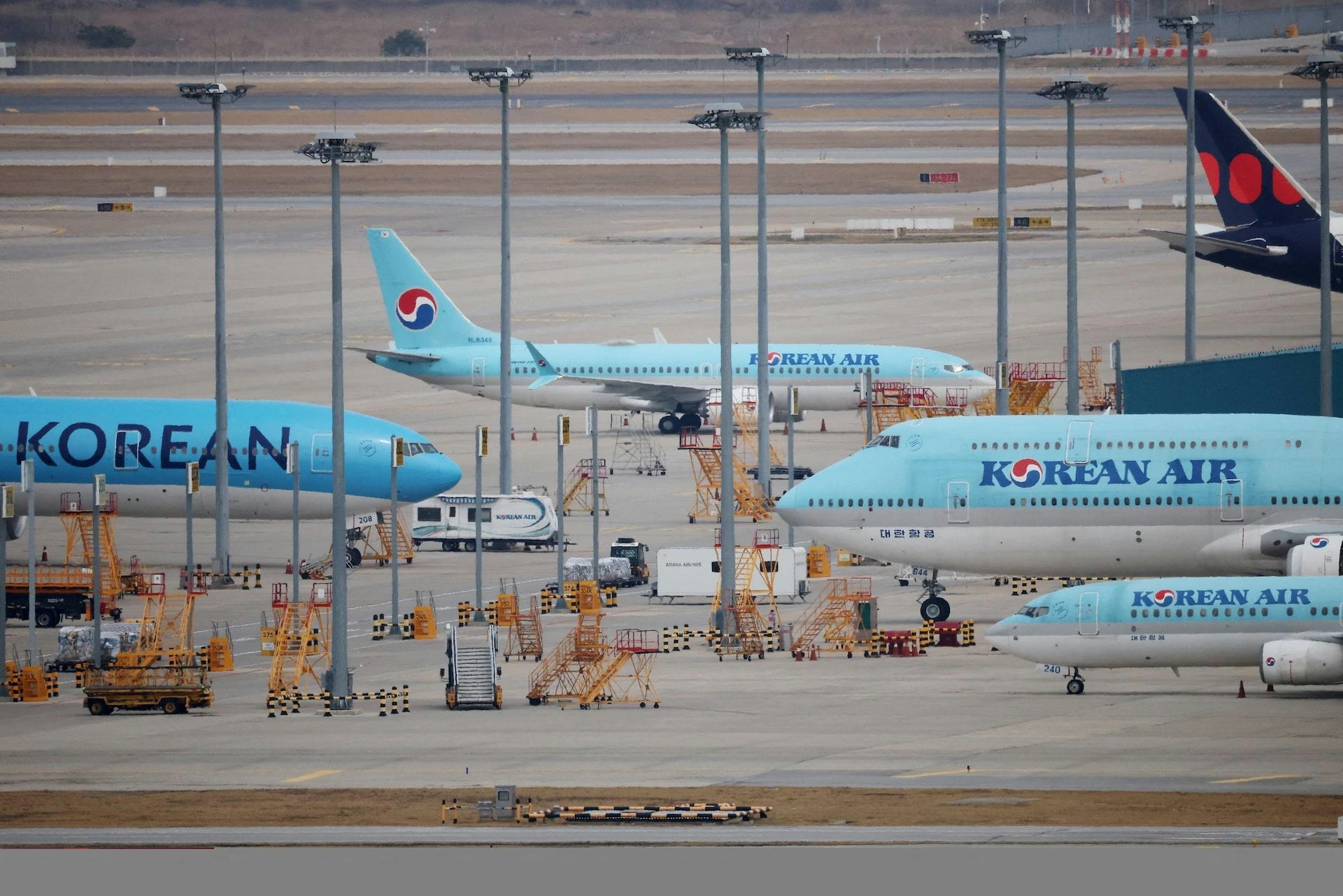
Korean Air Finalizes $36.2 Billion Deal with Boeing

Australia’s RFDS Queensland Section Orders Six King Air 260Cs

Korean Air Finalizes Order for 103 Boeing Jets and Engines

Embraer E195-E2 Features Distinctive Engine Placement Among Regional Jets

What Passengers Can Expect on Boeing’s New 777X Jet

How Ethiopian Airlines Became Africa’s Leading Carrier Amid Gulf Competition

Joby Aviation Extends Autonomous Flight Capabilities with Cross-Country Tour

Strengthening Europe's Aviation Supply Chain Amid Uncertainty

The Evolution of the Aircraft Maintenance Engineer Role
