
Orchestrate AI insights into action

Trending
Categories
NTSB: Engine Debris Broke Ryanair Window, Causing Passenger Injury
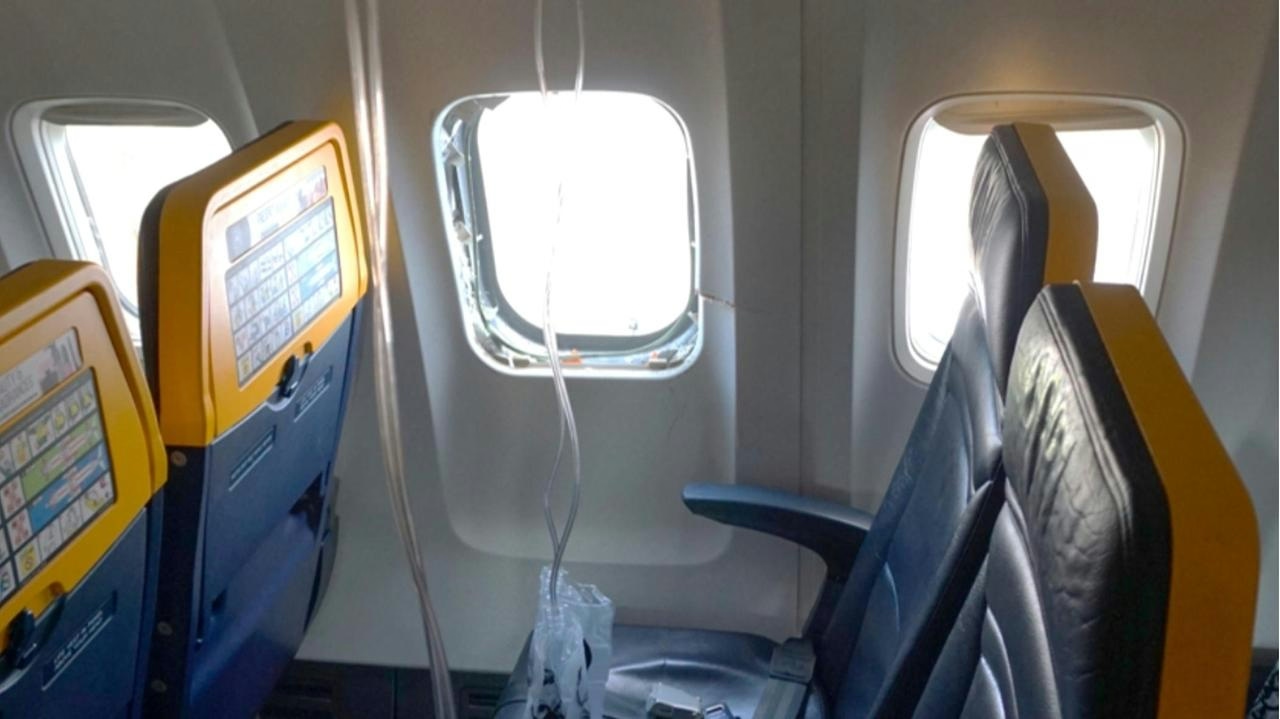
NTSB Report Details Engine Debris Incident on Ryanair Flight
A preliminary report released by the U.S. National Transportation Safety Board (NTSB) has revealed that engine debris shattered a window on a Ryanair-operated flight shortly after takeoff from Thessaloniki, Greece, last month. The incident caused a passenger’s head to be partially sucked through the broken window before fellow travelers intervened to pull him back inside the cabin.
Incident Overview and Passenger Injuries
The event occurred on July 10, 2026, aboard a Boeing 737-8AS operated by Malta Air on behalf of Ryanair. According to the NTSB, a fan blade in the aircraft’s right engine (No. 2) separated, sending fragments through the engine casing. These fragments punctured the fuselage in multiple locations and shattered a cabin window, leading to a rapid loss of cabin pressure. The affected passenger, a 61-year-old seated by the damaged window, sustained neck and shoulder injuries as well as friction burns. Passengers nearby reacted quickly, assisting in pulling the man back into the aircraft. Flight attendants reported intense vibrations, followed by smoke or fog filling the cabin and the deployment of oxygen masks. The injured passenger was relocated to another seat where a doctor onboard provided medical aid. Other passengers used a metal box to help block the opening until the plane made an emergency landing back at Thessaloniki Airport.
Investigation Findings and Maintenance History
Investigators found bird remains inside the damaged engine, indicating a possible bird strike during takeoff. However, the precise cause of the fan blade failure remains undetermined. The investigation was transferred to the NTSB by Greek authorities under international aviation protocols. Maintenance records reviewed by the NTSB show that the right engine’s fan blades underwent ultrasonic inspections in May 2026 and November 2025, with no damage detected. Despite this, flight crews had reported four suspected bird strikes involving the same engine over the previous year, with bird remains confirmed after two incidents.
Aviation safety experts emphasize that while required maintenance appears to have been conducted on schedule, investigators are expected to scrutinize the inspection procedures closely. They will also assess whether the repeated bird strikes may have contributed to undetected damage that led to the fan blade failure.
Industry Implications and Ongoing Investigation
The incident has drawn increased attention from aviation safety authorities and may expose Ryanair and Malta Air to potential legal action from injured passengers. Industry analysts suggest that the event could affect Ryanair’s reputation, potentially resulting in higher insurance premiums and more rigorous oversight of its maintenance practices. Competitors may also leverage the incident to highlight their own safety records and operational standards.
Jeff Guzzetti, a former investigator with the NTSB and Federal Aviation Administration, commented, “We know what happened and even to some extent why it happened, but there are still unanswered questions that the NTSB will get at.”
The NTSB’s investigation into the incident remains ongoing.

Etihad Airways Suspends Airbus A380 Flights on Key Route

Aditya Birla Group Seeks Approval for Aircraft Leasing in GIFT City

Qatar Airways Highlights Innovation and Connectivity at Arabian Travel Market 2026

Hong Kong's Five-Year Plan Includes Andrew Fan's Aircraft Parts Processing Hub Proposal

ACIA Aero Leasing Delivers ATR72-600 to Air Nostrum

RTX Appoints Jill Albertelli as Head of Pratt & Whitney

TAT Technologies Joins Beyond Aero Hydrogen Aircraft Program

AURAK Study Highlights Barriers to Air Taxi Adoption in Emerging Economies

Xiamen Air Selects Altitude for 787 Maintenance at Heathrow

Etihad and Swissport Extend Global Partnership
