
Orchestrate AI insights into action

Trending
Categories
PD-35 Gas Generator Demonstrates Cooler Operation Than GE9X
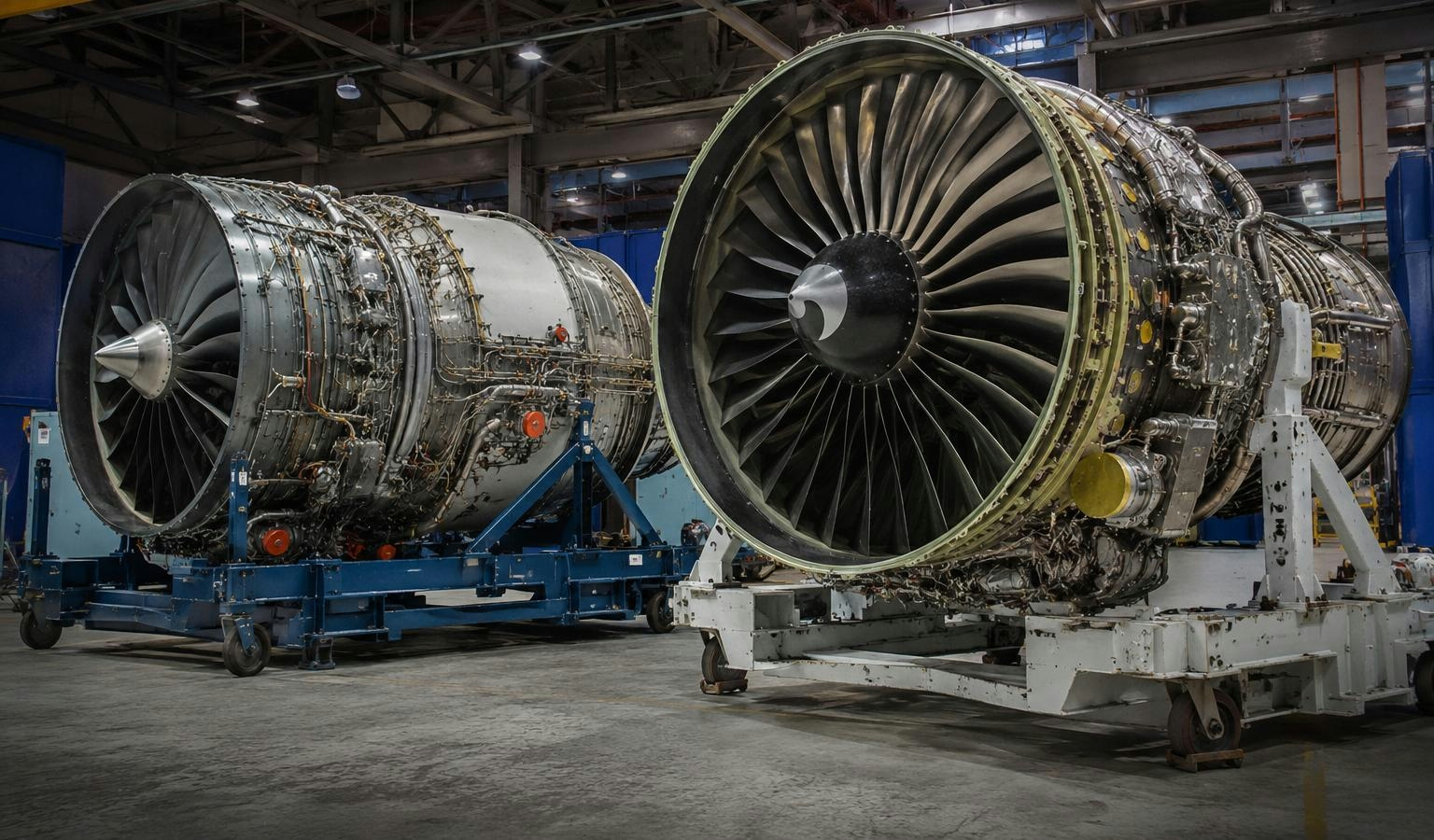
PD-35 Gas Generator Demonstrates Cooler Operation Than GE9X
The Russian-designed PD-35 engine operates with a gas temperature before the turbine of approximately 2000 K (around 1727 °C), establishing it as a formidable contender in the large turbofan market. In contrast, General Electric’s latest flagship engine, the GE9X—developed for the Boeing 777X—runs at even higher hot section temperatures, though precise figures have not been publicly disclosed. This disparity in operating temperatures reflects not only differing engineering philosophies but also carries broader implications for engine efficiency, durability, and competitive positioning within the aerospace industry.
Engineering Choices and Performance Margins
The PD-35 is designed to deliver 35,000 kgf of thrust, featuring a 3.1-meter fan diameter, a compression ratio of 53:1, and an 11:1 bypass ratio. United Engine Corporation (ODK) aims for the PD-35 to achieve cruise fuel consumption 10 to 15 percent lower than earlier Russian engines such as the PS-90A, targeting performance on par with Western engines from the 2010s. Typically, attaining higher efficiency necessitates increasing the temperature before the turbine, which in turn imposes greater thermal stress on engine components. Each incremental rise in temperature demands advancements in heat-resistant alloys, protective coatings, and sophisticated cooling systems to maintain reliability.
By comparison, the GE9X pushes the boundaries with a thrust rating of 47.6 tons and a larger 3.4-meter fan. Its 11-stage high-pressure compressor achieves a pressure ratio of 27:1, contributing to a total pressure ratio near 60:1. A distinguishing feature of the GE9X is its use of ceramic matrix composites (CMC) in critical areas such as the combustion chamber, casing, and turbine vanes. These materials are approximately three times lighter than traditional metal alloys and can endure higher temperatures with reduced cooling requirements, enabling the GE9X to operate under hotter conditions while maintaining component integrity.
Market Implications and Competitive Dynamics
The PD-35’s comparatively cooler operation relative to the GE9X could have significant ramifications across the commercial aircraft engine sector. Boeing’s substantial investment in the GE9X for the 777X program means that any demonstration of superior efficiency or reliability by the PD-35 may pose long-term challenges for both Boeing and General Electric. This development could prompt airframe manufacturers to reevaluate their engine partnerships, particularly as airlines and leasing companies increasingly emphasize fuel efficiency and lifecycle costs in their procurement decisions.
Furthermore, competitors such as CFM International and Rolls-Royce may find new opportunities to capture market share should the PD-35’s performance shift industry expectations. The aftermarket segment, where engine manufacturers typically secure higher profit margins through parts and maintenance services, could also experience disruption. If the PD-35’s design enables its intellectual property holder to retain a greater share of aftermarket revenues, it may alter the competitive landscape and influence future strategies in engine development and support.
A Broader Shift in Engine Technology
The contrast between the PD-35 and GE9X underscores a broader trend in gas turbine engine technology: achieving higher turbine inlet temperatures is increasingly reliant on the integration of advanced alloys, coatings, cooling techniques, and aerodynamic refinements rather than a single material breakthrough. As the commercial aircraft engine market continues to demand greater efficiency, the emergence of engines like the PD-35 may accelerate the adoption of innovative technologies and reshape strategic approaches among both engine manufacturers and airframe builders.

Etihad Airways Suspends Airbus A380 Flights on Key Route

Aditya Birla Group Seeks Approval for Aircraft Leasing in GIFT City

Qatar Airways Highlights Innovation and Connectivity at Arabian Travel Market 2026

Hong Kong's Five-Year Plan Includes Andrew Fan's Aircraft Parts Processing Hub Proposal

ACIA Aero Leasing Delivers ATR72-600 to Air Nostrum

RTX Appoints Jill Albertelli as Head of Pratt & Whitney

TAT Technologies Joins Beyond Aero Hydrogen Aircraft Program

AURAK Study Highlights Barriers to Air Taxi Adoption in Emerging Economies

Xiamen Air Selects Altitude for 787 Maintenance at Heathrow

Etihad and Swissport Extend Global Partnership
