
Orchestrate AI insights into action

Trending
Categories
Philippine Airlines Partners with Volantio to Improve Passenger Experience Using AI
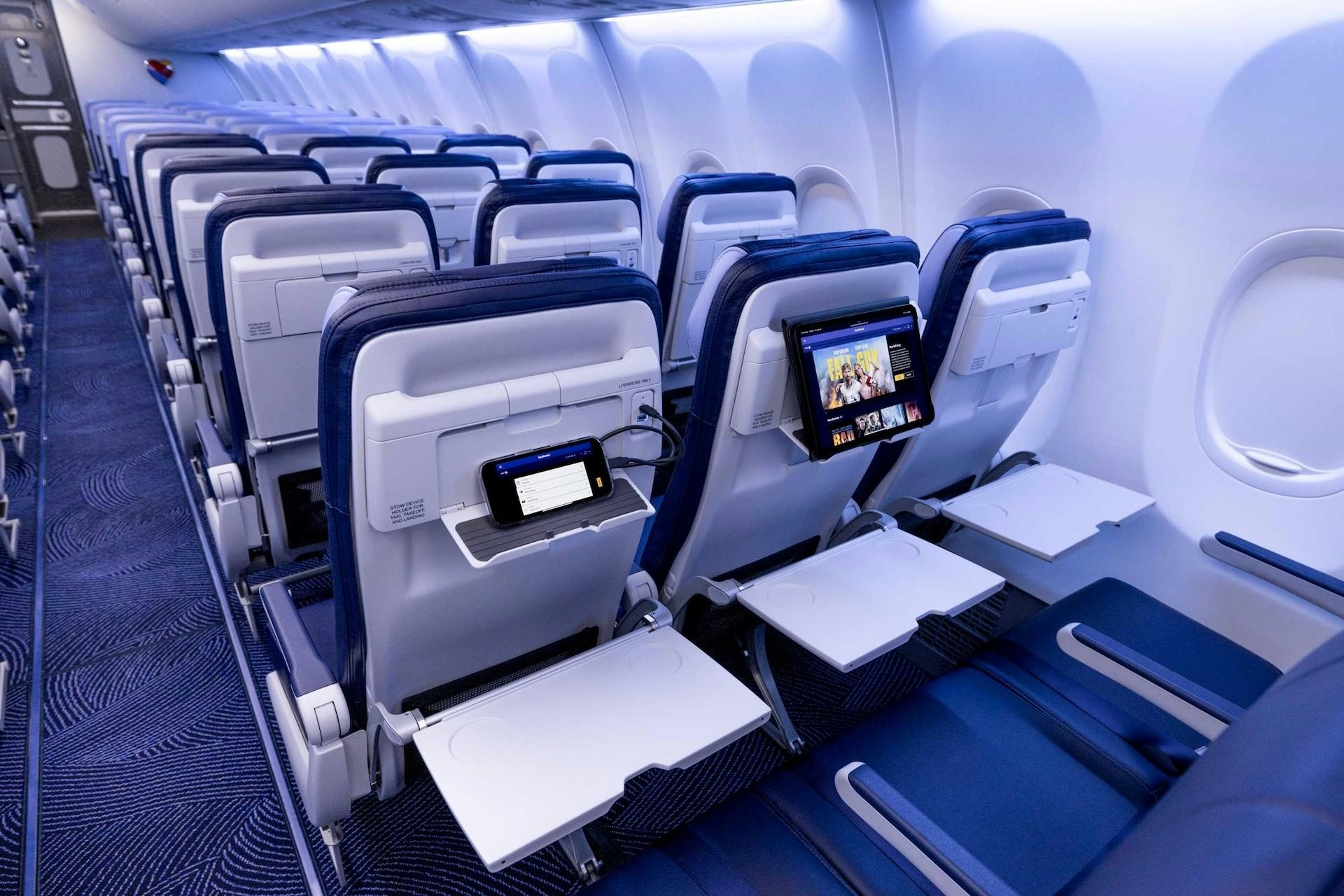
Philippine Airlines Partners with Volantio to Enhance Passenger Experience Using AI
Philippine Airlines has entered into a three-year strategic partnership with Volantio, a global leader in AI-driven demand reallocation solutions, to improve passenger experience and operational efficiency. This collaboration represents Volantio’s ongoing expansion into Southeast Asia, a region witnessing rapid growth in air travel and offering significant opportunities for innovation within the aviation sector.
Integration of AI Technology to Optimize Operations
As part of the agreement, Philippine Airlines will implement Volantio’s Revenue Rebook platform, which employs advanced neural networks to optimize seat allocation post-booking. This AI-powered system dynamically reallocates passengers based on real-time demand, balancing flights with high occupancy against those with lower load factors. Passengers who voluntarily adjust their travel plans receive tailored incentives, enhancing flexibility and overall satisfaction.
The adoption of Revenue Rebook is anticipated to improve network efficiency by reducing unsold seats and increasing revenue. Furthermore, the platform’s capacity to engage flexible travelers with personalized options is expected to strengthen customer loyalty.
The deployment of this technology will be expedited through Volantio’s exclusive partnership with Amadeus, a leading travel technology provider. Amadeus will facilitate the technical integration, enabling Philippine Airlines to swiftly leverage the platform’s capabilities and maximize its value from the outset.
Industry Context and Challenges Ahead
This partnership arrives amid a rapidly evolving AI landscape marked by both enthusiasm and caution. Industry analysts have raised concerns about the sustainability of the AI market, with some warning of a potential “AI bubble” that could burst as early as 2026. Such volatility has fostered cautious investor sentiment and increased scrutiny of AI-driven initiatives across sectors, including aviation.
Philippine Airlines may also encounter intensified competition as other carriers adopt similar AI technologies to enhance passenger experience. Maintaining a competitive edge will require continuous innovation and adaptability. Additionally, broader economic and geopolitical uncertainties pose risks to the airline industry’s profitability and strategic planning, complicating the implementation of new technologies.
Despite these challenges, the partnership between Volantio and Philippine Airlines highlights the growing role of artificial intelligence in optimizing airline operations and elevating customer service. As Southeast Asia’s aviation market continues to expand, such collaborations are poised to significantly influence the future trajectory of air travel in the region.

Etihad Airways Suspends Airbus A380 Flights on Key Route

Aditya Birla Group Seeks Approval for Aircraft Leasing in GIFT City

Qatar Airways Highlights Innovation and Connectivity at Arabian Travel Market 2026

Hong Kong's Five-Year Plan Includes Andrew Fan's Aircraft Parts Processing Hub Proposal

ACIA Aero Leasing Delivers ATR72-600 to Air Nostrum

RTX Appoints Jill Albertelli as Head of Pratt & Whitney

TAT Technologies Joins Beyond Aero Hydrogen Aircraft Program

AURAK Study Highlights Barriers to Air Taxi Adoption in Emerging Economies

Xiamen Air Selects Altitude for 787 Maintenance at Heathrow

Etihad and Swissport Extend Global Partnership
