
Orchestrate AI insights into action

Trending
Categories
Pratt & Whitney Advances Geared Turbofan for Next Narrowbody Aircraft
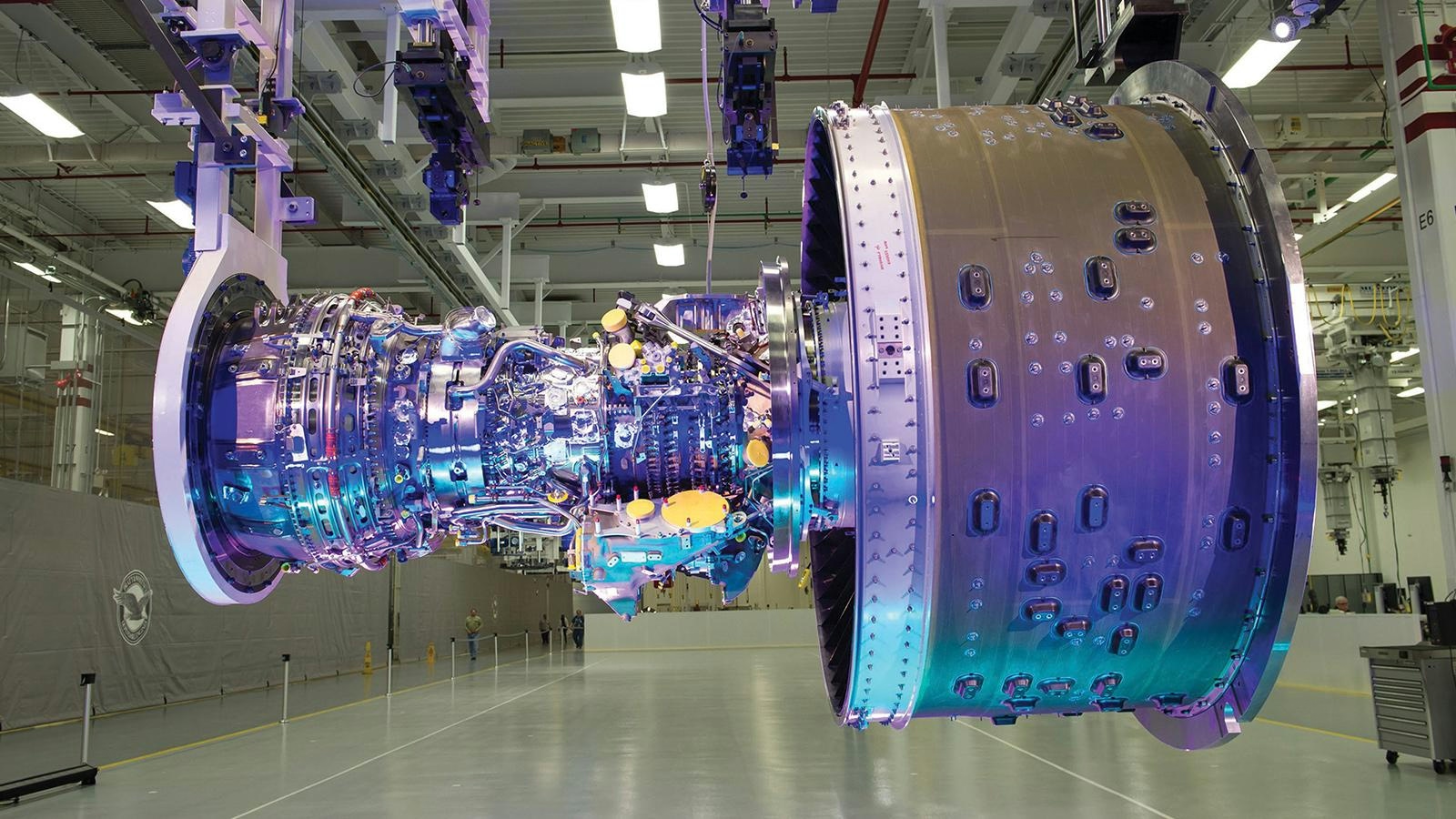
Pratt & Whitney Advances Geared Turbofan for Next Narrowbody Aircraft
Pratt & Whitney (P&W) is reaffirming its dedication to geared turbofan (GTF) technology as it prepares to introduce a next-generation “Gen2” engine designed for future Airbus and Boeing narrowbody aircraft. The company advocates for an evolutionary development strategy, building on insights gained from current turbofan reliability challenges, as the optimal approach to power the forthcoming generation of single-aisle jets.
Timeline and Industry Context
Rick Deurloo, president of P&W Commercial Engines, projects that these new aircraft will not enter service until around 2040, a timeline later than the mid-2030s often cited within the aerospace sector. Deurloo emphasized that this delay is driven by technological and industrial considerations, as well as the industry’s preference for stability. He stressed the importance of resolving existing maintenance issues and ensuring enhanced engine reliability before launching new designs.
This cautious outlook emerges amid a multi-year recall of P&W’s PW1000G GTF engines, which power the Airbus A320neo family, A220s, and Embraer E-Jet E2s. Manufacturing defects have necessitated premature maintenance and inspections, resulting in the temporary grounding of hundreds of aircraft. Although P&W reports that recovery efforts are progressing and the number of grounded jets is decreasing, the recall has underscored durability concerns that may affect market confidence in the company’s next-generation engines.
Competitive Landscape and Technological Developments
Competitors are closely monitoring P&W’s challenges and may seek to leverage these difficulties to their advantage. CFM International is developing a more radical open-rotor engine under its RISE program, which promises up to 20% greater efficiency compared to current models. Nonetheless, CFM has also indicated the possibility of offering a more conventional engine if market conditions require it. Meanwhile, Rolls-Royce is advancing its UltraFan30, a conventional ducted turbofan. Both companies are expected to highlight the reliability and efficiency of their technologies in response to P&W’s recent setbacks.
Despite these competitive pressures, P&W remains fully committed to the geared turbofan architecture. Deurloo described the technology as “proven-out” and argued that by the 2030s, the GTF will be perfected and supported by a comprehensive maintenance infrastructure. He contended that a Gen2 iteration of the GTF presents less risk than a clean-sheet engine design. All major engine manufacturers, including P&W, CFM, and Rolls-Royce, are exploring advanced propulsion technologies for future engines, with potential integration of hybrid-electric features.
Addressing Durability and Future Prospects
To mitigate current durability issues, P&W is introducing enhancements such as the GTF Advantage, an updated version of the PW1100G featuring new hot-section components, double-walled structures, and improved cooling systems. Deurloo asserted that the GTF Advantage will deliver twice the time-on-wing compared to earlier GTF models.
As the aerospace industry debates the optimal path for next-generation narrowbody propulsion, P&W’s evolutionary approach faces both technical and competitive challenges. With a projected service entry around 2040, the company may encounter resistance from rivals aiming for earlier market introduction and seeking to position their technologies as more reliable alternatives.

Etihad Deploys Widebody Fleet to Meet Strong Demand

Korean Air Finalizes $36.2 Billion Deal with Boeing
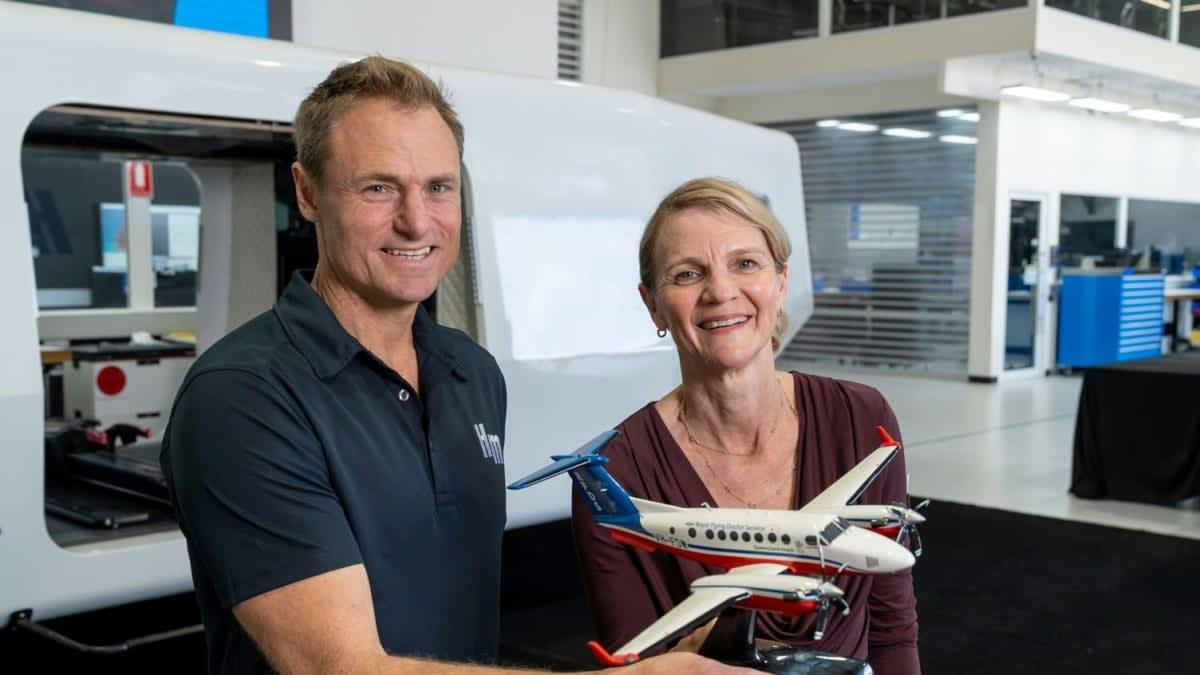
Australia’s RFDS Queensland Section Orders Six King Air 260Cs
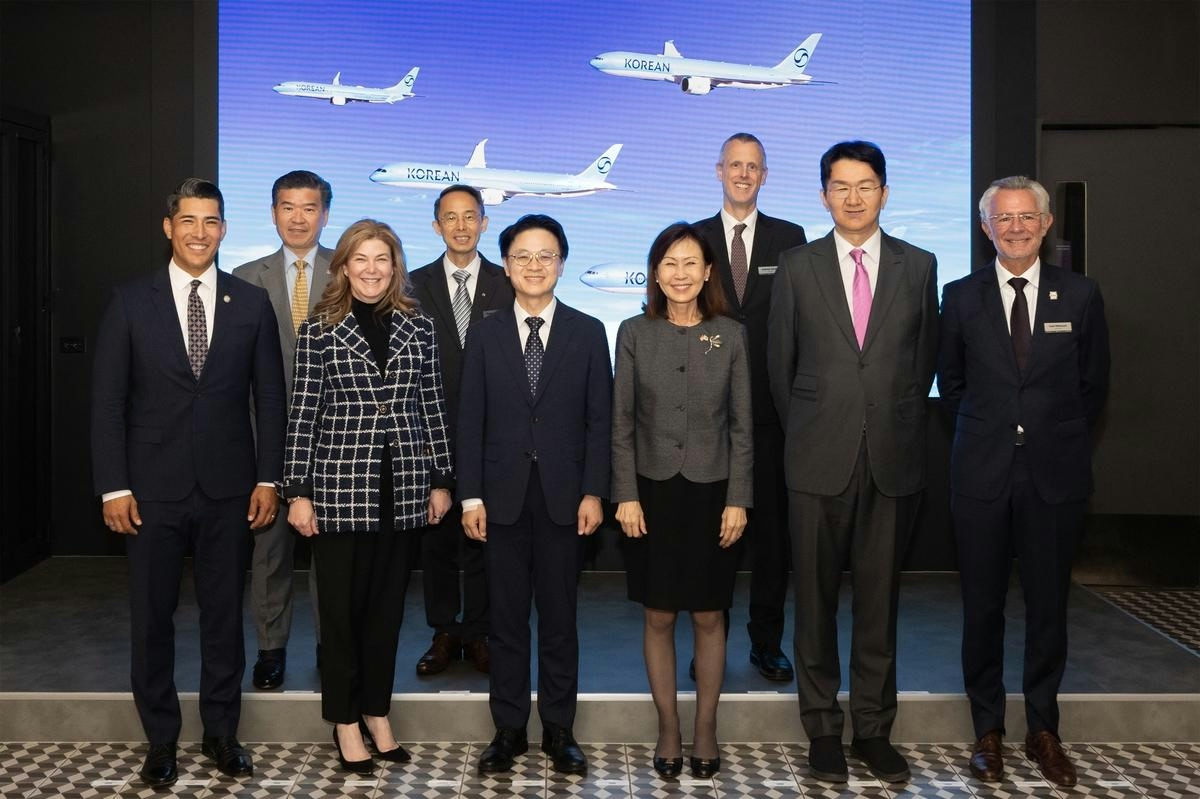
Korean Air Finalizes Order for 103 Boeing Jets and Engines
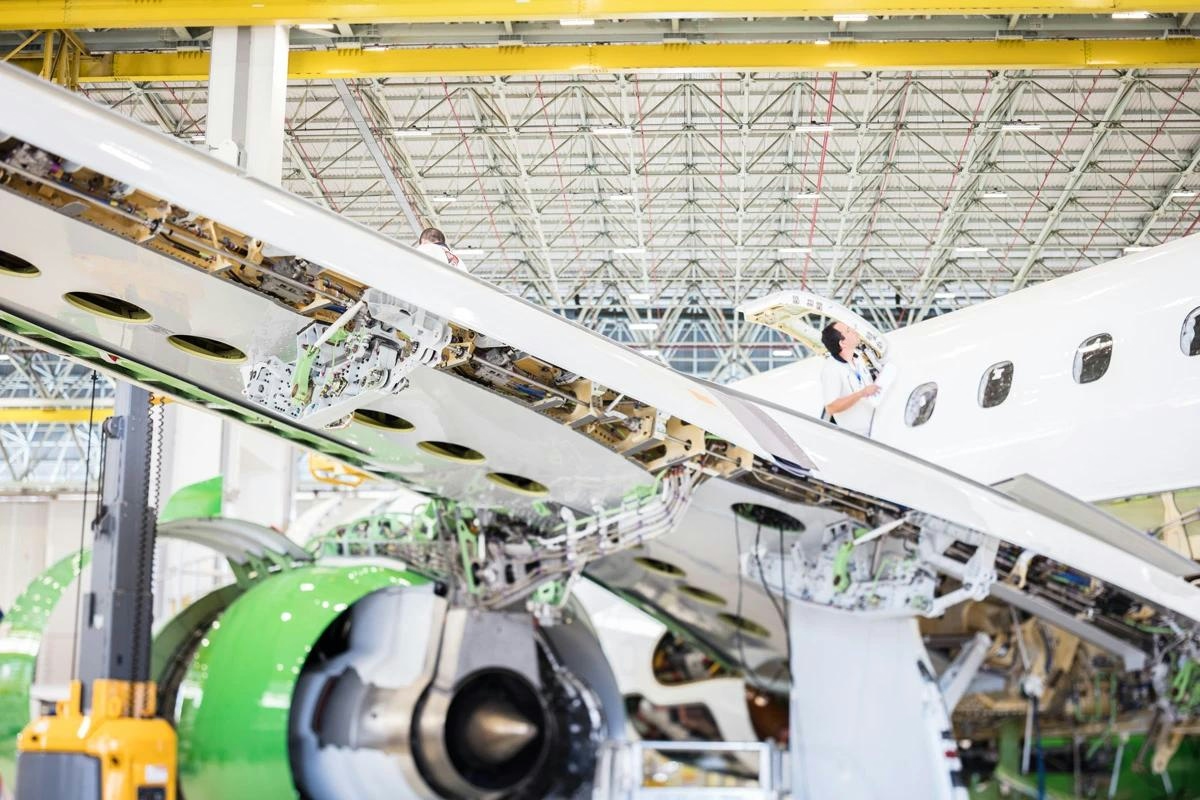
Embraer E195-E2 Features Distinctive Engine Placement Among Regional Jets

What Passengers Can Expect on Boeing’s New 777X Jet

How Ethiopian Airlines Became Africa’s Leading Carrier Amid Gulf Competition
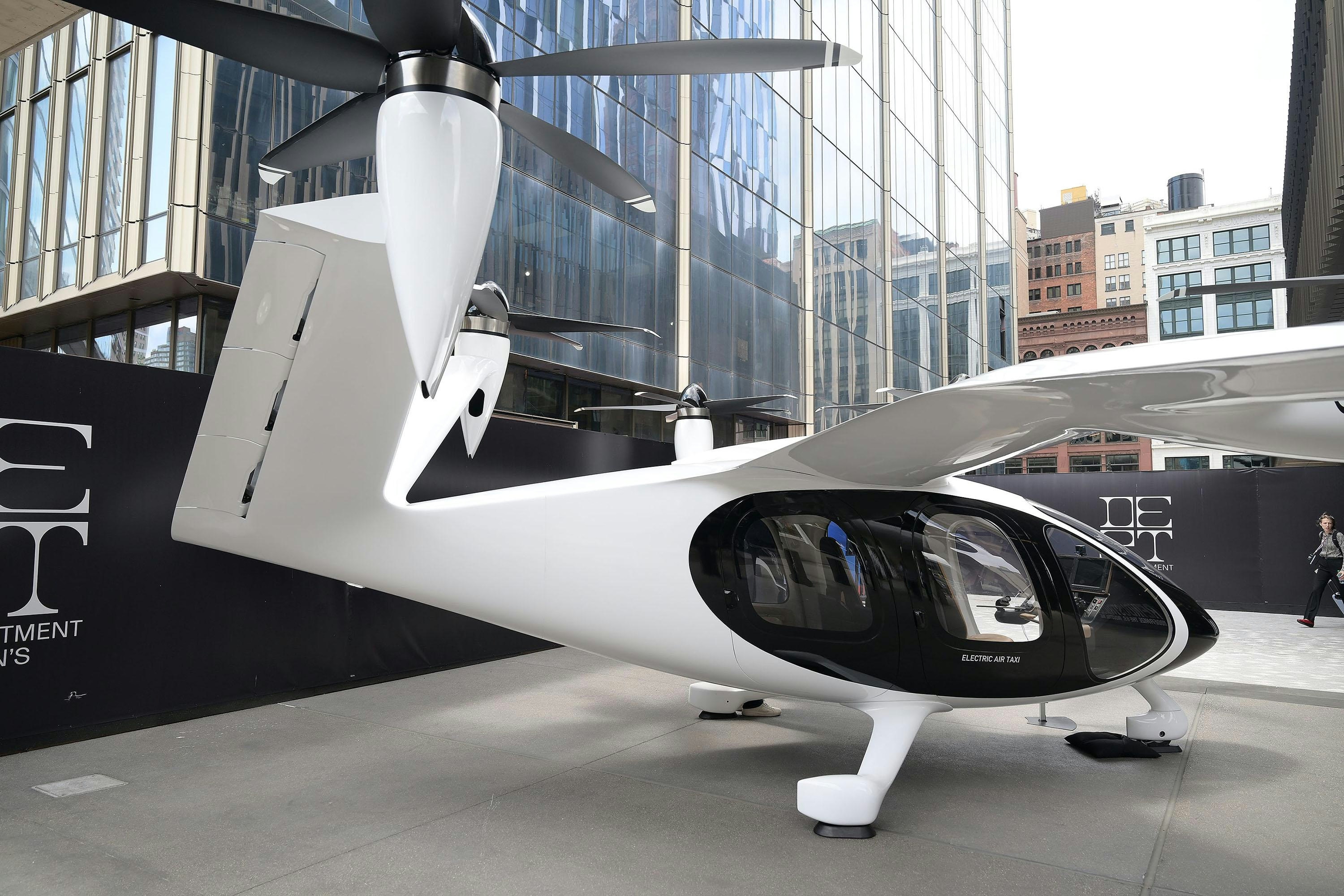
Joby Aviation Extends Autonomous Flight Capabilities with Cross-Country Tour

Strengthening Europe's Aviation Supply Chain Amid Uncertainty
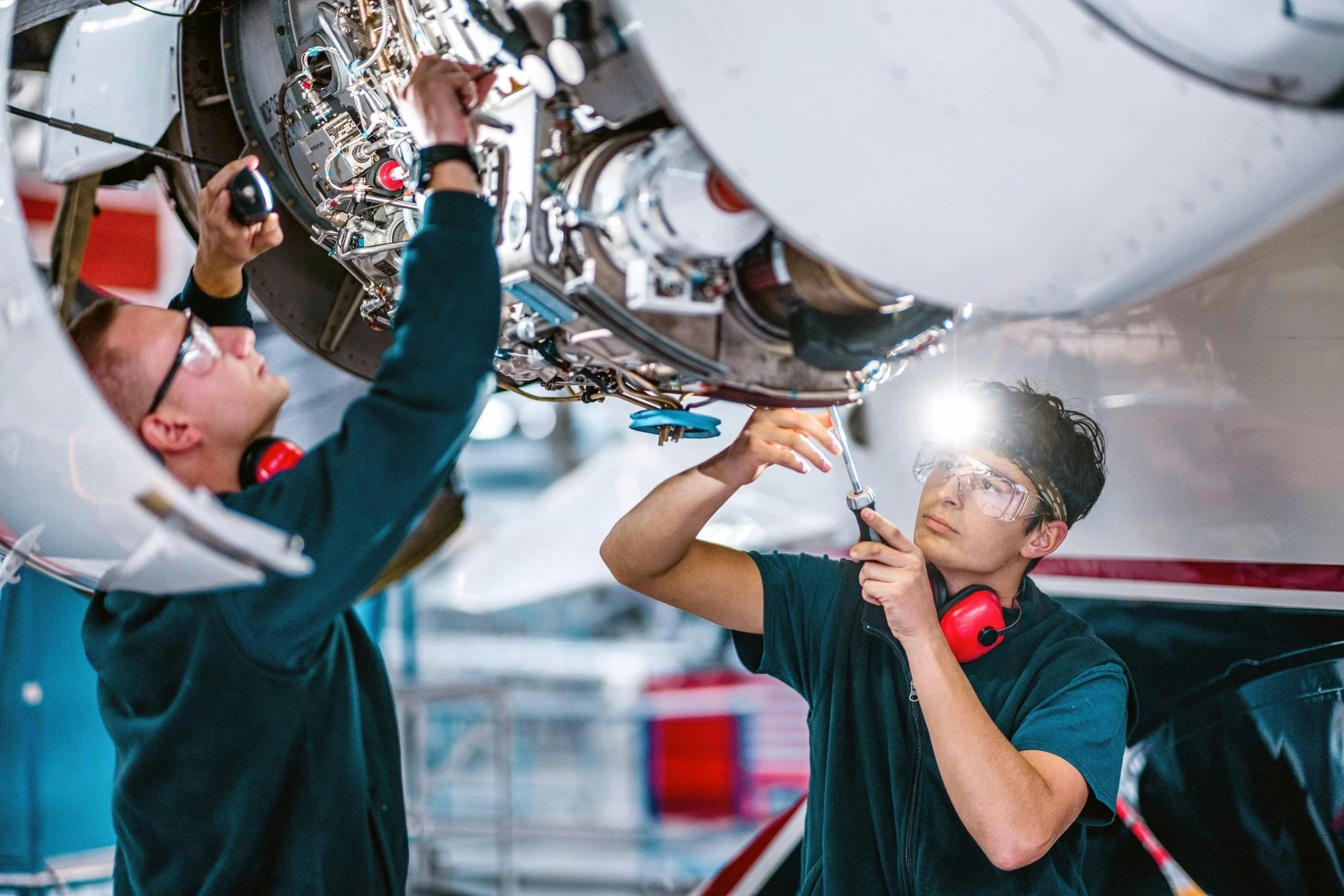
The Evolution of the Aircraft Maintenance Engineer Role
