
Orchestrate AI insights into action

Trending
Categories
Pratt & Whitney Shifts Focus from Widebody to Narrowbody Engines
Pratt & Whitney Shifts Focus from Widebody to Narrowbody Engines
For decades, Pratt & Whitney was a key player among the three dominant manufacturers of large commercial aircraft engines. Its PW4000 family powered hundreds of widebody aircraft, including early models of the Boeing 777, Airbus A330, Boeing 767, and Boeing 747, establishing a strong presence at airports worldwide. However, the competitive landscape has evolved significantly. Today, every new-generation widebody passenger aircraft is powered exclusively by either GE Aerospace or Rolls-Royce, leaving Pratt & Whitney absent from the latest flagship models.
Transition from Widebody to Narrowbody Markets
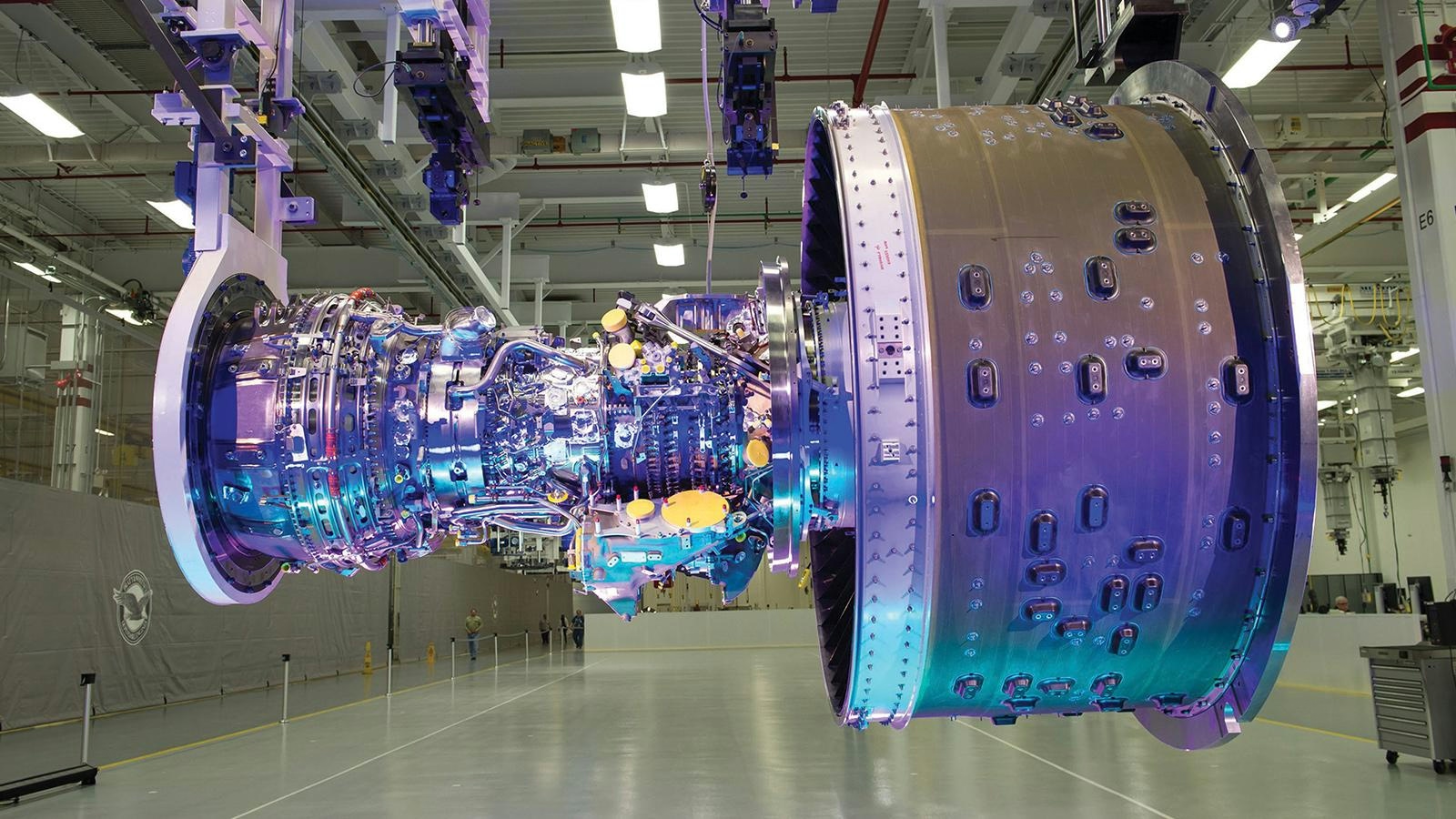
This shift occurred gradually and often went unnoticed by the public. While Pratt & Whitney has garnered attention for its successful geared turbofan (GTF) engines designed for narrowbody aircraft, the company has quietly withdrawn from developing new engines for twin-aisle jets. This strategic realignment has allowed GE Aerospace and Rolls-Royce to dominate the modern widebody market, effectively creating a duopoly. Meanwhile, Pratt & Whitney’s PW4000 business now primarily supports an aging installed fleet rather than new aircraft programs. Industry analysts observe that this consolidation has significantly altered airline purchasing dynamics and long-term competition within the widebody segment.
In the 1990s and early 2000s, airlines purchasing new widebody aircraft had the option to choose among three engine manufacturers. Pratt & Whitney competed directly with General Electric and Rolls-Royce on major programs, particularly the Boeing 777 and Airbus A330, providing airlines with leverage in negotiations over pricing and maintenance. The PW4000 engine became one of the most recognizable high-bypass turbofan models, powering a broad range of aircraft and earning a reputation for reliability over millions of flight hours.
Despite these accomplishments, Pratt & Whitney never achieved parity with its rivals in market share on the Boeing 777. Current fleet data indicates that of the 629 Boeing 777-200, 777-200ER, and 777-300 aircraft still in operation, only 81 are powered by Pratt & Whitney engines. GE Aerospace commands approximately 70% of the active fleet, with Rolls-Royce holding 18%, leaving Pratt & Whitney with the smallest share. This relatively modest position on one of aviation’s most successful long-haul aircraft presaged the company’s gradual exit from the twin-aisle engine market.
Exclusive Engine Partnerships and Market Realignment
The latest generation of widebody aircraft has solidified this transformation. Airbus has selected Rolls-Royce as the exclusive engine supplier for its newest twin-aisle programs, while Boeing’s latest widebody models rely solely on GE Aerospace engines. Consequently, Pratt & Whitney no longer powers any newly developed passenger widebody aircraft, fundamentally reshaping the competitive environment.
Challenges in the Narrowbody Sector
As Pratt & Whitney’s presence in the narrowbody engine market has expanded—particularly through its GTF engines—new challenges have emerged. The company continues to face reliability issues with its GTF engines, notably on the Airbus A220. Market responses have been mixed; some airlines, including British Airways, have opted for Pratt & Whitney’s GTF engines despite these concerns. At the same time, competitors such as GE Aerospace anticipate ongoing supply chain difficulties that may impact manufacturing and maintenance schedules industry-wide.
Pratt & Whitney, in collaboration with Airbus, is actively working to address the persistent GTF reliability problems, targeting a resolution by the end of 2025. Success in this endeavor could ease operational pressures on airlines and strengthen Pratt & Whitney’s position in the narrowbody market, even as its role in the widebody segment continues to wane.

Etihad Airways Suspends Airbus A380 Flights on Key Route

Aditya Birla Group Seeks Approval for Aircraft Leasing in GIFT City

Qatar Airways Highlights Innovation and Connectivity at Arabian Travel Market 2026

Hong Kong's Five-Year Plan Includes Andrew Fan's Aircraft Parts Processing Hub Proposal

ACIA Aero Leasing Delivers ATR72-600 to Air Nostrum

RTX Appoints Jill Albertelli as Head of Pratt & Whitney

TAT Technologies Joins Beyond Aero Hydrogen Aircraft Program

AURAK Study Highlights Barriers to Air Taxi Adoption in Emerging Economies

Xiamen Air Selects Altitude for 787 Maintenance at Heathrow

Etihad and Swissport Extend Global Partnership
