
Orchestrate AI insights into action

Trending
Categories
Putin Urges Russian Aerospace Sector to Develop Rocket Engines
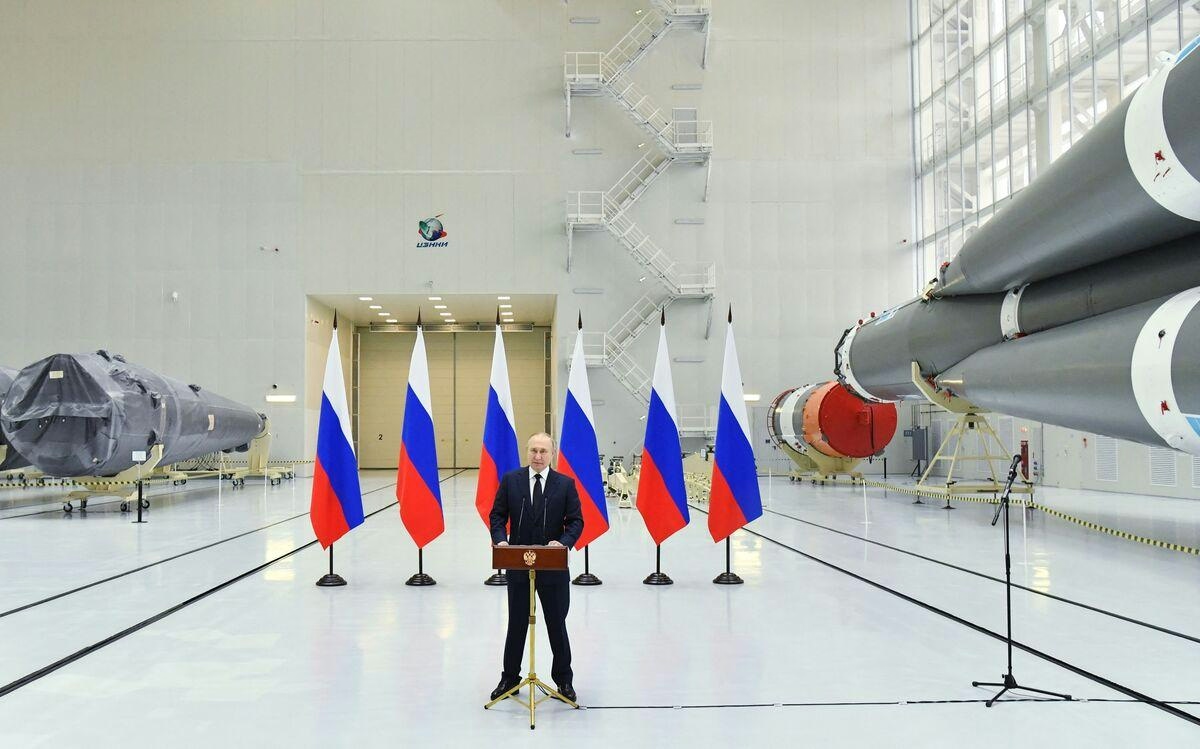
Putin Calls for Accelerated Development of Rocket Engines in Russian Aerospace Sector
Russian President Vladimir Putin has urged the country’s aerospace industry to intensify the development of advanced rocket booster engines, emphasizing their critical importance for Russia’s future in space exploration and its ability to compete in global markets. Speaking during a visit to the Kuznetsov design bureau in Samara, a key center for aircraft and rocket engine production, Putin highlighted the necessity of modernizing and expanding engine manufacturing capabilities for space launch vehicles.
Strategic Importance Amid Sanctions and Global Competition
Putin’s appeal comes amid mounting challenges posed by Western sanctions and growing competition from international aerospace firms. Despite these obstacles, he pointed to recent achievements in engine innovation, particularly within Russia’s energy sector. He noted that, despite restrictions, Russian engineers successfully developed a series of innovative engines for energy applications in a short period, underscoring their role in the country’s gas transport infrastructure.
These technological advancements are closely linked to broader energy initiatives, including the proposed Power of Siberia 2 pipeline, a major project aimed at exporting Russian gas to China. Putin described the pipeline as mutually beneficial, reflecting Russia’s strategic pivot from European to Asian energy markets—a shift he discussed during his recent visit to China.
Advancing Aviation Technologies and National Priorities
In addition to rocket engines, Putin addressed the PD-26 aircraft engine project, which he identified as vital for both defense and civil aviation sectors. The PD-26 is expected to support the modernization of military transport aircraft and facilitate the development of a new generation of wide-bodied passenger jets. According to Putin, this project will not only enhance military capabilities but also open new prospects for Russia’s civil aviation industry.
Concluding his visit, the president called on engineers and manufacturers to uphold Russia’s aerospace legacy, framing the advancement of rocket engines and aviation technologies as a national priority. His push for innovation arrives at a time when the global aerospace market is closely monitoring Russia’s next steps. Industry analysts suggest that increased scrutiny of Russian aerospace exports and potential shifts in international partnerships could influence the sector’s trajectory. Meanwhile, Western aerospace companies are expected to intensify their efforts to advance rocket engine technologies and safeguard their market positions in response to Russia’s ambitions.
As Russia navigates these complex challenges, the modernization of its aerospace sector remains central to its strategy for maintaining global relevance and competitiveness.

Etihad Airways Suspends Airbus A380 Flights on Key Route

Aditya Birla Group Seeks Approval for Aircraft Leasing in GIFT City

Qatar Airways Highlights Innovation and Connectivity at Arabian Travel Market 2026

Hong Kong's Five-Year Plan Includes Andrew Fan's Aircraft Parts Processing Hub Proposal

ACIA Aero Leasing Delivers ATR72-600 to Air Nostrum

RTX Appoints Jill Albertelli as Head of Pratt & Whitney

TAT Technologies Joins Beyond Aero Hydrogen Aircraft Program

AURAK Study Highlights Barriers to Air Taxi Adoption in Emerging Economies

Xiamen Air Selects Altitude for 787 Maintenance at Heathrow

Etihad and Swissport Extend Global Partnership
