
Orchestrate AI insights into action

Trending
Categories
Robots Assist with Baggage Handling in Tokyo Airport Trial
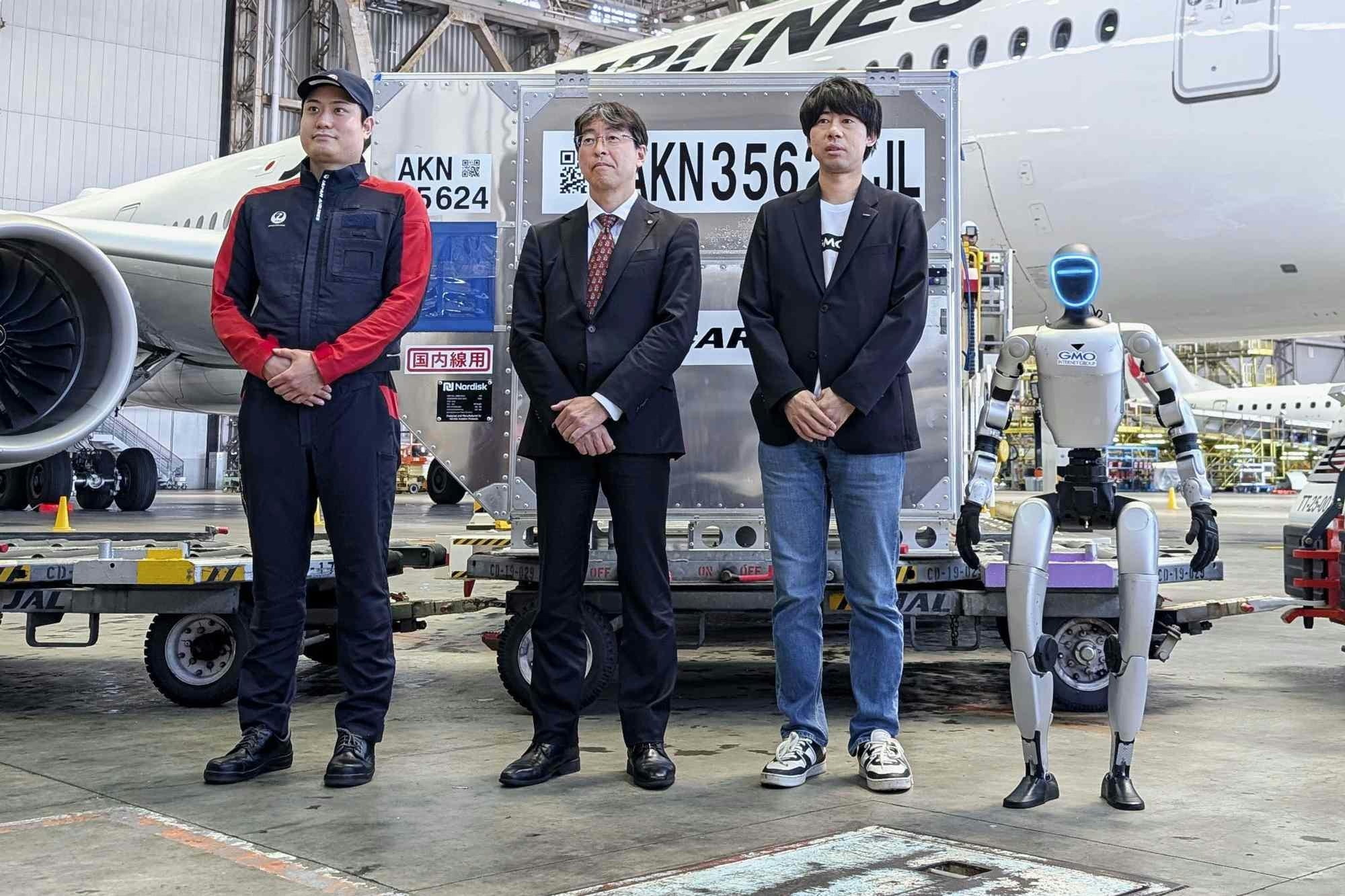
Robots Assist with Baggage Handling in Tokyo Airport Trial
Advancing Automation in Air Travel
Air travel continues to embrace automation, evolving from self-service check-ins to automated bag drops. Tokyo’s Haneda Airport, one of Japan’s busiest hubs, is now poised to take a further step forward by integrating humanoid robots into its ground operations. Japan Airlines, in collaboration with GMO AI & Robotics—a division of GMO Internet Group—has initiated a trial to evaluate how these robots can support baggage and cargo handling within the airport environment.
This initiative responds to two pressing challenges: the steady increase in passenger volumes and a shrinking workforce, a particularly acute issue in Japan amid rising tourism and demographic shifts. Rather than redesigning existing airport infrastructure, the project emphasizes the deployment of humanoid robots capable of operating within current workflows. Their human-like form allows them to navigate shared spaces, utilize existing equipment, and collaborate with human staff without necessitating significant modifications to airport layouts.
The Technology Behind the Trial
The robots under evaluation are developed by Unitree Robotics, with the G1 model at the forefront. Standing just over four feet tall and weighing approximately 77 pounds, the G1 is designed to maneuver efficiently in confined airport spaces. Its foldable structure suits crowded environments, while advanced sensors—including 3D LiDAR and depth cameras—enable object recognition, adaptive movement, and responsiveness to voice commands. Recent demonstrations have showcased the robot’s ability to push cargo onto conveyor belts and communicate with nearby personnel, highlighting its potential for seamless human-robot interaction in real time.
Prior to physical deployment, these robots undergo rigorous virtual training. Engineers employ digital simulations, supported by technologies from companies such as Nvidia, to prepare the machines for the unpredictable and dynamic conditions typical of airport tarmacs.
Challenges and Industry Implications
Despite promising capabilities, the trial faces significant hurdles. Ensuring the robots’ reliability and safety in the fast-paced, complex airport environment is paramount. Any malfunction or miscommunication could disrupt operations or compromise safety. The success of this initiative hinges on the robots’ ability to adapt to the variable nature of baggage handling and to interact safely with both human workers and machinery.
The trial has attracted considerable attention within the aviation industry. As labor shortages persist globally, interest in automation solutions is intensifying. Competitors may respond by exploring similar robotic technologies or investing in alternative innovations to enhance operational efficiency. The results of this trial could influence the broader adoption of humanoid robots in airport operations worldwide, particularly as demographic trends and technological progress continue to reshape the future of air travel.
While still in its early stages, Japan Airlines’ experiment at Haneda Airport represents a potentially significant advancement toward more sustainable and efficient airport operations. The coming months will determine whether humanoid robots can effectively address the growing demands of air travel while mitigating workforce constraints, potentially setting a precedent for airports around the world.

Etihad Airways Suspends Airbus A380 Flights on Key Route

Aditya Birla Group Seeks Approval for Aircraft Leasing in GIFT City

Qatar Airways Highlights Innovation and Connectivity at Arabian Travel Market 2026

Hong Kong's Five-Year Plan Includes Andrew Fan's Aircraft Parts Processing Hub Proposal

ACIA Aero Leasing Delivers ATR72-600 to Air Nostrum

RTX Appoints Jill Albertelli as Head of Pratt & Whitney

TAT Technologies Joins Beyond Aero Hydrogen Aircraft Program

AURAK Study Highlights Barriers to Air Taxi Adoption in Emerging Economies

Xiamen Air Selects Altitude for 787 Maintenance at Heathrow

Etihad and Swissport Extend Global Partnership
