
Orchestrate AI insights into action

Trending
Categories
Rolls-Royce Develops Technology to Protect Jet Engines from Sand Damage
Rolls-Royce Develops Technology to Protect Jet Engines from Sand Damage
Addressing a Persistent Challenge in Desert Operations
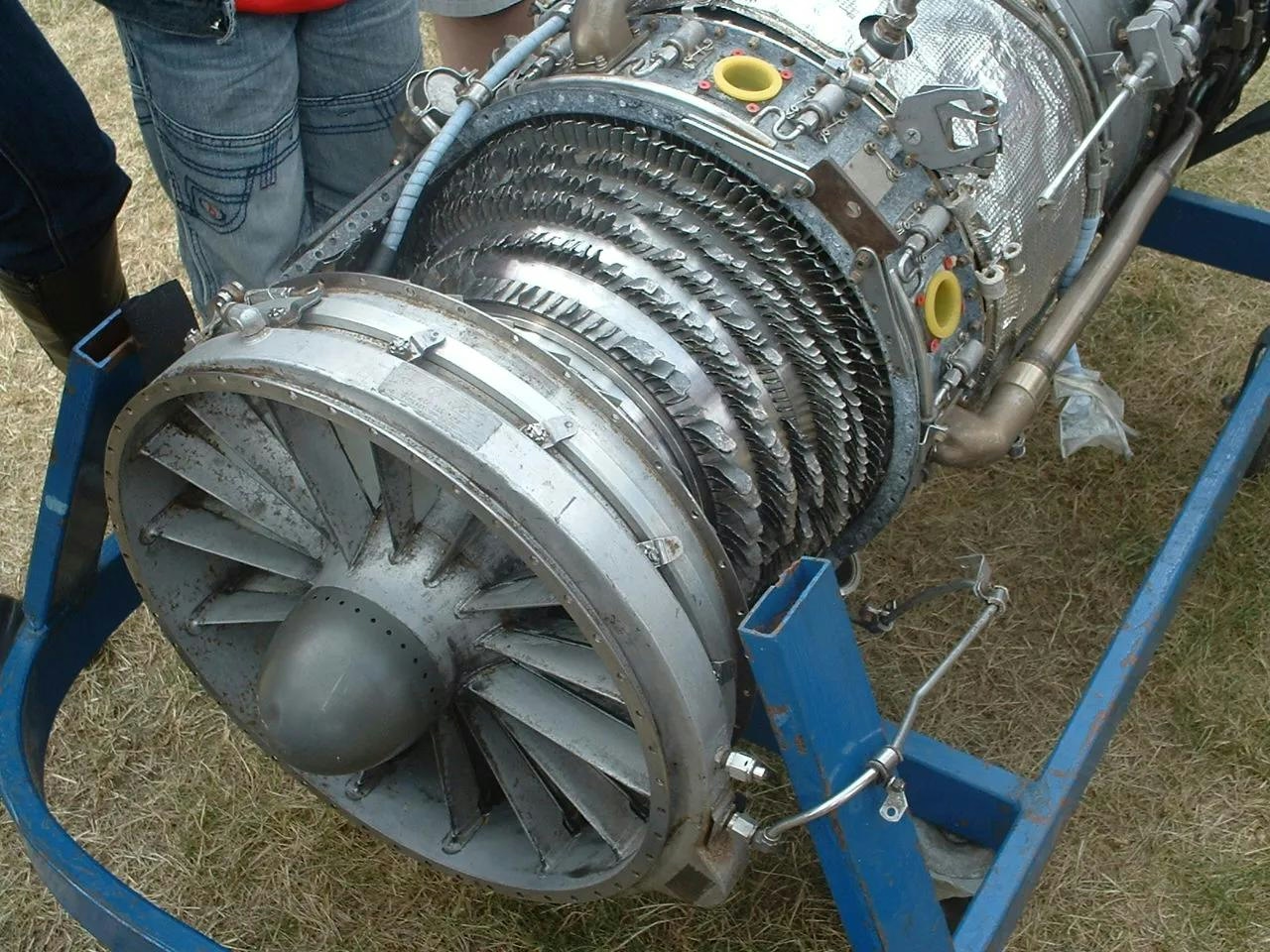
Rolls-Royce is currently testing advanced technology at its Derby facility designed to protect jet engines from the detrimental effects of sand and dust. This issue is particularly acute for airlines operating in the Middle East, a critical market for the company. During take-off, fine sand and dust particles can enter the hottest sections of an engine, causing corrosion and blocking coolant holes. While these conditions do not pose a direct threat to flight safety, they significantly reduce engine efficiency and accelerate the degradation of protective coatings, leading to increased maintenance requirements.
Enhancing Durability and Reliability in Harsh Environments
The company’s latest initiatives aim to improve the resilience and reliability of engine components exposed to severe desert conditions. Initial dust-ingestion tests have surpassed expectations, yet ensuring that these protective measures maintain their effectiveness over extended periods remains a key challenge. Rolls-Royce engineers are rigorously evaluating whether the new technology can endure prolonged exposure to abrasive environments without compromising engine performance.
Market Implications and Industry Response
Industry analysts suggest that the successful implementation of this technology could strengthen confidence in Rolls-Royce’s engine durability, potentially enabling the company to reclaim market share from competitors. As airlines increasingly demand engines capable of withstanding dusty operating environments, Rolls-Royce’s advancements may establish a new benchmark for reliability. In response, rival manufacturers are anticipated to develop their own sand protection technologies or enhance existing engine designs to remain competitive. This ongoing innovation underscores the growing necessity of adapting aviation technology to meet the challenges posed by diverse and demanding operational conditions worldwide.

Etihad Airways Suspends Airbus A380 Flights on Key Route

Aditya Birla Group Seeks Approval for Aircraft Leasing in GIFT City

Qatar Airways Highlights Innovation and Connectivity at Arabian Travel Market 2026

Hong Kong's Five-Year Plan Includes Andrew Fan's Aircraft Parts Processing Hub Proposal

ACIA Aero Leasing Delivers ATR72-600 to Air Nostrum

RTX Appoints Jill Albertelli as Head of Pratt & Whitney

TAT Technologies Joins Beyond Aero Hydrogen Aircraft Program

AURAK Study Highlights Barriers to Air Taxi Adoption in Emerging Economies

Xiamen Air Selects Altitude for 787 Maintenance at Heathrow

Etihad and Swissport Extend Global Partnership
