
Orchestrate AI insights into action

Trending
Categories
Rolls-Royce runs aero engine on 100% hydrogen in flight test
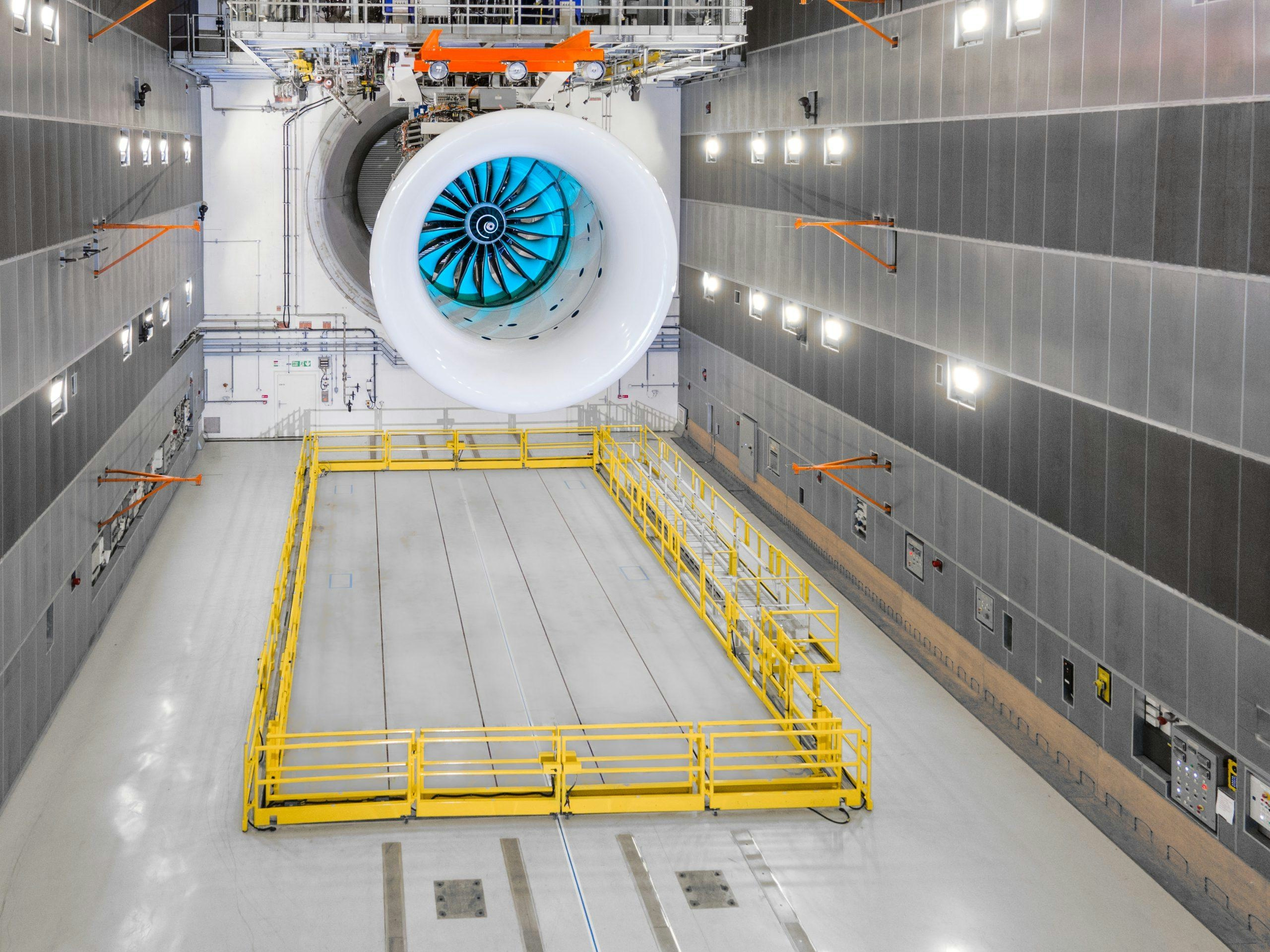
Rolls-Royce Achieves Breakthrough with 100% Hydrogen-Powered Aero Engine Test
Rolls-Royce has reached a pivotal milestone in sustainable aviation by successfully operating a modern aero gas turbine entirely on hydrogen throughout a simulated flight cycle, encompassing take-off, cruise, and landing phases. This landmark demonstration, conducted in partnership with Tata Consultancy Services (TCS), represents a significant advance toward the potential adoption of hydrogen as a viable fuel for future aircraft propulsion.
Advancing Hydrogen Propulsion Technology
Initiated in 2022 by Rolls-Royce and easyJet, the hydrogen propulsion program seeks to establish whether hydrogen can reliably power an aircraft gas turbine across all flight stages. In the recent test, a modified engine ran exclusively on hydrogen, enabling engineers to evaluate the performance of combustion, fuel delivery, and control systems under varying operational conditions. Unlike conventional jet fuel, hydrogen poses distinct challenges in combustion and storage, requiring substantial modifications to engine architecture. The program’s focus extended beyond demonstrating hydrogen combustion to integrating multiple advanced technologies essential for practical application.
TCS played a critical role by providing expertise in fuel system and engine controls integration, hydrogen combustion analysis, test preparation, validation, data analytics, risk management, and detailed design. Adam Newman, Chief Engineer of the Hydrogen Demonstrator Program at Rolls-Royce, described the achievement as “an important milestone in our journey towards more sustainable aviation.” He emphasized that the rigorous testing yielded valuable insights into hydrogen’s behavior within a modern aero gas turbine, validating key combustion, fuel, and control system technologies. These findings are expected to inform the development of future propulsion systems, including Rolls-Royce’s UltraFan engine.
Challenges and Industry Collaboration
Hydrogen-powered propulsion offers the promise of eliminating in-flight carbon dioxide emissions, a critical advancement given that aviation currently contributes approximately 2-3% of global CO2 emissions. However, transitioning to commercial hydrogen-powered flight remains complex. Engineers must overcome significant challenges related to hydrogen storage, fuel delivery, aircraft integration, and the establishment of supporting infrastructure. Ensuring engine reliability and safety, meeting regulatory standards, and integrating hydrogen systems into existing aircraft frameworks are essential hurdles that must be addressed before commercial deployment can be realized.
The demonstration was the result of a broad coalition involving Rolls-Royce, TCS, easyJet, NASA, the UK’s Health and Safety Executive, and other industry stakeholders. This collaboration encompassed propulsion development, testing, and safety considerations. Anupam Singhal, President of Manufacturing at TCS, underscored the importance of combining advanced engineering with digital capabilities and ecosystem collaboration to accelerate the transition of breakthrough innovations into practical applications. TCS remains committed to advancing hydrogen-powered aviation technologies alongside Rolls-Royce.
The successful test has already begun to influence the wider aviation sector. Airlines are increasingly expressing interest in sustainable aviation fuels, while competitors are intensifying their own hydrogen propulsion research and development efforts. New partnerships and investments in hydrogen technologies are emerging as industry players seek to maintain competitiveness amid the sector’s shift toward greener solutions.
While this demonstration does not indicate that hydrogen-powered commercial aircraft are imminent, it provides essential data and momentum for the aviation industry’s ongoing transition to sustainable flight. Rolls-Royce and its partners intend to build upon these results as they continue to tackle the technical and regulatory challenges that lie ahead.

Etihad Airways Suspends Airbus A380 Flights on Key Route

Aditya Birla Group Seeks Approval for Aircraft Leasing in GIFT City

Qatar Airways Highlights Innovation and Connectivity at Arabian Travel Market 2026

Hong Kong's Five-Year Plan Includes Andrew Fan's Aircraft Parts Processing Hub Proposal

ACIA Aero Leasing Delivers ATR72-600 to Air Nostrum

RTX Appoints Jill Albertelli as Head of Pratt & Whitney

TAT Technologies Joins Beyond Aero Hydrogen Aircraft Program

AURAK Study Highlights Barriers to Air Taxi Adoption in Emerging Economies

Xiamen Air Selects Altitude for 787 Maintenance at Heathrow

Etihad and Swissport Extend Global Partnership
