
Orchestrate AI insights into action

Trending
Categories
Russia Accelerates MC-21 Production Amid Western Sanctions
Russia Accelerates MC-21 Production Amid Western Sanctions
Strategic Push to Sustain Domestic Aviation Industry
Russia is intensifying state support for its MC-21-310 narrowbody jet and Il-114-300 turboprop programmes, positioning aircraft manufacturing as a critical test of Moscow’s capacity to maintain an independent aviation sector amid ongoing Western sanctions. Prime Minister Mikhail Mishustin announced enhanced funding measures during a government meeting on July 30, 2026, shortly after President Vladimir Putin’s visit to the Irkutsk Aviation Plant, operated by Yakovlev, United Aircraft Corporation, and Rostec.
The government’s immediate focus is to prevent disruptions on assembly lines as Russia replaces foreign engines, avionics, and composite materials—previously sourced from Western suppliers such as Airbus, Boeing, and Pratt & Whitney—with domestically produced alternatives. This industrial transition is essential not only for commercial aviation but also for preserving aviation sovereignty, which depends on a complex ecosystem of design bureaux, engine manufacturers, composite producers, certification authorities, leasing entities, maintenance networks, and skilled labor.
Challenges of Import Substitution and Production Continuity
Western sanctions have severely limited Russia’s access to foreign-made components, compelling a shift toward domestic substitutes. This has necessitated significant redesigns and caused delays, complicating efforts to maintain production schedules. The government has committed over 250 billion rubles in support of the aviation sector through 2026, yet persistent delays threaten Russia’s ability to fulfill fleet requirements and sustain operational continuity.
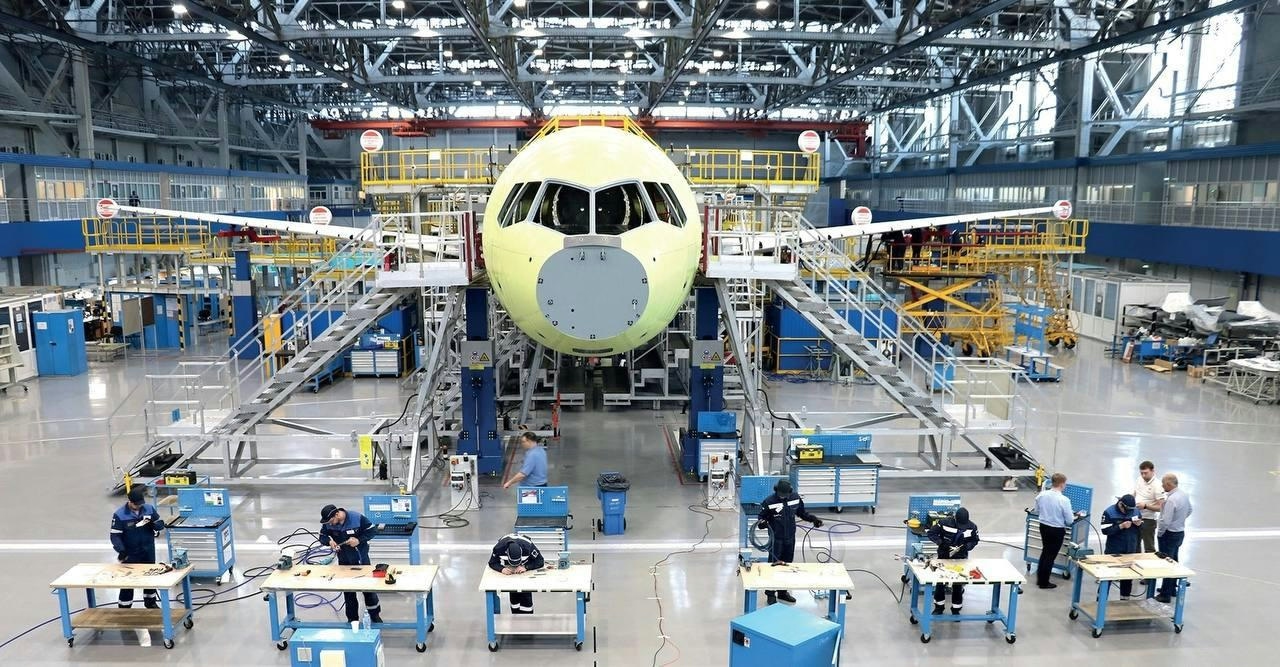
Funding has now been secured for 18 MC-21-310 aircraft at various stages of assembly in Irkutsk, providing a production bridge as the import-substitution campaign advances through the certification process. Mishustin stressed that ensuring uninterrupted production is now a government priority, reflecting the strategic importance of maintaining industrial momentum beyond commercial considerations.
Aeroflot remains the launch customer with a firm order for 18 aircraft, while additional orders will depend on certification progress, manufacturing readiness, and the credibility of projected production rates. The MC-21-310, powered by Russian PD-14 turbofan engines and equipped with domestic avionics and locally sourced systems, is positioned as Moscow’s alternative to the Airbus A320 and Boeing 737 families. However, the aircraft’s full type certification is now targeted for June 2027 after multiple delays, meaning assembly continues in parallel with ongoing testing. This approach exposes the programme to continued uncertainties in financing, storage, configuration management, and delivery planning.
Regional Aircraft and Future Production Goals
In addition to the MC-21, Russia has allocated 2.6 billion rubles (approximately US$32 million) to complete three serial Il-114-300 turboprops for the Arkhangelsk Aviation Enterprise. These aircraft are intended to replace ageing An-24 and An-26 models on regional routes, where smaller capacities and challenging operating conditions prevail.
Looking ahead, Russia aims to achieve an annual production rate of 36 MC-21 aircraft by 2032. However, the prospects for large-scale production and market viability remain uncertain as the sector contends with certification challenges and the need to align after-sales support with fleet ambitions. The 18 MC-21-310 airframes currently under production in Irkutsk represent tangible progress, but their strategic value will depend on the reliable delivery and economic operation of certified aircraft by Russian airlines.

Etihad Airways Suspends Airbus A380 Flights on Key Route

Aditya Birla Group Seeks Approval for Aircraft Leasing in GIFT City

Qatar Airways Highlights Innovation and Connectivity at Arabian Travel Market 2026

Hong Kong's Five-Year Plan Includes Andrew Fan's Aircraft Parts Processing Hub Proposal

ACIA Aero Leasing Delivers ATR72-600 to Air Nostrum

RTX Appoints Jill Albertelli as Head of Pratt & Whitney

TAT Technologies Joins Beyond Aero Hydrogen Aircraft Program

AURAK Study Highlights Barriers to Air Taxi Adoption in Emerging Economies

Xiamen Air Selects Altitude for 787 Maintenance at Heathrow

Etihad and Swissport Extend Global Partnership
