
Orchestrate AI insights into action

Trending
Categories
Ryanair Signs Five-Year Deal with Google Cloud to Expand AI Use
Ryanair Signs Five-Year Deal with Google Cloud to Expand AI Use
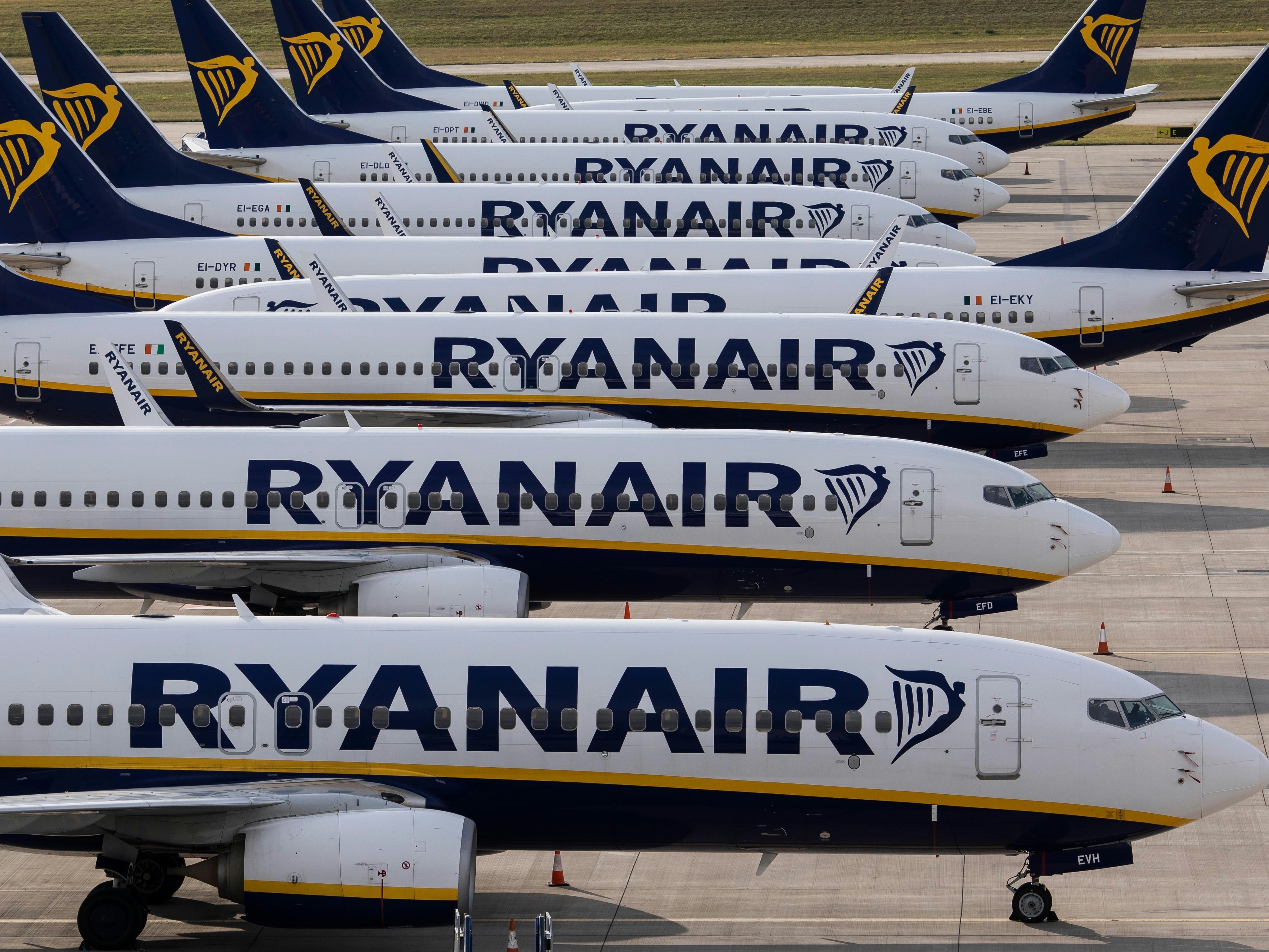
LONDON, Aug 12 – Ryanair has entered into a five-year partnership with Google Cloud to accelerate the deployment of advanced artificial intelligence technologies across its operations. The collaboration will see the airline integrate Google’s Gemini AI suite alongside DeepMind models to enhance crew scheduling, automate operational decision-making, and improve fleet maintenance processes.
Strategic AI Integration and Dual-Cloud Approach
As Europe’s largest airline by passenger volume, Ryanair plans to implement Google Workspace and Google Cloud services for its 35,000 employees. This initiative supports the airline’s ambitious target of transporting 300 million passengers annually by 2034. The agreement forms part of a broader dual-cloud strategy, complementing Ryanair’s existing use of Amazon Web Services. This approach is designed to bolster infrastructure resilience and reduce the risk of technology outages.
“To support this growth, we need to ensure we have excellent infrastructure resilience, and our new dual-cloud strategy provides this, alongside technology partners that match our speed and relentless focus on efficiency,” stated Ryanair CEO Eddie Wilson.
Under the terms of the deal, Ryanair will utilize Gemini Enterprise to develop bespoke AI agents aimed at automating decision-making, optimizing crew scheduling, and minimizing operational disruptions. Additionally, the airline will deploy Google DeepMind models such as AlphaEvolve and WeatherNext to refine fleet operations and maintenance planning. Financial details of the agreement have not been disclosed.
Industry Implications and Challenges Ahead
Maureen Costello, Google Cloud’s vice president for the United Kingdom, Ireland, and Sub-Saharan Africa, emphasized the significance of the partnership: “This agreement demonstrates how deploying generative AI at scale can help industry leaders scale securely, reduce operational costs, and redefine the travel experience.”
The aviation sector has increasingly embraced AI technologies to enhance customer service, operational efficiency, and maintenance, according to research by aviation technology provider SITA and the International Air Transport Association (IATA). Airlines are intensifying efforts to improve reliability and competitiveness through technological innovation.
Nonetheless, Ryanair faces potential challenges in expanding its AI capabilities. Regulatory constraints and the substantial investment required for advanced technology deployment may affect the speed and effectiveness of implementation. Furthermore, maintaining high customer satisfaction will be critical, particularly as some passengers may express reservations about changes to traditional services. Industry analysts anticipate that competitors will respond by upgrading their own technological infrastructures to remain competitive.
As Ryanair advances its digital transformation, the airline’s capacity to balance innovation with operational stability and customer expectations will be closely monitored by the market and industry peers alike.

Etihad Airways Suspends Airbus A380 Flights on Key Route

Aditya Birla Group Seeks Approval for Aircraft Leasing in GIFT City

Qatar Airways Highlights Innovation and Connectivity at Arabian Travel Market 2026

Hong Kong's Five-Year Plan Includes Andrew Fan's Aircraft Parts Processing Hub Proposal

ACIA Aero Leasing Delivers ATR72-600 to Air Nostrum

RTX Appoints Jill Albertelli as Head of Pratt & Whitney

TAT Technologies Joins Beyond Aero Hydrogen Aircraft Program

AURAK Study Highlights Barriers to Air Taxi Adoption in Emerging Economies

Xiamen Air Selects Altitude for 787 Maintenance at Heathrow

Etihad and Swissport Extend Global Partnership
