
Orchestrate AI insights into action

Trending
Categories
Sabre and AirBorneo Announce Long-Term Technology Partnership
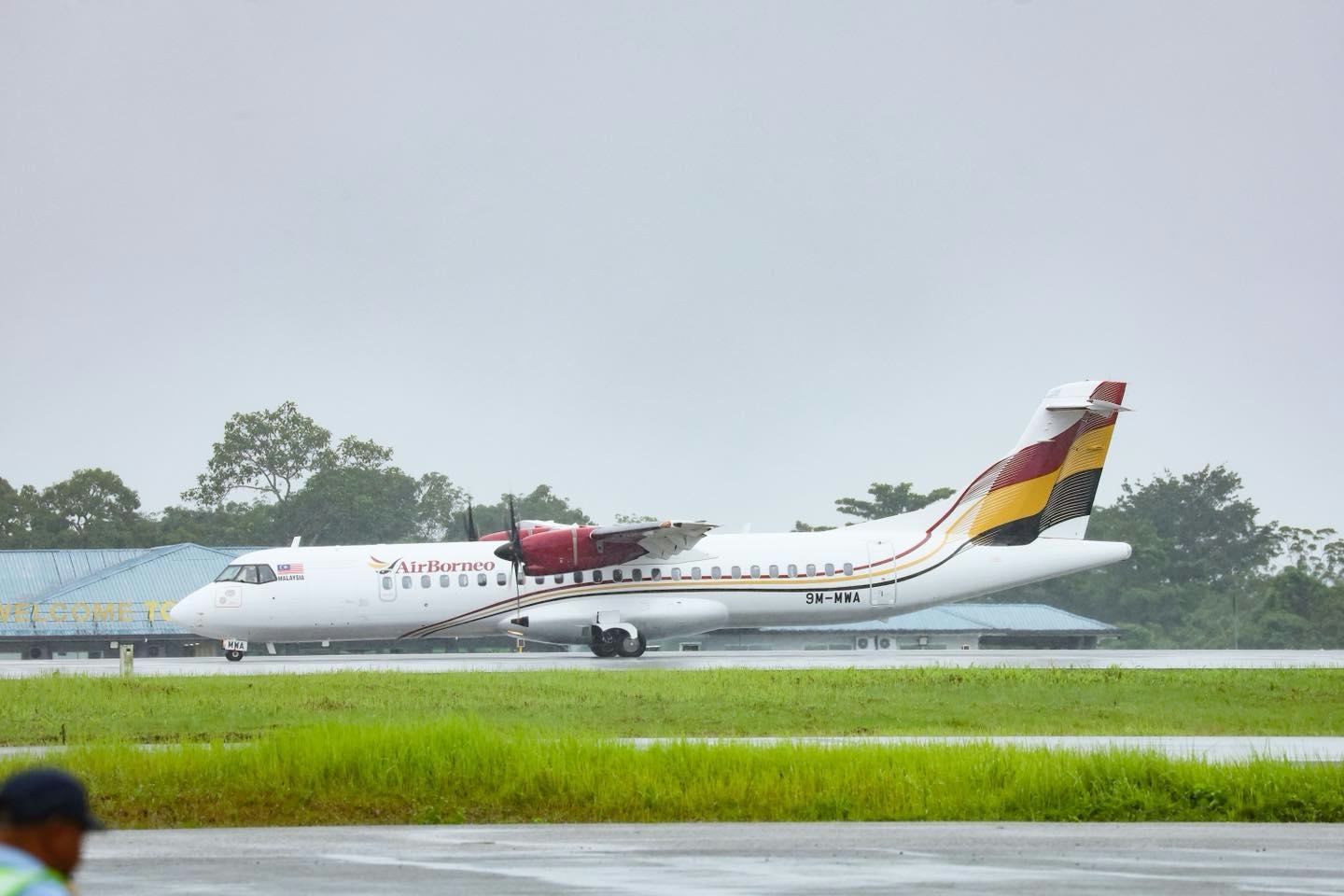
Sabre and AirBorneo Announce Long-Term Technology Partnership
Sabre Corporation has formalized a long-term technology partnership with AirBorneo, the newly established airline owned by the government of Malaysia’s Sarawak state. Since commencing operations in January 2026, AirBorneo has selected Sabre’s advanced technology solutions to support its planning and pricing strategies from inception. This collaboration aims to build a strong operational foundation that will enhance regional connectivity and facilitate future growth.
Strategic Technology Integration
Under the terms of the multi-year agreement, AirBorneo will implement Sabre’s Network Planning and Optimisation suite to automate and manage flight schedules, codeshare agreements, and route profitability. The airline will also utilize Sabre Mosaic Revenue Optimizer, a tool designed to dynamically adjust seat availability and fare conditions in response to fluctuating market demand and business objectives. Complementing these capabilities, Sabre Market Intelligence and Global Demand Data will provide AirBorneo with essential insights and competitive benchmarks to guide its network and revenue strategies.
Megat Ardian Wira Mohd Aminuddin, CEO of AirBorneo Holdings, emphasized the airline’s commitment to establishing a modern and competitive carrier that strengthens connectivity within Sarawak and the broader region. He noted that partnering with Sabre prior to launching operations ensures that AirBorneo’s pricing, planning, and revenue management systems are grounded in robust, data-driven methodologies. This approach is intended to enhance passenger service, support informed business decisions, and lay the groundwork for sustainable expansion.
Challenges and Industry Implications
While the partnership highlights a strong focus on technological innovation, both Sabre and AirBorneo face several challenges moving forward. The successful integration and scaling of Sabre’s solutions will be critical to realizing the partnership’s goals, presenting execution risks that must be carefully managed. Additionally, regulatory constraints within the highly regulated aviation sector could affect the deployment of new technologies. As AirBorneo pursues expansion, scaling operational and manufacturing capacities may introduce further complexities.
Market responses to the announcement have been cautious, with investors balancing the long-term potential benefits against operational and regulatory uncertainties. The collaboration may also trigger competitive responses, as rival airlines might seek similar technology partnerships or invest in enhancing their digital capabilities to maintain market positioning.
Despite these challenges, the alliance between Sabre and AirBorneo underscores the increasing significance of data-driven decision-making and advanced technology in the aviation industry. Both emerging and established carriers are recognizing the necessity of adapting to evolving market demands to deliver seamless passenger experiences and maintain competitive advantage.

Etihad Airways Suspends Airbus A380 Flights on Key Route

Aditya Birla Group Seeks Approval for Aircraft Leasing in GIFT City

Qatar Airways Highlights Innovation and Connectivity at Arabian Travel Market 2026

Hong Kong's Five-Year Plan Includes Andrew Fan's Aircraft Parts Processing Hub Proposal

ACIA Aero Leasing Delivers ATR72-600 to Air Nostrum

RTX Appoints Jill Albertelli as Head of Pratt & Whitney

TAT Technologies Joins Beyond Aero Hydrogen Aircraft Program

AURAK Study Highlights Barriers to Air Taxi Adoption in Emerging Economies

Xiamen Air Selects Altitude for 787 Maintenance at Heathrow

Etihad and Swissport Extend Global Partnership
