
Orchestrate AI insights into action

Trending
Categories
Samsung and Turkish Airlines Collaborate on SmartTag Baggage Tracking
Samsung and Turkish Airlines Collaborate on SmartTag Baggage Tracking
Launch of the SmartTag Baggage Tracking Service
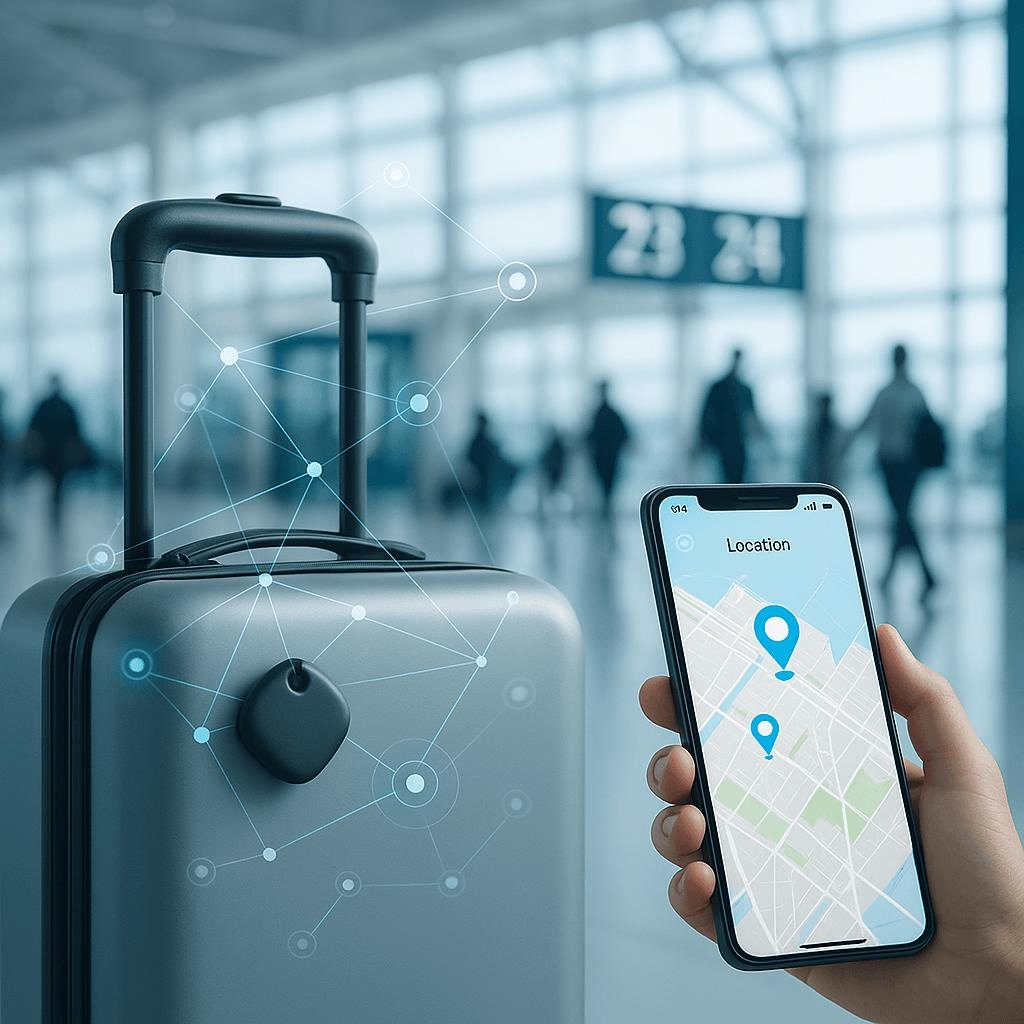
Samsung has partnered with Turkish Airlines to address the longstanding issue of lost luggage through the introduction of the Smart Tagged Baggage Service, which officially launched on December 1. This new initiative enables passengers to track their baggage in real time by utilizing Samsung’s SmartThings Find network, a vast ecosystem supported by approximately 700 million Galaxy devices worldwide. By attaching Samsung’s Galaxy SmartTag2 devices to their luggage, travelers can monitor their bags via the SmartThings Find app, which employs Bluetooth Low Energy and ultra-wideband technology to detect nearby Galaxy devices.
In the event of lost baggage, passengers can share their SmartThings Find location data directly with Turkish Airlines’ baggage handling team, facilitating a more efficient recovery process. A distinctive feature of the service allows users to upload actual photographs of their luggage through the app’s “Change Device Image” function. This capability enables airline staff to identify specific bags—such as a paisley carry-on with a frayed handle—rather than generic suitcases, potentially accelerating the retrieval of misplaced items.
Context and Industry Implications
The timing of this launch is particularly significant given the record levels of air travel disruptions and baggage mishandling experienced in 2024. Turkish Airlines, which manages millions of bags annually across its extensive global network, views the partnership as a means to enhance the overall passenger experience. Turkish Airlines CTO Kerem Kızıltunç expressed enthusiasm about the collaboration, emphasizing the value of leveraging Samsung’s advanced technology for the benefit of travelers.
Nevertheless, Samsung’s SmartTag service enters a competitive market already shaped by Apple’s AirTag, which has been integrated into Delta Airlines’ baggage tracking system and reportedly contributed to a reduction in delayed and lost luggage incidents. Industry analysts suggest that Samsung’s technology will be closely evaluated against Apple’s more established solution. The growing adoption of similar tracking technologies by other airlines may intensify competition, as carriers seek to offer the most reliable baggage tracking services.
Integrating the SmartTag system into Turkish Airlines’ existing baggage handling infrastructure may also present logistical challenges. Ensuring seamless compatibility and providing adequate staff training will be essential to the service’s successful implementation.
Strategic Expansion of SmartThings Find
For Samsung, this partnership represents a broader strategic effort to extend the SmartThings Find platform beyond personal device location services and into enterprise applications. Jaeyeon Jung, Executive Vice President at Samsung Electronics, highlighted the company’s commitment to expanding the SmartThings Find experience through cross-industry collaborations aimed at keeping customers connected and reassured wherever they are.
As the travel industry continues to seek effective solutions to persistent baggage issues, the collaboration between Samsung and Turkish Airlines marks a notable advancement. While the ultimate effectiveness of the SmartTag service relative to competing technologies remains to be determined, the initiative underscores the increasing role of the Internet of Things (IoT) in transforming the passenger experience.

Etihad Airways Suspends Airbus A380 Flights on Key Route

Aditya Birla Group Seeks Approval for Aircraft Leasing in GIFT City

Qatar Airways Highlights Innovation and Connectivity at Arabian Travel Market 2026

Hong Kong's Five-Year Plan Includes Andrew Fan's Aircraft Parts Processing Hub Proposal

ACIA Aero Leasing Delivers ATR72-600 to Air Nostrum

RTX Appoints Jill Albertelli as Head of Pratt & Whitney

TAT Technologies Joins Beyond Aero Hydrogen Aircraft Program

AURAK Study Highlights Barriers to Air Taxi Adoption in Emerging Economies

Xiamen Air Selects Altitude for 787 Maintenance at Heathrow

Etihad and Swissport Extend Global Partnership
