
Orchestrate AI insights into action

Trending
Categories
Silent wings: Top 10 electric planes promising fast, quiet journeys
Silent Wings: The Rise of Electric Aviation
Electric aviation is rapidly transitioning from concept to reality as 2025 approaches, heralding a new era of clean, quiet, and efficient flight. Advances in battery technology, lightweight materials, and hybrid propulsion systems are driving this transformation, enabling a diverse range of aircraft—from urban air taxis to long-range regional jets—to take shape. This technological progress is redefining the possibilities of air travel, promising to reduce noise pollution and carbon emissions significantly.
The momentum behind electric aircraft is gaining global traction. Norway has set an ambitious goal to electrify all domestic flights by 2040, while China’s electric vertical takeoff and landing (eVTOL) startups are expanding their presence in the market. Regulatory agencies, including the U.S. Federal Aviation Administration (FAA), are actively supporting the industry by launching programs aimed at accelerating the development and certification of electric air taxis. These initiatives reflect a growing recognition of the potential for electric aviation to transform regional connectivity and urban mobility.
Challenges and Industry Response
Despite the optimism surrounding electric planes, significant challenges remain. Battery technology, particularly regarding lifespan and charging speed, continues to limit the range and operational efficiency of electric aircraft. In response, manufacturers are investing heavily in next-generation battery systems and hybrid propulsion solutions. Additionally, companies are seeking regulatory approvals to conduct test flights in strategic markets such as the United Arab Emirates, underscoring the dual imperative of technological innovation and regulatory compliance.
Investor and government interest in sustainable air travel has been largely positive, reflecting confidence in the sector’s growth potential. As electric aircraft move closer to commercial deployment, the industry is poised to usher in a quieter, cleaner, and more efficient mode of flight.
Leading Electric Aircraft Models
Several pioneering electric aircraft are at the forefront of this aviation revolution. The Alice by Eviation is a fully electric commuter plane designed for regional routes, while the Lilium Jet from Germany offers an eVTOL air taxi solution tailored for urban environments. The Joby Aviation S4 focuses on quiet, efficient city flights, and the Heart Aerospace ES-30 aims to introduce a regional hybrid-electric aircraft into commercial service in Scandinavia.
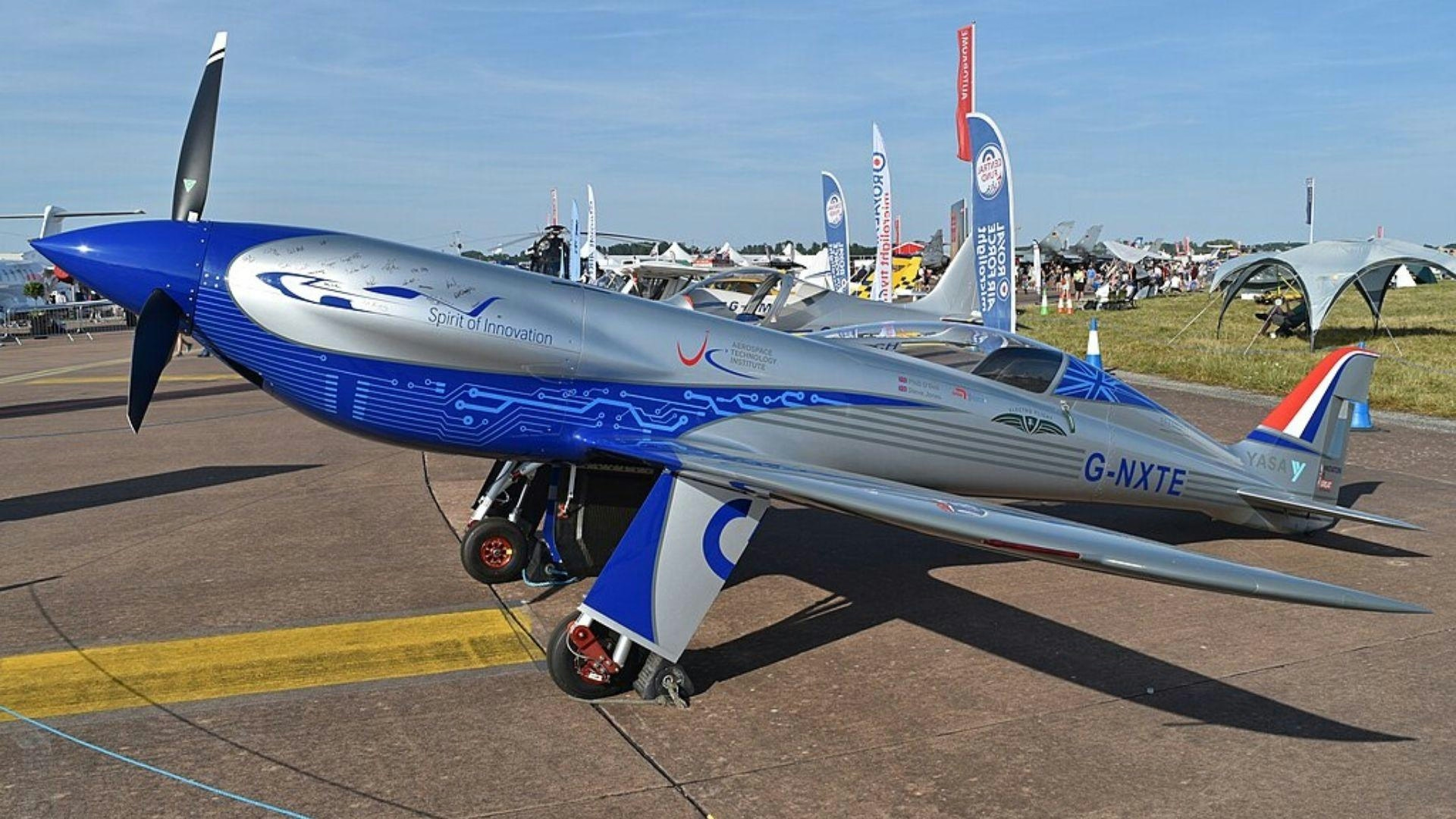
The British Vertical Aerospace VX4 targets intercity travel with its eVTOL design, and the American Archer Midnight is engineered for short-haul urban routes. The Bye Aerospace eFlyer 800 serves the business and cargo sectors as a fully electric regional aircraft. In Asia, the Chinese AutoFlight Prosperity I is gaining momentum as an eVTOL contender. The Pipistrel Velis Electro holds the distinction of being the world’s first certified electric trainer aircraft, while the Rolls-Royce Spirit of Innovation showcases the high-speed capabilities of electric propulsion through record-breaking performance.
As these aircraft prepare for commercial operation, the vision of sustainable air travel with silent wings promising fast, quiet journeys is steadily coming into focus worldwide.

Etihad Airways Suspends Airbus A380 Flights on Key Route

Aditya Birla Group Seeks Approval for Aircraft Leasing in GIFT City

Qatar Airways Highlights Innovation and Connectivity at Arabian Travel Market 2026

Hong Kong's Five-Year Plan Includes Andrew Fan's Aircraft Parts Processing Hub Proposal

ACIA Aero Leasing Delivers ATR72-600 to Air Nostrum

RTX Appoints Jill Albertelli as Head of Pratt & Whitney

TAT Technologies Joins Beyond Aero Hydrogen Aircraft Program

AURAK Study Highlights Barriers to Air Taxi Adoption in Emerging Economies

Xiamen Air Selects Altitude for 787 Maintenance at Heathrow

Etihad and Swissport Extend Global Partnership
