Image

Orchestrate AI insights into action

Join the AeroGenie waitlist today!

Trending

Categories

Smartflyer and H55 Deliver Certifiable Battery Modules for SFX1 Electric Aircraft
April 24, 2026By ePlane AI
Smartflyer and H55 Deliver Certifiable Battery Modules for SFX1 Electric Aircraft
0
0
Smartflyer SFX1
H55
Electric Aircraft Battery

Smartflyer and H55 Deliver Certifiable Battery Modules for SFX1 Electric Aircraft

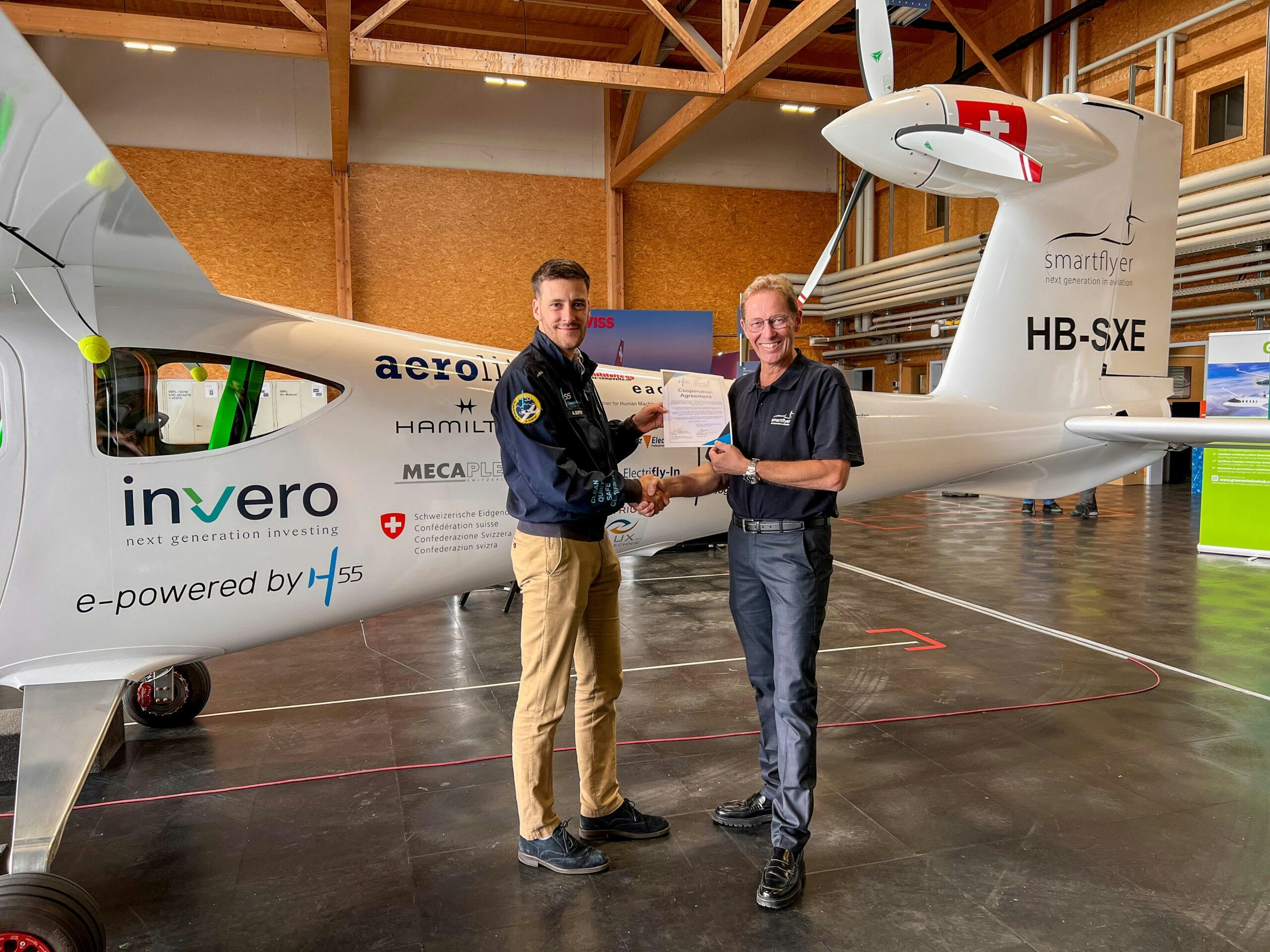
Smartflyer has announced the successful delivery of the first batch of Adagio battery modules from H55, marking a pivotal advancement in the development of the Smartflyer SFX1 electric aircraft. Unveiled on April 20, 2026, in Sion and Selzach, Switzerland, this delivery represents a critical milestone for Smartflyer’s Proof of Concept Demonstrator program and a significant step forward in the industrialization of H55’s certified electric propulsion technologies.

Advancing Integration and Testing

The incorporation of these certifiable battery modules allows Smartflyer to progress from component-level validation to full system integration and testing. This next phase will involve comprehensive system-level validation of the propulsion architecture, energy management, and other essential aircraft systems. These efforts are designed to prepare the SFX1 for an upcoming ground test campaign scheduled for the summer, with the first flight planned for autumn. This timeline keeps the program aligned with its established development roadmap.

For H55, the delivery highlights the company’s expanding role as a provider of scalable, commercially viable electric propulsion solutions. The Adagio battery system has successfully completed all regulator-mandated certification tests, confirming its safety, reliability, and suitability for a variety of electric and hybrid-electric aircraft applications. Recent agreements and deliveries underscore H55’s proactive approach to market readiness and regulatory compliance, positioning the company as a leader in the advanced air mobility sector.

Challenges and Industry Implications

Despite these achievements, both Smartflyer and H55 face considerable challenges ahead. The certification process for the battery modules demands rigorous testing and strict adherence to aviation safety standards. Market reception is anticipated to be mixed; while early adopters may welcome the innovation, more traditional industry stakeholders could approach it with caution. Meanwhile, competitors are expected to respond by developing comparable battery technologies or enhancing their existing systems to maintain market competitiveness.

Rolf Stuber, CEO of Smartflyer, emphasized the significance of this milestone, stating, “Receiving the first Adagio battery modules from H55 is a major milestone for Smartflyer and a key enabler for the next phase of our development program. It also highlights the strength of our collaboration with a partner whose technology is not only innovative but ready for real-world application. Together, we are taking concrete steps toward bringing efficient and sustainable aviation solutions to market.”

Rob Solomon, CEO of H55, added, “This delivery marks an important step in bringing H55’s certified battery and propulsion solutions into operational aircraft programs. Our collaboration with Smartflyer illustrates how our technology, spanning both electric and hybrid-electric configurations, is moving from development into commercial application, enabling aircraft manufacturers to accelerate their path to flight. We are proud to support the SFX1 program and contribute to the broader adoption of electric and hybrid-electric aviation.”

As the SFX1 program advances, integration activities are intensifying, with teams concentrating on installation, calibration, and test readiness. The successful delivery and integration of H55’s certified battery modules not only propel Smartflyer’s ambitions but also signal a broader industry shift toward sustainable, electric-powered flight.

More news
Airline CEOs Blame Engine Manufacturers for Aircraft Delivery Delays

Airline CEOs Blame Engine Manufacturers for Aircraft Delivery Delays

Airline CEOs Criticize Engine Manufacturers Over Aircraft Delivery Delays At the recent International Air Transport Association (IATA) annual summit in Rio de Janeiro, airline executives voiced strong criticism of jet engine manufacturers, attributing persistent engine problems and escalating maintenance costs to widespread aircraft groundings and delivery delays that may extend for years. The concerns highlight a significant bottleneck within the aviation industry, affecting global fleets and complicating airline operations. Engine Issues Disrupting Global Fleets Executives from leading airlines emphasized that engine reliability remains a critical challenge despite some recent progress. Jerome Cadier, CEO of LATAM Brasil, underscored the severity of the issue by revealing that 12 of the carrier’s single-aisle aircraft are currently grounded due to engine complications. This problem is not isolated; hundreds of Airbus A320neo jets worldwide have been sidelined, primarily because of prolonged wait times for engine inspections and repairs. A manufacturing defect at RTX’s Pratt & Whitney has notably hindered the production of its fuel-efficient geared turbofan (GTF) engines, further exacerbating supply constraints. Airlines have also reported difficulties with engines produced by Rolls-Royce and GE Aerospace, impacting both Boeing and Airbus aircraft. The reliance on single engine types in aircraft design has intensified the problem, leaving carriers vulnerable to shortages and delays. Industry Leaders Highlight Supply Chain Vulnerabilities Scott Kirby, CEO of United Airlines, criticized Boeing and Airbus for their dependence on single engine suppliers, describing it as a major constraint for the next five years. While acknowledging progress by GE Aerospace and ongoing efforts by Pratt & Whitney to address their challenges, Kirby singled out Rolls-Royce as a particular concern. United’s recent cancellation of an order for 45 Airbus A350s, stemming from a contract dispute with Rolls-Royce, underscores the gravity of the situation. The ripple effects of these delays are evident in major airline projects. Qantas, for instance, has postponed its ambitious Project Sunrise nonstop flights between Australia and New York or London, citing delays in the delivery of specially modified Airbus A350-1000 aircraft. The first of these jets is now expected in April 2027, pushed back from the original late 2026 target. Airbus has also issued warnings about further delivery delays for its A350 and A320neo families in the coming years. Manufacturers Respond Amid Rising Costs Engine manufacturers have responded by emphasizing their investments to expand repair and production capacities. RTX stated it is working to enhance the durability of its GTF engines, while GE Aerospace announced efforts to increase resources to meet demand. Rolls-Royce, however, has yet to provide a public comment on the matter. Meanwhile, rising maintenance and ownership costs are compounding the challenges faced by airlines. Alexis von Hoensbroech, CEO of WestJet, highlighted that modern engines are incurring higher-than-expected maintenance expenses, which are offsetting anticipated fuel savings. He noted a significant increase in unscheduled maintenance, leading to ownership costs that far exceed initial projections. Reflecting the growing frustration within the industry, outgoing IATA director general Willie Walsh accused engine manufacturers of “gouging” airlines and profiting at their expense. Despite some incremental improvements, airline executives anticipate that these constraints will continue to affect the sector for several years to come.
Hydrogen Aviation Startup ZeroAvia Withdraws from Seattle Amid Reduced Ambitions

Hydrogen Aviation Startup ZeroAvia Withdraws from Seattle Amid Reduced Ambitions

Hydrogen Aviation Startup ZeroAvia Withdraws from Seattle Amid Reduced Ambitions A Promising Start and Subsequent Retrenchment ZeroAvia, once heralded as a pioneering force in clean aviation, has significantly scaled back its operations and withdrawn from the Seattle area, underscoring the mounting challenges faced by green aviation startups. Founded in California in 2017, the company quickly garnered attention and substantial investment, including support from Bill Gates’ Breakthrough Energy Ventures and Amazon’s Climate Pledge Fund. ZeroAvia expanded its footprint to Washington state, establishing a 136,000-square-foot research and development facility in Everett, strategically located near Boeing’s operations. The company also forged a partnership with Alaska Airlines to retrofit a retired Q400 turboprop with its hydrogen-electric powertrain, a project that was celebrated in 2023 by then-Governor Jay Inslee as a significant milestone for sustainable aviation in the region. However, three years on, ZeroAvia’s presence in Washington has diminished to a minimal sales team. The ambitious hydrogen retrofit of the Alaska Airlines aircraft never came to fruition, and the future of the Paine Field facility remains uncertain. Product development efforts have shifted overseas to the United Kingdom, and the company has completely exited California. These developments reflect a marked retreat from the company’s earlier expansive vision. Leadership Changes and Sector-Wide Challenges The company’s strategic pullback coincides with considerable internal upheaval. Founder and CEO Val Miftakhov recently resigned to pursue other opportunities, following a period characterized by staff reductions and financial constraints. At least three other senior executives have also departed, signaling a significant leadership transition. These internal challenges mirror broader difficulties within the green aviation sector, where startups contend with high risks, protracted development timelines, and uncertain financial returns. The recent bankruptcy of Maeve Aerospace further highlights the precarious funding environment confronting companies striving to achieve net-zero aviation. Despite these setbacks, ZeroAvia insists that its fundamental mission remains intact. Chief Strategic Officer James McMicking emphasized that the company continues to prioritize hydrogen-electric powertrains aimed at decarbonization and cost reduction, though it must now adjust its pace and focus in response to evolving market conditions. The Complex Path to Aviation Decarbonization Aviation remains one of the most difficult industries to decarbonize due to the high energy density and widespread availability of traditional jet fuel, which pose significant barriers to the adoption of alternatives such as hydrogen, batteries, and sustainable aviation fuels. ZeroAvia’s original plan for its Everett facility involved developing a comprehensive suite of hydrogen fuel cells, power electronics, compressors, and advanced electric motors, offering both complete engines and individual components to customers. Nevertheless, hydrogen adoption in the United States has lagged behind expectations. While the Biden administration initially fostered momentum for the sector, support diminished following the change in administration last year, complicating ZeroAvia’s efforts further. Snohomish County Executive Dave Somers expressed sympathy for the company’s difficulties, acknowledging the broader challenges faced by businesses operating in the emerging clean aviation industry. ZeroAvia’s retrenchment highlights the formidable technological, financial, and policy obstacles confronting startups in the race to decarbonize aviation, as the industry continues to grapple with the complexities of transitioning to sustainable alternatives.
Why Nigeria Must Turn Airports Into Engines of Growth

Why Nigeria Must Turn Airports Into Engines of Growth

Why Nigeria Must Turn Airports Into Engines of Growth Across Nigeria, the rapid emergence of new airports has become a prominent feature of the nation’s infrastructure landscape. Governors proudly commission these facilities, and supporters celebrate them as symbols of progress and modernization. Conversely, critics often dismiss them as expensive vanity projects lacking clear economic justification. However, both perspectives overlook a fundamental truth: an airport by itself does not constitute a development strategy or an economic achievement. A runway is not an economy. The critical issue is not whether a state can construct an airport, but whether it can cultivate a thriving economy around it. Expansion of Airport Infrastructure and Public Skepticism Over the past decade, Nigeria has experienced an unprecedented expansion in airport infrastructure. New airports have been inaugurated in states such as Anambra, Bayelsa, Ebonyi, and Nasarawa, while existing airports have undergone significant upgrades. For many state governments, aviation infrastructure symbolizes modernity and serves as a gateway to attracting investment. Yet, each announcement of a new airport is met with familiar skepticism. Many Nigerians question the necessity, sustainability, and opportunity cost of these projects, wondering if the resources might be better allocated elsewhere. These concerns are legitimate and warrant serious reflection. This skepticism is partly rooted in a broader lack of public trust. Nigerians have witnessed numerous grand projects launched with great fanfare that ultimately failed to deliver on their promises. This history fosters doubt about official assurances of economic transformation. Furthermore, proponents of airport projects often emphasize the physical infrastructure—runways, terminals, control towers—without articulating how these investments will generate employment, stimulate commerce, attract investment, support exports, enhance tourism, or benefit local communities. The discourse tends to focus narrowly on infrastructure rather than on holistic development. Airports as Catalysts for Economic Integration and Growth The future success of Nigeria’s airport projects hinges on a crucial distinction: airports matter not because they exist, but because of what they enable. The proliferation of new airports reflects a broader ambition among states to integrate more fully with national and international markets. For instance, the Chinua Achebe International Airport in Anambra State handled over 140 flights and nearly 4,000 passengers in its first month of operation, demonstrating the potential for connectivity to drive economic activity. Similar aspirations underpin projects in Bayelsa, Ebonyi, and Nasarawa. The rationale is clear: connectivity is essential. Improved access benefits businesses, investors, tourists, students, and professionals alike. However, constructing an airport should not be viewed as the culmination of a development plan but rather as its starting point. Globally, the most successful airports function not merely as transport hubs but as dynamic economic ecosystems that foster commerce, innovation, and employment. Challenges and Opportunities in Nigeria’s Aviation Sector Transforming Nigeria’s airports into engines of growth faces significant challenges. Recent jet fuel shortages have disrupted airline operations, exposing vulnerabilities within the aviation sector. These disruptions have elicited mixed reactions from investors: some express concern about the sector’s stability, while others perceive opportunities arising from proposed reforms and new initiatives. One such initiative is the Nigeria Aircraft Leasing Company, which aims to reduce operational costs for domestic carriers and promote greater competition, potentially strengthening the sector’s resilience. Simultaneously, Nigeria’s broader economic strategy, highlighted at forums such as the Nigeria Energy Forum 2026, emphasizes industrial growth and diversification. Leveraging local industries and enhancing infrastructure—including airports—are central components of this vision. Ultimately, airports possess the potential to serve as powerful catalysts for economic growth, but only if they are integrated into a comprehensive strategy that addresses operational challenges, rebuilds public trust, and links infrastructure development to tangible economic opportunities. The runway should mark the beginning, not the end, of Nigeria’s pursuit of sustainable development.
Danantara Indonesia Considers Entering Aircraft Leasing Sector

Danantara Indonesia Considers Entering Aircraft Leasing Sector

Danantara Indonesia Explores Entry into Aircraft Leasing Sector Amid Boeing Acquisition Jakarta — Danantara Indonesia is contemplating an expansion into the aircraft leasing industry as it prepares to acquire new Boeing passenger jets for Garuda Indonesia, the national airline. This strategic consideration aligns with Indonesia’s obligations under a recent bilateral trade agreement with the United States. Commitment to Boeing Purchase Under Bilateral Trade Agreement Danantara’s Chief Operating Officer and Head of the State-Owned Enterprises Regulatory Agency (BP BUMN), Dony Oskaria, disclosed during a parliamentary session in Senayan that the company is evaluating the establishment of its own aircraft leasing business. This initiative is part of fulfilling Indonesia’s commitment to purchase 50 Boeing jets for Garuda Indonesia, as stipulated in the trade deal signed earlier this year. Oskaria emphasized the importance of synchronizing aircraft delivery schedules with the selection of an appropriate leasing model, stating that the company will carefully assess the most viable options. The trade agreement, titled “Toward a New Golden Age for the US-Indonesia Alliance,” mandates Indonesia to procure commercial aircraft and related goods and services from the United States valued at approximately US$13.5 billion. Indonesian Investment Minister Rosan Roeslani confirmed the Boeing acquisition plans in February, highlighting ongoing collaboration between his ministry and Danantara to implement the agreement. Challenges and Market Reactions to Danantara’s Potential Leasing Venture Danantara’s potential foray into aircraft leasing faces significant challenges, including navigating complex regulatory frameworks, securing substantial financing, and competing against well-established global leasing companies. These factors have elicited mixed reactions from the market, with some investors expressing doubts about the feasibility of Indonesia’s expanded export and aviation strategies. This skepticism was reflected in a nearly four percent decline in the stock market following the announcement. Established industry players are anticipated to respond by leveraging their entrenched market positions and financial strength to maintain their competitive advantage against new entrants such as Danantara. Despite these obstacles, Danantara remains committed to honoring its obligations under the US-Indonesia trade agreement while thoroughly evaluating the risks and opportunities associated with entering the competitive aircraft leasing sector.
Certification, eIPP, and Partnerships Advance Electric Aviation and Infrastructure

Certification, eIPP, and Partnerships Advance Electric Aviation and Infrastructure

Certification, eIPP, and Partnerships Advance Electric Aviation and Infrastructure The Jefferies Innovative Aerospace Virtual Summit 2026 recently highlighted notable progress in the certification of electric aircraft, the expansion of charging infrastructure, and the establishment of strategic partnerships within the sector. Companies such as Beta Technologies, Inc. (BETA) are capitalizing on regulatory initiatives like the Federal Aviation Administration’s (FAA) Electric Integrated Pilot Program (eIPP) to facilitate early commercial operations. Alongside regulatory engagement, these firms are also exploring innovation and revenue diversification through ventures in artificial intelligence and defense projects. Regulatory Landscape and Industry Responses Despite these advancements, the journey toward widespread electric aviation remains fraught with complexity. The US Government Accountability Office has emphasized ongoing regulatory challenges, pointing to uncertainty regarding the timeline for electric aircraft to achieve full commercial service. This ambiguity is reflected in the market’s mixed reception to the FAA’s eIPP pilot program. While some industry participants express optimism about the program’s capacity to accelerate certification and deployment, others remain cautious, highlighting unresolved questions about regulatory requirements and timelines. In response, competitors are adopting varied approaches. Vaeridion, for instance, is focusing on securing FAA certification and has expanded its advisory panel to better navigate the shifting regulatory environment. Joby Aviation has also reported progress under the eIPP framework, underscoring its continued collaboration with regulators to meet certification milestones. Infrastructure and Market Viability Challenges Beyond regulatory hurdles, the industry confronts significant questions regarding the viability of electric aircraft business models and the readiness of supporting infrastructure. Although companies are investing in charging networks and forging operational partnerships, concerns linger about whether these initiatives will scale rapidly enough to sustain commercial operations. The uncertainty surrounding infrastructure deployment and market adoption remains a substantial barrier to entry. As the electric aviation sector evolves, the dynamic interplay between regulatory progress, technological innovation, and infrastructure development will be pivotal. The coming years will reveal whether the prevailing industry optimism can be translated into commercial success or if regulatory and market challenges will impede the pace of adoption.
Global Airline Profits Decline as PAL and Cebu Pacific Reduce Routes

Global Airline Profits Decline as PAL and Cebu Pacific Reduce Routes

Global Airline Profits Decline Amid Rising Fuel Costs and Route Reductions Airlines around the world are confronting a significant downturn in profitability as escalating jet fuel prices and ongoing geopolitical tensions disrupt operations and inflate expenses. The International Air Transport Association (IATA) has revised its forecast, projecting that global airline profits will nearly halve this year, with combined net income expected to reach only $23 billion. This represents a 45 percent decline from the initial estimate of $41 billion and falls well short of the $45 billion profit recorded in 2025. Financial Pressures and Industry Outlook IATA anticipates that airline profit margins will contract sharply to just 2 percent, down from 4.2 percent last year and below the earlier forecast of 3.9 percent. Although total airline revenues are expected to increase by 9.4 percent to $1.17 trillion, operating costs are rising at a faster pace, projected to climb 13 percent to $1.12 trillion. The surge in expenses is largely driven by soaring jet fuel prices, which are forecasted to rise nearly 40 percent to $350 billion this year, up from $252 billion in 2025. The average price of jet fuel is expected to reach $152 per barrel, a 70 percent increase from last year’s $90 per barrel. IATA Director General Willie Walsh attributed the worsening outlook to disruptions caused by conflicts in the Middle East and the resulting spike in fuel costs. While some airlines have attempted to mitigate these pressures through fare increases, Walsh emphasized that such measures have been insufficient to maintain previous profit levels. Net profit per passenger is projected to fall to $4.50 this year, roughly half of last year’s $9.10. Walsh remarked, “Under the circumstances, that shows resilience. But it won’t even buy you a hot dog at most of the FIFA World Cup venues and it does not leave much of a buffer should other costs or taxes start rising.” Regional Impacts and Route Adjustments The Asia-Pacific region is particularly hard hit, with IATA forecasting a combined net profit of $6.6 billion for airlines in the area—33 percent lower than last year’s $9.8 billion. The region’s dependence on crude oil imports from the Middle East has exacerbated fuel shortages and price increases relative to other markets. Additionally, airspace restrictions have forced longer flight routes, increasing fuel consumption and unit costs. These factors have compelled airlines to adjust capacity and reconsider their networks. In the Philippines, major carriers Philippine Airlines (PAL) and Cebu Pacific have responded by reducing certain routes, especially those servicing the Middle East, in an effort to manage soaring fuel expenses. Cebu Pacific has issued warnings about anticipated losses and is actively restructuring its network to contain costs. Similar challenges are evident elsewhere in Asia; India’s IndiGo has temporarily cut routes within the region and plans further reductions in its European network and Boeing 787-9 fleet. Meanwhile, Ryanair CEO Michael O’Leary has cautioned that sustained high oil prices could lead to financial failures among more airlines. As the global aviation industry grapples with these mounting pressures, carriers are making difficult operational decisions to sustain their businesses and safeguard profitability in an increasingly volatile environment.
IndiGo Aims to Become a Global Airline by 2030

IndiGo Aims to Become a Global Airline by 2030

IndiGo’s Ambitious Plan to Become a Global Airline by 2030 IndiGo has announced a bold strategy to evolve into a global airline by 2030, aiming to operate a fleet exceeding 550 aircraft, carry 200 million passengers annually, and manage approximately 3,000 flights each day. This vision was detailed during a recent investor presentation, where the airline emphasized a commitment to “disciplined growth” as it seeks to expand its operations beyond the domestic market and establish a significant international presence. Growth Targets and Operational Challenges At the close of fiscal year 2026, IndiGo operated 441 aircraft and transported 123 million passengers. To meet its 2030 objectives, the airline must add over 100 aircraft and increase passenger volume by more than 60 percent within four years. Additionally, IndiGo projects nearly doubling its available seat kilometres (ASK) from 172 billion to approximately 300 billion by fiscal 2030, reflecting a substantial increase in capacity. This rapid expansion presents considerable challenges. Scaling the fleet and passenger numbers at such a pace will require significant capital investment and operational adjustments. IndiGo has already encountered difficulties, including the need to reduce its European network and phase out older aircraft models in response to rising fuel costs and persistent airspace constraints. These factors underscore the complexity of executing a global growth strategy in a competitive and volatile industry. Market Response and Competitive Landscape Reactions from market analysts have been mixed. Some view IndiGo’s expansion plan as a decisive step that could elevate the airline to a major international competitor. Others question the feasibility of achieving such rapid growth amid increasing operational expenses and potential disruptions in airspace access. The competitive environment is expected to intensify, with rival carriers likely to respond by adjusting their own route networks and capacity to protect market share both within India and internationally. Despite these concerns, IndiGo’s leadership remains steadfast in its ambition to become a “global scale” carrier by 2030. The airline underscores that disciplined and strategic growth will be essential to overcoming the challenges of international expansion and maintaining its status as India’s largest airline.
How AI Is Transforming Jobs in Airline Operations

How AI Is Transforming Jobs in Airline Operations

How AI Is Transforming Jobs in Airline Operations Artificial Intelligence (AI) is rapidly reshaping the landscape of airline operations, not by outright replacing jobs but by automating repetitive tasks and redirecting aviation personnel toward more strategic and value-added roles. Airlines are increasingly integrating AI technologies to enhance operational efficiency, improve decision-making processes, and streamline service delivery. This shift is prompting a reevaluation of the skills deemed essential within the industry, with a growing emphasis on operational data literacy, systems thinking, and fluency in AI tools. The emerging workforce is being built to collaborate with AI systems rather than work around them. AI Applications and Their Impact on Airline Operations Operational efficiency remains the foremost motivation behind AI adoption in aviation. Airlines are utilizing AI to optimize flight routes, anticipate maintenance requirements, maximize revenue streams, and refine forecasting accuracy. Customer service has also seen significant AI integration, with chatbots managing routine inquiries and AI-driven tools supporting ground operations to enhance safety and resilience. These developments, underscored by initiatives such as the International Air Transport Association’s (IATA) 2026 ground operations conference agenda, have yielded tangible improvements including reduced block times, quicker aircraft turnarounds, and more reliable maintenance and baggage handling processes. The initial deployment of AI focuses on areas where benefits are most quantifiable and operationally feasible. Early AI applications target repetitive, data-intensive, and rules-based tasks such as document retrieval, scheduling, maintenance forecasting, passenger communication, and cargo processing. Rather than eliminating entire job categories, AI facilitates faster information processing with fewer manual interventions, thereby augmenting existing workflows. Transformation of Jobs and Skills in the Aviation Sector Currently, AI is more likely to transform and enhance roles than to render them obsolete. By automating specific routine tasks, AI enables aviation professionals to concentrate on activities demanding judgment, creativity, and interpersonal skills. Research on AI’s impact within airline operations reveals a decline of approximately 13% in job postings for highly repetitive roles, contrasted with a 20% increase in demand for analytical, creative, and technical positions capable of working alongside AI technologies. The earliest changes are evident in roles closely tied to planning and coordination, including airline planners, schedulers, and operations control teams. In these data-driven positions, AI supports functions such as route optimization, disruption management, and forecasting, making them particularly amenable to augmentation through AI. Challenges and Industry Responses Despite the promising advances, the integration of AI presents significant challenges. In certain markets, such as Malaysia, projections indicate that up to 1.57 million jobs could be affected by 2026, raising concerns about potential job displacement and the equitable distribution of AI’s benefits. The substantial costs associated with reskilling workers contribute to uneven adoption rates across different regions and airlines. Market responses to AI adoption have included cost-cutting initiatives and efficiency improvements, yet concerns remain regarding transparency and fairness, especially in dynamic pricing models. Competitors increasingly deploy AI for customer support, often allowing AI to manage conversations autonomously while involving human agents discreetly for complex or high-stakes decisions. Industry forums, including the Skift Data Summit, have highlighted ongoing tensions between ambitious AI integration goals and operational realities. Airlines face the challenge of balancing the demands for speed and efficiency with the necessity of maintaining trust, transparency, and minimizing disruptions within distribution channels. Future Outlook As AI technologies continue to evolve, their role in airline operations is expected to deepen, further transforming job functions and industry practices. Airlines will need to navigate the complexities of harnessing AI’s advantages while ensuring fair outcomes for both workers and customers, adapting swiftly to the rapidly changing aviation landscape.
Global Aircraft Landing Gear and Brakes Market Outlook to 2035

Global Aircraft Landing Gear and Brakes Market Outlook to 2035

Global Aircraft Landing Gear and Brakes Market Outlook to 2035 The global market for aircraft landing gear and brakes is anticipated to expand significantly, growing from USD 827.52 million in 2026 to USD 1,244.7 million by 2035. This growth corresponds to a compound annual growth rate (CAGR) of 4.7% over the forecast period. Landing gear systems are a vital element of aerospace engineering, with the undercarriage constituting approximately 3.8% to 6.2% of the total maximum takeoff weight in both narrow-body and wide-body aircraft. Market Composition and Technological Advancements Within this sector, the main landing gear assembly holds a dominant position, accounting for 72.4% of the total shipset value, while the nose landing gear represents the remaining 27.6%. A significant technological trend is the increasing adoption of carbon-carbon composite braking systems, which now feature in approximately 64.5% of new installations. These advanced braking systems provide a substantial 40.2% reduction in weight compared to traditional steel brakes, thereby enhancing fuel efficiency and overall operational performance. Landing gear systems are generally rated for 60,000 to 75,000 flight cycles, with major overhauls required every 10 to 12 years. This maintenance schedule sustains a steady aftermarket demand, which contributes 55.8% of the sector’s global revenue. Market Dynamics and Regional Insights The United States remains the largest contributor to the global aircraft landing gear and brakes market, with 38.4% of the world’s aircraft fleet operating within North American airspace. In the U.S., narrow-body aircraft such as the Boeing 737 MAX dominate commercial deliveries, comprising 78.5% of the total. These aircraft require high-cycle landing systems capable of enduring three to five daily rotations. The defense sector further bolsters market demand, with 42.6% of the U.S. military aviation maintenance budget allocated to undercarriage and braking components for platforms including the F-35 and specialized transport aircraft. Moreover, the U.S. commands a 32.1% share of global aerospace material exports, focusing on titanium alloys and carbon-carbon composites essential for high-performance braking assemblies. Domestic manufacturing efficiency in these materials has improved by 15.4% over the past three years, enhancing the country’s competitive position in the aerospace supply chain. Key Trends and Challenges A primary driver of market growth is the 12.8% annual increase in global narrow-body aircraft deliveries, which accounts for 85.2% of the demand for lightweight landing gear systems. These systems contribute to a 3.5% improvement in fuel efficiency by reducing the overall shipset weight by 22.4%. Despite these positive trends, the market faces considerable challenges. High raw material costs, particularly for titanium alloys that constitute 45.6% of component weight, have resulted in a 14.8% increase in production lead times for 68.2% of Tier-1 aerospace suppliers. Additionally, a growing shortage of narrow-body landing gears, especially for the Airbus A320neo and Boeing 737 MAX, is emerging as a critical constraint in the aftermarket. Supply for these newer aircraft models remains extremely limited, with little improvement anticipated in the near term. This scarcity is driving up both demand and prices for these components, creating a stark contrast with the availability of parts for older aircraft models. Despite ongoing supply chain pressures and geopolitical uncertainties, the business jet segment continues to demonstrate resilience. This sector supports a robust outlook for aircraft component demand across both commercial and private aviation markets.
JAL Opens New Landing Gear Maintenance Facility at Haneda

JAL Opens New Landing Gear Maintenance Facility at Haneda

JAL Opens New Landing Gear Maintenance Facility at Haneda Japan Airlines (JAL) has initiated the construction of a cutting-edge landing gear maintenance facility within the Maintenance District of Tokyo’s Haneda Airport, marking a pivotal advancement in its aircraft maintenance operations. The groundbreaking ceremony took place on May 19, 2026, with the facility expected to be completed by December 2027. The project was formally announced on June 8, 2026, alongside the creation of Landing Gear Innovation Factory (LIF), a newly established company responsible for managing the facility’s real estate and operational functions. Enhancing Maintenance Capabilities and Operational Efficiency Landing gear, often referred to as the “legs” of an aircraft, plays a crucial role in supporting planes during takeoff, landing, and taxiing. The overhaul of these components is a highly specialized and intricate process, typically required every ten years. It involves removing the landing gear from the aircraft to perform advanced procedures such as plating, thermal spraying, painting, surface treatment, and non-destructive inspection. With over five decades of expertise, JAL is internationally recognized as a leader in landing gear maintenance. The new facility at Haneda will consolidate maintenance functions that are currently spread across multiple locations, thereby streamlining operations and introducing automation and labor-saving technologies. JAL plans to incorporate state-of-the-art equipment, including technologies being deployed in Japan for the first time. The facility’s design is guided by three primary objectives: transferring expert technical skills to the next generation, improving quality and production efficiency through consolidation and modernization, and minimizing environmental impact by employing eco-friendly building practices. Landing gear maintenance will remain primarily under the purview of JAL Engineering Co. (JALEC), the maintenance subsidiary of the JAL Group. Together, JAL, JALEC, and LIF aim to enhance flight safety for both domestic and international operations while contributing to the broader development of Japan’s aviation industry. Strategic Positioning Amidst Global Competition JAL’s expansion into advanced landing gear maintenance comes at a time of increasing competition from global maintenance providers such as Héroux-Devtek and Antavia. The success of the new facility will depend on its seamless integration with JAL’s existing maintenance infrastructure and its ability to harness advanced technologies. The airline is already exploring innovations in automation and robotics, including partnerships with GMO AI & Robotics for baggage and cargo handling, which may inform future maintenance processes. Industry analysts suggest that the launch of this facility could bolster market confidence in JAL’s technical expertise. In response, competitors may seek to enhance their own service offerings or pursue strategic alliances to maintain their market share. JAL’s investment in the Haneda landing gear maintenance facility underscores its ambition to establish a next-generation hub for landing gear overhaul. This initiative positions the airline to meet growing global demand for aircraft maintenance services while setting new benchmarks in safety, efficiency, and sustainability.
line









