
Orchestrate AI insights into action

Trending
Categories
The Airline That Created Premium Economy Now Has The Most Spacious Version In The Sky
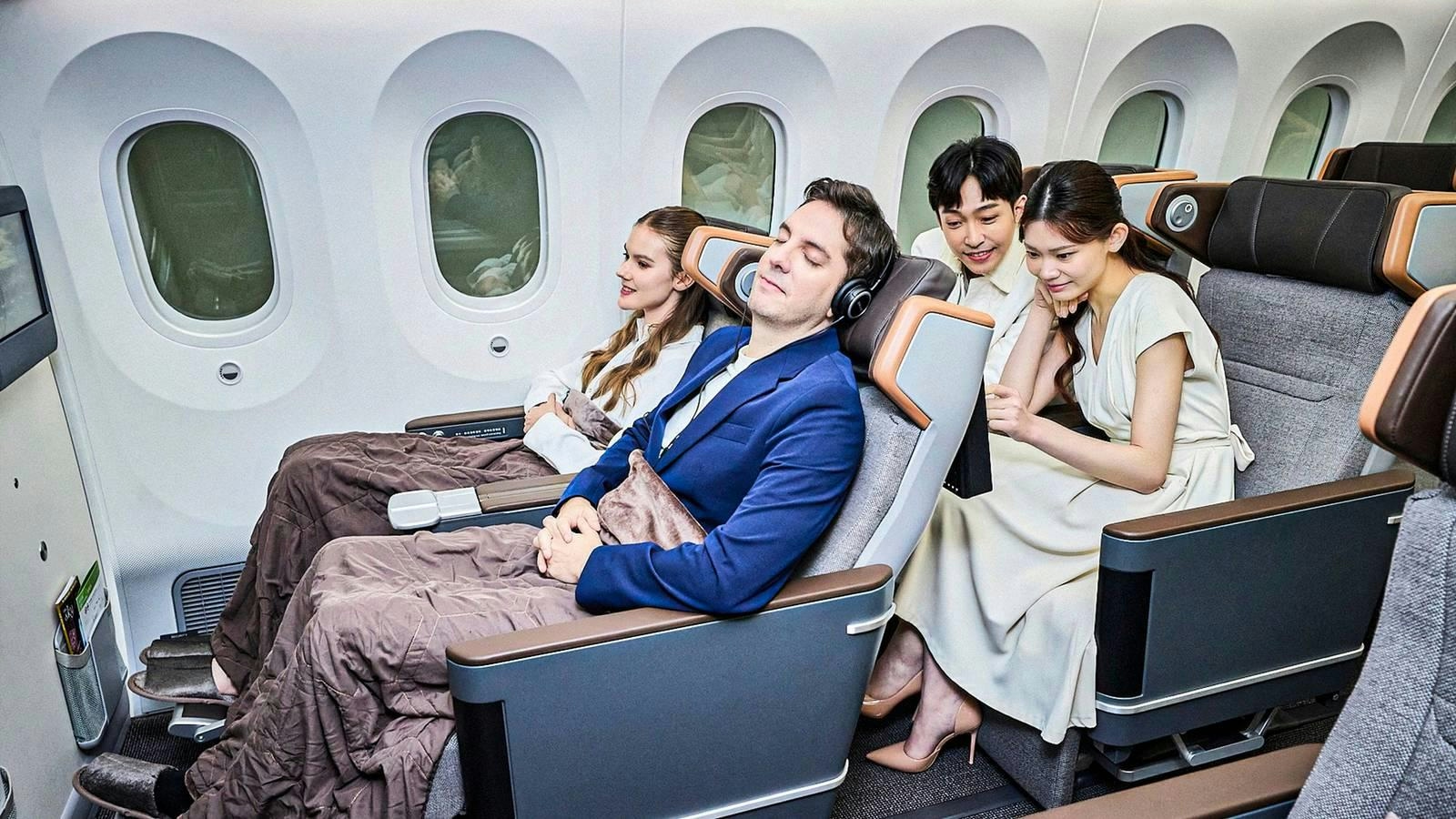
The Airline That Created Premium Economy Now Offers the Most Spacious Version in the Sky
As global competition intensifies, airlines are increasingly focusing on upgrading their premium economy cabins, recognizing the growing demand from long-haul travelers seeking a balance between the cramped economy seats and the high cost of business class. This evolution reflects not only changing passenger preferences but also a strategic shift in airline revenue models, with premium economy emerging as one of the most profitable sections on widebody aircraft when measured by revenue per square foot.
The Origins of Premium Economy
The concept of premium economy dates back to the early 1990s, when EVA Air pioneered a new class of service that filled the gap between economy and business class. At a time when airlines offered only basic economy or premium first and business class cabins, EVA Air introduced its Evergreen Deluxe Class in 1992 on Boeing 747-400 flights between Taipei and Los Angeles. This innovative offering featured a generous 38-inch seat pitch in a 2-4-2 configuration, wider seats, upgraded meals, and individual entertainment screens—an advancement at a time when shared monitors were still the norm.
Around the same period, Virgin Atlantic launched a similar product initially called Mid Class, later rebranded as premium economy. Although Virgin Atlantic announced its cabin slightly earlier, EVA Air was the first to operate scheduled flights with the new class. This simultaneous introduction laid the groundwork for what would become a globally adopted cabin category over the following decades.
Setting a New Benchmark in Comfort and Amenities
In 2025, EVA Air is set to reaffirm its leadership by unveiling the most spacious premium economy cabin to date. The airline’s latest iteration promises unprecedented comfort and amenities that approach the standards of regional business class. This development comes amid a broader industry trend, with airlines investing billions to retrofit fleets and elevate the passenger experience beyond basic upgrades.
The competitive landscape is rapidly evolving. Emirates, for example, has introduced an exceptionally spacious premium economy cabin on the upper deck of its A380, raising expectations for comfort and potentially altering market dynamics. Major U.S. carriers such as United and American Airlines are also expanding their premium economy offerings, intensifying competition for these mid-tier seats and putting pressure on traditional economy class. Even Turkish Airlines, which had long resisted the concept, plans to launch premium economy by 2028, underscoring the widespread industry shift toward enhanced premium cabins.
The Future of Long-Haul Travel
As more airlines embrace and enhance premium economy, passengers can anticipate increased competition, evolving amenities, and shifting price structures. The rise of this cabin class represents more than just improved comfort; it is a strategic response to changing consumer expectations and a critical battleground for airline profitability. With industry leaders like EVA Air and Emirates setting new standards, the future of long-haul air travel is poised to become both more comfortable and fiercely competitive.

Etihad Airways Suspends Airbus A380 Flights on Key Route

Aditya Birla Group Seeks Approval for Aircraft Leasing in GIFT City

Qatar Airways Highlights Innovation and Connectivity at Arabian Travel Market 2026

Hong Kong's Five-Year Plan Includes Andrew Fan's Aircraft Parts Processing Hub Proposal

ACIA Aero Leasing Delivers ATR72-600 to Air Nostrum

RTX Appoints Jill Albertelli as Head of Pratt & Whitney

TAT Technologies Joins Beyond Aero Hydrogen Aircraft Program

AURAK Study Highlights Barriers to Air Taxi Adoption in Emerging Economies

Xiamen Air Selects Altitude for 787 Maintenance at Heathrow

Etihad and Swissport Extend Global Partnership
