
Orchestrate AI insights into action

Trending
Categories
The Similarities Between Diesel and Jet Fuel
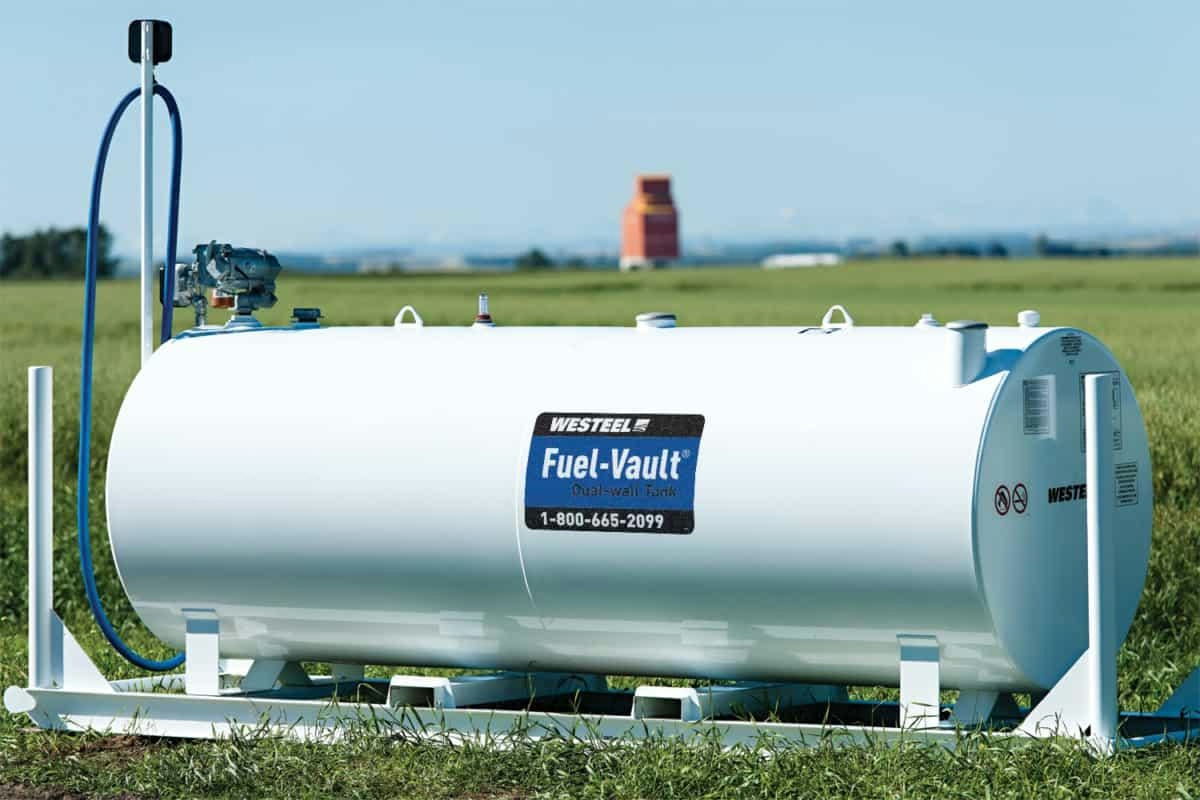
The Similarities Between Diesel and Jet Fuel
Chemical Composition and Operational Characteristics
Recent increases in fuel prices have placed considerable financial pressure on both drivers and airlines, highlighting the interconnected nature of diesel and jet fuel markets. Both fuels originate from crude oil and share a closely related chemical structure. This similarity is such that diesel engines can technically operate on jet fuel, underscoring their comparable properties. The predominant jet fuel used in commercial aviation, Jet A1, is a highly refined kerosene-based product engineered for clean and efficient combustion. It features a freezing point of -53 degrees Fahrenheit, which ensures safe operation at high altitudes and in extremely cold environments. Additionally, its flash point of approximately 100 degrees Fahrenheit minimizes fire hazards. Diesel fuel exhibits similar characteristics, with a high flash point and low freezing point, enabling reliable ignition through compression.
Market Implications and Economic Impact
The close relationship between diesel and jet fuel presents challenges beyond their chemical likeness. Increased demand for one fuel can directly influence the supply and pricing of the other. In recent weeks, jet fuel prices have doubled, driven by a surge in demand, logistical constraints, and escalating geopolitical tensions, notably the ongoing conflict involving Iran. These factors have disrupted supply chains and contributed to significant volatility in fuel markets.
The economic repercussions are already apparent. Airlines, confronted with sharply rising fuel costs, have responded by adjusting flight schedules, increasing ticket prices, and investigating alternative fuel options. These necessary measures are likely to have broader consequences, as elevated transportation costs permeate various sectors of the economy.
The intertwined nature of diesel and jet fuel markets means that their chemical similarities, while operationally advantageous, also exacerbate supply shortages and price fluctuations. As geopolitical tensions and logistical challenges continue, both industries and their consumers are expected to experience ongoing impacts at the pump and beyond.

Korean Air Finalizes $36.2 Billion Deal with Boeing

Korean Air Finalizes Order for 103 Boeing Jets and Engines

Embraer E195-E2 Features Distinctive Engine Placement Among Regional Jets

What Passengers Can Expect on Boeing’s New 777X Jet

How Ethiopian Airlines Became Africa’s Leading Carrier Amid Gulf Competition

Joby Aviation Extends Autonomous Flight Capabilities with Cross-Country Tour

Strengthening Europe's Aviation Supply Chain Amid Uncertainty

The Evolution of the Aircraft Maintenance Engineer Role
He 111Z Zwilling: Twin Fuselages, Five Engines, One Pilot

Monacair Plans Electric Air Taxi Service Between Monaco and Nice by 2029
