
Orchestrate AI insights into action

Trending
Categories
Third Russian Airliner Aborts Flight After Fire Alert This Summer
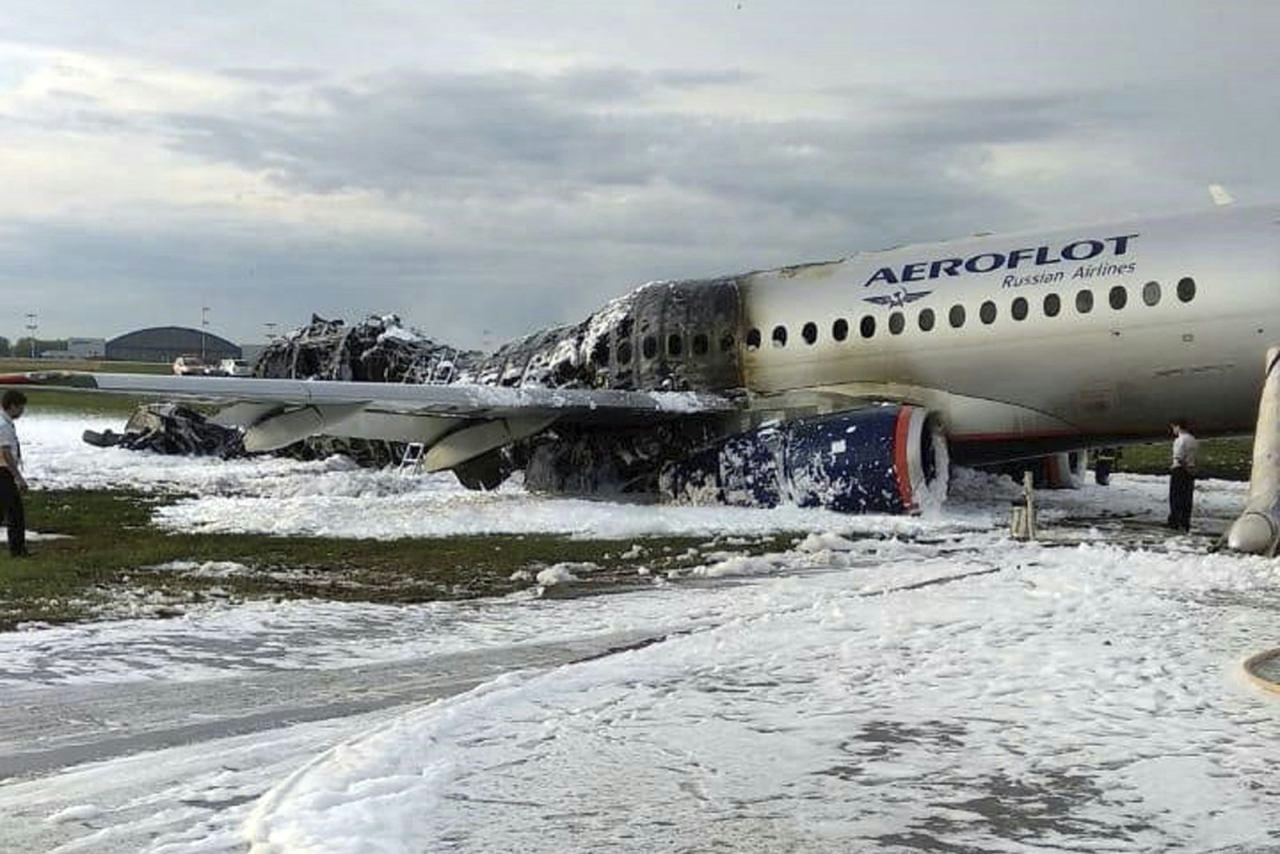
Third Russian Airliner Aborts Flight After Fire Alert This Summer
Incident Overview
On July 29, an S7 Airlines Airbus A320 was compelled to return to Novosibirsk shortly after takeoff following an engine fire warning, according to Russia’s Eastern Interregional Transport Investigative Directorate. The aircraft, carrying 160 passengers and six crew members, safely landed at Tolmachevo Airport without any reported injuries. Authorities have initiated a preliminary investigation into potential violations of aviation safety regulations. Investigators confirmed that a fire occurred in one of the engines during the flight, but the crew successfully extinguished it before landing. S7 Airlines announced that affected passengers would continue their journey to Krasnodar aboard a replacement aircraft.
Context and Industry Implications
This incident represents the third engine-related emergency involving a Russian passenger airliner since the start of the summer, raising significant concerns about the reliability and safety of Russian aircraft. The recurrence of such events is expected to prompt heightened scrutiny from aviation authorities and may undermine passenger confidence in Russian carriers. Industry analysts suggest that competing airlines might respond by emphasizing their own safety protocols and issuing public reassurances to maintain traveler trust.
The latest emergency follows two similar occurrences earlier this summer. On June 22, a Red Wings Sukhoi Superjet 100 lost the cowling of one of its engines during a flight from Yekaterinburg to Astana. Just days prior, on June 17, a Smartavia Boeing 737-800 returned to Sochi after an engine failure was reported during a flight to Arkhangelsk.
Broader Challenges in Russian Aviation
These repeated incidents have intensified discussions regarding the overall state of Russian aviation maintenance and operational standards. The sector continues to grapple with challenges stemming from aircraft shortages, spare parts deficits, and maintenance difficulties exacerbated by international sanctions. In response to these mounting issues, Ukraine’s Foreign Intelligence Service recently disclosed plans by Rostec, Russia’s state-owned defense conglomerate, to merge several aviation companies—including Red Wings and SkyGates—into a single holding company aimed at better managing the crisis within the civil aviation sector.
As investigations proceed, this series of emergencies is likely to fuel ongoing debate about the safety standards and long-term viability of Russia’s commercial aviation industry.

Etihad Deploys Widebody Fleet to Meet Strong Demand

Korean Air Finalizes $36.2 Billion Deal with Boeing

Australia’s RFDS Queensland Section Orders Six King Air 260Cs

Korean Air Finalizes Order for 103 Boeing Jets and Engines

Embraer E195-E2 Features Distinctive Engine Placement Among Regional Jets

What Passengers Can Expect on Boeing’s New 777X Jet

How Ethiopian Airlines Became Africa’s Leading Carrier Amid Gulf Competition

Joby Aviation Extends Autonomous Flight Capabilities with Cross-Country Tour

Strengthening Europe's Aviation Supply Chain Amid Uncertainty

The Evolution of the Aircraft Maintenance Engineer Role
