
Orchestrate AI insights into action

Trending
Categories
TIM Aerospace
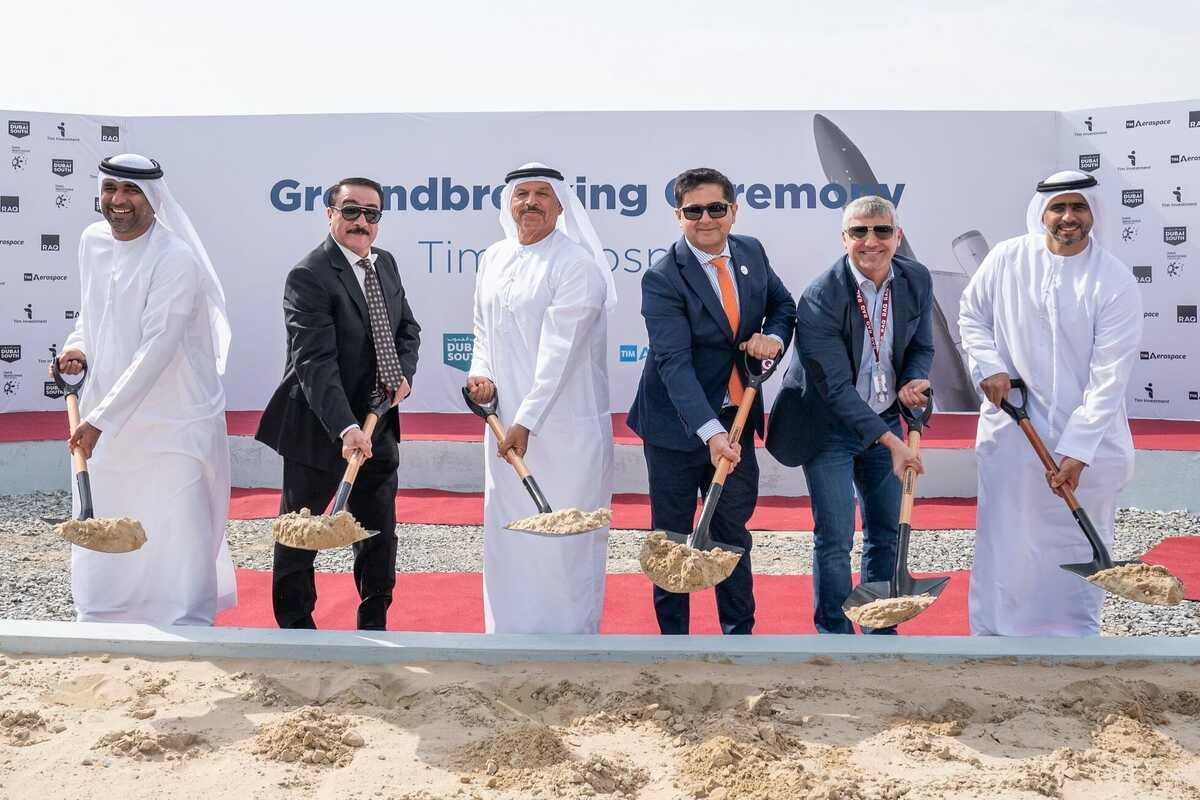
TIM Aerospace: Shaping the Future of MRO in the Middle East
The global aviation maintenance sector is undergoing significant growth, driven by expanding airline fleets and extended aircraft service lifespans. This trend has intensified the demand for high-quality maintenance, repair, and overhaul (MRO) services worldwide. Within this evolving landscape, TIM Aerospace is establishing itself as a prominent independent player in the Middle East’s MRO market. Situated in Dubai South, a rapidly developing aviation hub, the company is constructing one of the region’s largest independent maintenance facilities.
According to CEO Haluk Acar, TIM Aerospace’s ambitions extend beyond the scale of its operations. He emphasizes that the company was founded with a clear mission to create a disciplined, independent MRO platform rooted in operational precision, regulatory compliance, and sustainable growth. “Our location at Dubai World Central places us within one of the region’s most strategically important aviation hubs. However, infrastructure alone does not define a successful maintenance organisation,” Acar states. “From the outset, our focus has been on designing a controlled, measurable, and accountable maintenance ecosystem—one that prioritises predictability, safety culture, sustainability, and transparency.”
Operational Excellence and Technological Integration
TIM Aerospace’s new purpose-built facility at Dubai South covers approximately 18,000 square metres and features a distinctive single-span hangar design. By eliminating internal columns, the hangar provides an unobstructed space that enhances aircraft movement safety and streamlines workflow efficiency. The facility is capable of accommodating up to four Boeing 777-300s, five Boeing 777-200s, or as many as twelve narrow-body aircraft, depending on operational requirements. This versatility allows the company to manage multiple heavy maintenance projects simultaneously while maintaining rigorous safety and workflow standards.
However, Acar stresses that the physical size of the facility is only one aspect of its world-class status. Equally important is the integration of advanced technology. TIM Aerospace is pioneering a fully paperless maintenance environment supported by sophisticated digital MRO systems. Maintenance task cards, compliance documentation, and work packages are all managed digitally, incorporating secure digital stamp authorisations to ensure regulatory traceability and provide real-time transparency for both customers and authorities.
In addition, the company is implementing an RFID-based tool control system throughout the hangar. This innovation enhances traceability, reduces the risk of human error, and strengthens foreign object debris (FOD) prevention protocols. “The discipline, traceability, and technology embedded within our new hangar truly distinguish it and reflect our broader philosophy on operational excellence in the MRO industry,” Acar explains.
Navigating Industry Challenges and Competition
Despite benefiting from Dubai’s supportive regulatory and industrial environment, TIM Aerospace operates within a complex and challenging global context. Geopolitical tensions, particularly those related to the Iran-U.S. conflict, have disrupted supply chains and complicated the procurement of raw materials essential to aerospace manufacturing. Concurrently, the competitive landscape is evolving. Regional rivals such as Unimech Aerospace and Manufacturing Ltd have recently enhanced their technical capabilities and investment profiles, even amid financial pressures. At the same time, major industry players like Safran are responding to increased defense spending and market demand by planning substantial expansions in missile production capacity by 2030.
In this dynamic environment, TIM Aerospace’s commitment to operational discipline, technological innovation, and sustainable development positions it as a resilient and forward-looking force within the Middle East’s MRO sector.

Etihad Airways Suspends Airbus A380 Flights on Key Route

Aditya Birla Group Seeks Approval for Aircraft Leasing in GIFT City

Qatar Airways Highlights Innovation and Connectivity at Arabian Travel Market 2026

Hong Kong's Five-Year Plan Includes Andrew Fan's Aircraft Parts Processing Hub Proposal

ACIA Aero Leasing Delivers ATR72-600 to Air Nostrum

RTX Appoints Jill Albertelli as Head of Pratt & Whitney

TAT Technologies Joins Beyond Aero Hydrogen Aircraft Program

AURAK Study Highlights Barriers to Air Taxi Adoption in Emerging Economies

Xiamen Air Selects Altitude for 787 Maintenance at Heathrow

Etihad and Swissport Extend Global Partnership
