Image

Orchestrate AI insights into action

Join the AeroGenie waitlist today!

Trending

Categories

TPA Proposes Air Taxi Service Between Tampa and St. Petersburg
April 21, 2026By ePlane AI
TPA Proposes Air Taxi Service Between Tampa and St. Petersburg
0
0
Tampa International Airport
Air Taxi Service
Electric VTOL Aircraft

Tampa International Airport Proposes Air Taxi Service Linking Tampa and St. Petersburg

Tampa International Airport (TPA) has announced plans to introduce air taxi routes across Tampa Bay, including a direct connection between Tampa and St. Petersburg. This initiative forms part of a broader $1.5 billion terminal expansion aimed at accommodating regional growth and enhancing transportation infrastructure. Airport CEO Michael Stephens outlined the vision during a presentation to the Pinellas County Commission, emphasizing collaboration with state, federal, and industry partners to integrate electric vertical takeoff and landing (eVTOL) aircraft—commonly referred to as air taxis—into the local transit network.

Vision for Air Taxi Integration and Regional Mobility

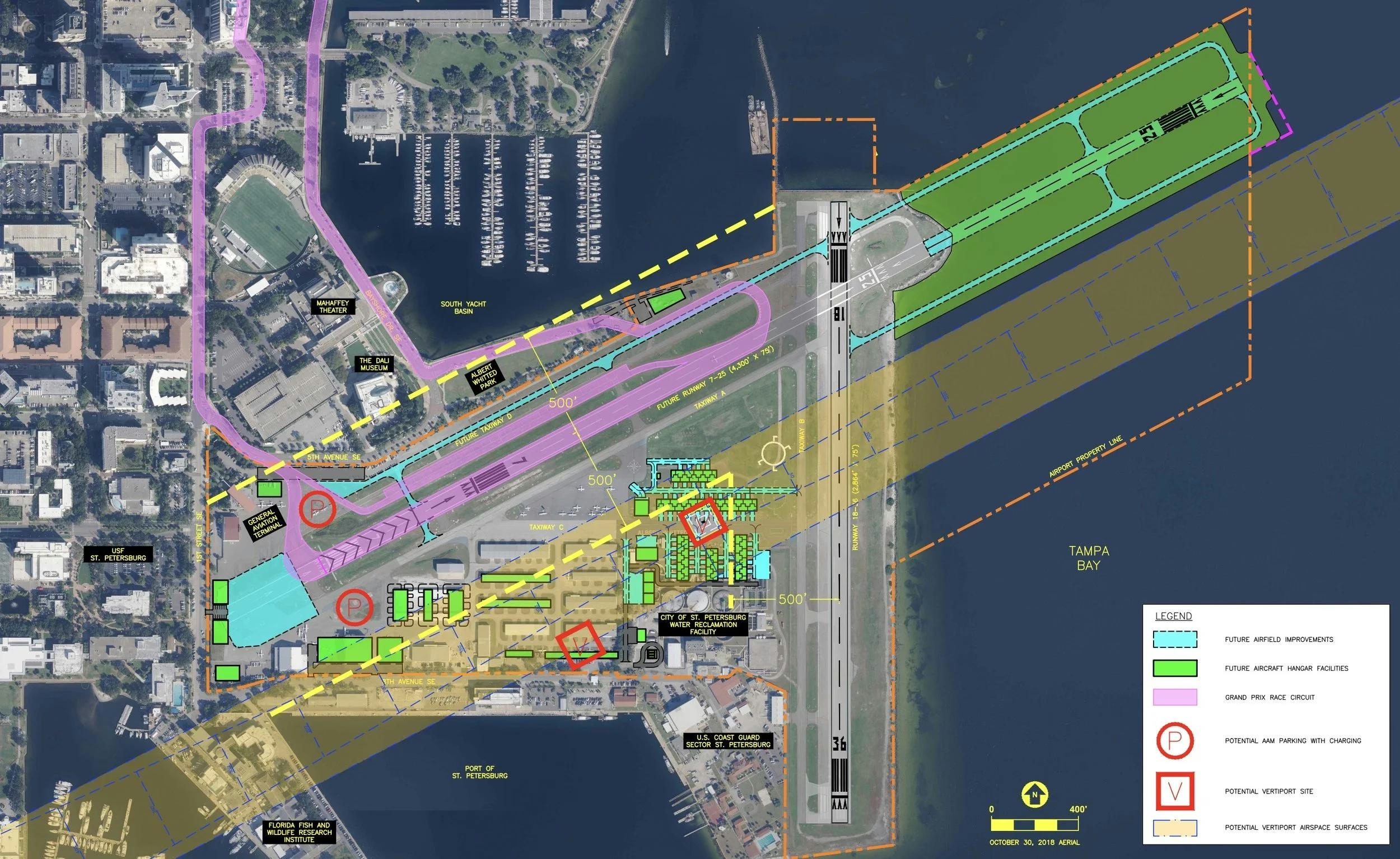
Initial proposals include routes linking Tampa International with Peter O. Knight Airport on Davis Islands, alongside other locations designed to support multimodal travel options. Stephens described the airport’s ambition to become a hub for emerging "flying car" technology, highlighting Florida’s strategic position to lead early adoption. The Tampa–Orlando corridor has been identified as a critical test market for eVTOL deployment.

The initiative responds to longstanding mobility challenges between Hillsborough and Pinellas counties, where daily commutes are hindered by limited bridge crossings. Stephens stressed the necessity of diversifying transportation modalities to better connect the region, underscoring the potential of air taxis to alleviate congestion and improve commuter options.

Industry Challenges and Ongoing Developments

Despite the promise of air taxi services, the path to implementation faces significant hurdles. The eVTOL sector is currently marked by legal disputes among major players such as Joby Aviation and Archer Aviation, who are engaged in litigation over trade secrets and business relationships. These conflicts, coupled with the rigorous certification process for eVTOL aircraft, may affect the timeline and scale of service deployment. Meanwhile, Doroni Aerospace has announced plans to test its prototype in 2027, as companies compete for market share through both technological innovation and legal strategies.

Terminal Expansion and Regional Impact

Concurrently, TPA is advancing construction on Airside D, a new 16-gate, 600,000-square-foot terminal that will serve as the airport’s primary international facility. This expansion is designed to support passenger growth from 25 million to an estimated 35 million by 2037. Stephens noted that Pinellas County contributes nearly a quarter of TPA’s total traffic, driven by tourism and a workforce that commutes across the bay. The enhanced international service is expected to meet increasing demand for access to Pinellas County’s beaches and attractions.

Following a groundbreaking in December 2024, construction on Airside D has entered the vertical phase. Upon completion, the terminal will expand customs capacity, introduce new airline lounges, and improve passenger flow. During the recent spring break period, TPA managed over 3 million passengers, maintaining wait times as low as 22 minutes—significantly shorter than delays experienced at other major airports.

With a daily workforce of approximately 10,000 employees, many of whom commute across Tampa Bay, the airport’s efforts to improve regional connectivity are critical. As TPA progresses with its expansion and explores innovative transportation solutions, the prospect of air taxi services becoming operational hinges on forthcoming regulatory approvals, legal resolutions, and market dynamics.

More news
Two Aircraft Lessors Make Major Moves at Farnborough Airshow

Two Aircraft Lessors Make Major Moves at Farnborough Airshow

Two Aircraft Lessors Make Major Moves at Farnborough Airshow Major Orders Signal Industry Influence At the Farnborough Airshow, where airlines often capture attention with new liveries and aircraft unveilings, two of the world’s largest aircraft lessors—SMBC Aviation Capital and BOC Aviation—have quietly made significant moves that underscore their critical role in the aviation industry. These lessors announced substantial orders for aircraft and engines, reflecting their strategic influence in shaping the future of global air travel. Dublin-based SMBC Aviation Capital, owned by Sumitomo Mitsui Financial Group and Sumitomo Corporation, secured agreements for 200 new narrowbody jets. Boeing received an order for 100 737 MAX aircraft, comprising 60 of the larger -10 variant and 40 of the -8. Airbus matched this with 65 A321neo and 35 A320neo jets. In addition, SMBC signed a deal with CFM International for up to 90 LEAP-1A engines to power its Airbus fleet, including 70 firm orders and 20 options. Peter Barrett, SMBC’s Chief Executive, described the transaction as a defining moment in the company’s 25-year history, ensuring a steady supply of new aircraft to airline customers well into the mid-2030s. Shortly thereafter, Singapore-based BOC Aviation, listed in Hong Kong and backed by the Bank of China, announced its largest-ever engine transaction. The company agreed to acquire up to 300 engines from CFM International, including 200 LEAP-1A and 100 LEAP-1B units. These engines will support Airbus A320neo family jets and Boeing 737-8s already on BOC Aviation’s order book. Steven Townend, BOC Aviation’s Chief Executive and Managing Director, emphasized that this transaction will underpin the company’s growth from this decade into the next. Gael Meheust, President of CFM International, highlighted the enduring partnership with BOC Aviation, noting its integral role in the engine manufacturer’s long-term strategy since their initial LEAP order in 2013. The Strategic Role of Lessors in Aviation Together, these deals, valued at billions of dollars, highlight a fundamental aspect of the aircraft leasing business. Lessors do not operate flights themselves; instead, they purchase aircraft—often years before airlines commit to operating them—and lease these assets to carriers, generating revenue through rental payments while the aircraft are in service. Supported by major financial institutions, lessors such as SMBC and BOC Aviation leverage investment-grade credit to secure large orders, frequently outpacing airlines in their capacity to commit capital and manage associated risks. These bold commitments come amid a dynamic and competitive market environment. Lessors face challenges including fluctuating demand, intense competition from manufacturers like Airbus and Boeing, and the risk of delivery delays. The market’s reaction to these announcements has been marked by increased interest in the expanding portfolios of these lessors. Meanwhile, competitors have responded by showcasing their latest technological advancements and securing new orders to maintain their market positions. Notable highlights at Farnborough, such as significant orders for the Bombardier Global 8000 and Embraer KC-390, further illustrate the robust demand and evolving preferences shaping the aviation industry. As the airshow progresses, the strategic investments made by SMBC Aviation Capital and BOC Aviation not only demonstrate confidence in the future of air travel but also emphasize the increasingly central role of lessors in determining the composition and direction of the global aircraft fleet for years to come.
Indonesia’s C-130 MRO Dilemma: Strategic Lift-off or Sovereignty Trap?

Indonesia’s C-130 MRO Dilemma: Strategic Lift-off or Sovereignty Trap?

Indonesia’s C-130 MRO Dilemma: Strategic Lift-off or Sovereignty Trap? Indonesia’s enduring reliance on the C-130 Hercules has been a defining feature of its defense and humanitarian operations since the 1960s. The aircraft has proven indispensable not only for military missions but also for disaster relief and medical aid delivery across the archipelago’s expansive and often inaccessible regions. However, the Western arms embargoes imposed during the 1990s and early 2000s exposed a critical vulnerability: Indonesia’s heavy dependence on foreign defense suppliers. These restrictions severely undermined the Indonesian Air Force’s fleet readiness, underscoring the risks inherent in limited self-sufficiency. This vulnerability has been further highlighted by a series of serious incidents, including nine major accidents, most notably the 2015 Medan crash. These events illustrate the dangers of operating aging aircraft without comprehensive maintenance, modernization, and life-cycle management. Against this backdrop, the recent U.S. proposal to establish Indonesia as a regional Maintenance, Repair, and Overhaul (MRO) hub for the C-130 is more than a technical or commercial initiative. It represents a strategic crossroads involving defense preparedness, industrial development, and national sovereignty. Domestic MRO Capabilities and Strategic Considerations Indonesia is not without a foundation in this domain. PT Dirgantara Indonesia (PTDI) has already spearheaded modernization programs for the Air Force’s Hercules fleet, implementing critical upgrades such as Center Wing Box Replacement and avionics enhancements. These efforts demonstrate Indonesia’s technical expertise, skilled workforce, and institutional experience—valuable assets that could be expanded through a broader MRO initiative. Nevertheless, the challenge extends beyond technical capacity. The C-130 escape slide disaster, which exposed the risks of dependence on a single supplier for vital safety components, serves as a stark warning. Any MRO hub must reinforce, rather than replace, domestic industry capabilities. PTDI should remain at the core of this effort, potentially collaborating with other certified local entities like GMF AeroAsia. Success will require not only advanced technical infrastructure but also a cadre of trained engineers, rigorous safety protocols, certification access, and well-coordinated supply chains. Geopolitical and Market Dynamics The Padang incident in May-June 2026, when a U.S. military C-130 was stranded at Minangkabau International Airport due to technical difficulties, underscored the practical necessity of reliable regional MRO support. Indonesia’s strategic position between the Indian and Pacific Oceans makes it an ideal candidate for such a hub. However, the incident also revealed sensitivities regarding the presence of foreign military aircraft on Indonesian soil, highlighting the importance of clear legal frameworks, transparent communication, and inter-agency coordination to prevent technical issues from escalating into political disputes. Geopolitical tensions further complicate the environment. Indonesia’s defense procurement processes are under heightened scrutiny, particularly following high-profile agreements with India for BrahMos and Astra missile systems. Rival nations may respond by offering comparable or more advanced MRO services in an effort to strengthen ties with Indonesia. Meanwhile, broader challenges in military aircraft procurement—such as the U.S. Army’s schedule risks with the MV-75 acceleration plan—could indirectly affect Indonesia’s strategic airlift capabilities and timelines. The U.S. proposal to establish a C-130 MRO hub in Indonesia thus presents both significant opportunities and considerable risks. The critical question is not whether Indonesia should accept the offer, but under what conditions the project can genuinely advance national interests by enhancing defense readiness, expanding industrial capacity, and safeguarding sovereignty amid a complex and evolving Indo-Pacific security landscape.
Insights from First-Day Orders at Farnborough 2026

Insights from First-Day Orders at Farnborough 2026

Insights from First-Day Orders at Farnborough 2026 The opening day of Farnborough 2026 saw a relatively subdued pace in order announcements, reflecting the reality that manufacturers’ order books are already filled well into the next decade. While headline-grabbing deals were limited, the initial day provided valuable insights into prevailing industry trends and shifting strategic priorities among airlines, lessors, and manufacturers. Commercial Aircraft Orders Reflect Evolving Airline Strategies Boeing emerged as the leading manufacturer on day one, securing commitments for 148 aircraft through a combination of new orders and conversions of previously announced options. Airbus followed with orders totaling 106 aircraft. Although the traditional comparison of Boeing versus Airbus order volumes remains a focal point at such events, the more significant narrative lies in the changing approaches adopted by airlines and leasing companies. Boeing’s early successes were concentrated exclusively on its established Dreamliner family, with no new orders recorded for the 777X. Philippine Airlines confirmed 15 firm orders and five options, while Riyadh Air exercised 28 options, both selecting the 787 series for their forthcoming fleet expansions. Notably, both carriers favored the larger 787-10 variant for their regional operations, highlighting a broader industry inclination toward up-gauging aircraft capacity. SMBC Aviation Capital, responsible for approximately 80% of the day’s activity, placed substantial orders for larger single-aisle aircraft, including 60 Boeing 737 MAX 10s and 65 Airbus A321neos. While smaller variants were also part of their portfolio, the emphasis on higher-capacity models suggests that airlines and lessors anticipate continued growth in demand for larger aircraft. This trend reinforces the enduring relevance of the hub-and-spoke network model, even as manufacturers like Airbus forecast a future with increased direct connections between smaller city pairs enabled by efficient single-aisle jets. Despite Airbus’s pre-show expectations of expanding point-to-point routes and growth in smaller urban markets, airlines continue to demonstrate a preference for larger aircraft. The A350-1000 remains in strong demand, the A321neo continues to outsell the A320neo, and there is increasing pressure on Airbus to develop the stretched A220-500 variant. These preferences underscore the industry’s sustained appetite for capacity in the near term. Strategic Shift Toward Defense and Advanced Technologies Beyond commercial aviation, Farnborough 2026 also underscored a strategic pivot within the sector, driven by escalating global security concerns. Both Airbus and Boeing are intensifying their focus on defense capabilities and advanced technologies, a shift reflected in growing interest in drones, artificial intelligence systems, and specialized aircraft platforms. Embraer is expanding production of its KC-390 military transport aircraft, while Airbus continues to secure contracts for police and military helicopters. These developments indicate that the traditional competition between Airbus and Boeing is broadening into new arenas, with defense and innovation becoming increasingly central to their business strategies. While the first day’s order book may have lacked dramatic announcements, it provided a clear perspective on an industry balancing robust demand for larger commercial aircraft with a growing emphasis on defense and next-generation technologies. The evolving landscape at Farnborough signals not only ongoing competition between manufacturers but also a broader transformation in aviation’s priorities and future possibilities.
ASA Advocates for Development of Sustainable Aviation Fuels

ASA Advocates for Development of Sustainable Aviation Fuels

ASA Champions the Advancement of Sustainable Aviation Fuels in Mexico Aeropuertos y Servicios Auxiliares (ASA) has reaffirmed its pivotal role in driving Mexico’s national strategy to decarbonize air transport through the development of a comprehensive roadmap for Sustainable Aviation Fuels (SAF). Since 2024, ASA has intensified its institutional commitment to aviation sustainability, collaborating closely with government agencies to position Mexico as a leader in the adoption and development of SAF. Strategic Leadership and Collaborative Efforts Captain Carlos Manuel Merino Campos, ASA’s Director General and head of the technical working groups for the SAF initiative, emphasized the critical need to harmonize regulations, promote technological innovation, secure adequate raw materials, and comply with stringent international standards. He stated, “If we can align regulations, support technological innovation, ensure sufficient raw materials, and meet the highest international standards, we will take a decisive step toward a cleaner, more competitive, and more responsible aviation sector.” ASA’s efforts have been bolstered by the active participation of key stakeholders, including the National Energy Commission, Petróleos Mexicanos (Pemex), and the National Institute of Ecology and Climate Change, alongside international organizations. Their collaboration is deemed essential to guarantee the technical, economic, and social viability of SAF initiatives within Mexico. Challenges and Market Dynamics Despite these advances, the expansion of SAF production faces significant challenges. The industry requires more long-term offtake agreements to scale up output effectively. Additionally, recent policy developments, such as the European Commission’s proposal to broaden its emissions trading system, have introduced further uncertainty. Airlines remain cautious, wary of the so-called “valley of death” period during which producers struggle to increase production capacity, leading to hesitancy in committing substantial investments to SAF projects. Market reactions have been varied. Some carriers, notably International Airlines Group (IAG), have taken proactive steps by securing long-term SAF offtake agreements and engaging in investment funds dedicated to renewable fuels. Conversely, other airlines maintain a more reserved stance, while some competitors face legal disputes concerning renewable fuel standards. Nonetheless, the sector is witnessing a gradual increase in production volumes and fresh investments, driven by the rising demand for sustainable fuel alternatives. ASA’s Role in Mexico’s Aviation Fuel Market In 2025, ASA solidified its position as Mexico’s foremost jet fuel supplier, commanding a majority share of the aviation fuel market and operating a nationwide network of fuel stations that dispense over 5.4 billion liters annually. This extensive logistical infrastructure is expected to be instrumental in integrating sustainable fuels into the country’s aviation fuel supply chain. As ASA advances its SAF roadmap, the agency remains dedicated to addressing industry challenges and supporting Mexico’s transition toward a more sustainable and competitive aviation sector.
The Evolution of Travel Tech: Quant AI CEO Chetan Dube on Deploying Agentic AI in Aviation

The Evolution of Travel Tech: Quant AI CEO Chetan Dube on Deploying Agentic AI in Aviation

The Evolution of Travel Technology: Quant AI CEO Chetan Dube on Agentic AI in Aviation The travel industry is experiencing a significant transformation as it moves beyond the constraints of traditional automated chatbots toward the adoption of advanced Agentic AI systems. These sophisticated technologies are poised to redefine the passenger experience by serving as the vital link between disparate airline and travel networks. Unlike conventional chatbots that often redirect travelers to generic FAQs during disruptions, Agentic AI can execute complex, multi-step tasks instantaneously—ranging from rebooking delayed flights and filing baggage claims to managing sudden spikes in customer service demand. This evolution promises a seamless, white-glove service that alleviates the logistical burdens on travelers, allowing them to transition from stressed planners to effortless passengers. Leading the Charge: Chetan Dube and Quant AI At the forefront of this technological shift is Chetan Dube, CEO and founder of Quant AI. A former professor at New York University and recognized by Forbes as one of the “Nine Greatest AI Minds to Watch,” Dube has dedicated decades to exploring how autonomous technology can optimize complex enterprise workflows. Quant AI’s digital employee technology functions as a comprehensive operating system, integrating siloed legacy networks to enable real-time, frictionless travel experiences. The company has already established partnerships with prominent global airlines, including Lufthansa and Saudia, to pioneer these innovations. Dube emphasizes that Agentic AI is destined to become the indispensable connector within the travel ecosystem. Unlike traditional chatbots that often frustrate passengers by merely providing links to help pages, Agentic AI systems—such as Saudia’s ‘Ahmed’—are designed to take decisive action. For instance, if a traveler’s checked luggage goes missing, the AI can locate the bag and arrange for its delivery to the passenger’s hotel, rather than simply instructing the traveler on how to file a report. Similarly, if a rental car is damaged, the AI can automatically file the claim. Missed flight connections can be resolved through instant rebooking, with lounge access credentials sent directly to the passenger’s phone. “Agentics provides you the latter, each time,” Dube asserts. Transforming Travel Amid Disruptions and Challenges The transformative potential of Agentic AI extends across the entire travel ecosystem, particularly in minimizing delays and reducing friction during disruptions. Dube recounts a personal experience that illustrates this point: “Last year I flew from San Francisco to New York and there was heavy fog. Dozens of flights were delayed, including mine. Weather cannot be controlled, but how airports respond to these inevitable disruptions can be.” Despite its promise, scaling Agentic AI presents considerable challenges. The travel industry must overcome obstacles related to expanding AI solutions, addressing a persistent skills gap, and implementing robust security protocols. As AI-driven search emerges as a new distribution channel—highlighted by the fact that 82% of AI hotel recommendations originate from online travel agencies and editorial media—the market response underscores the technology’s transformative potential. Competitors such as Hilton and Air Canada are actively modernizing their core architectures and integrating AI into their business workflows to remain competitive. However, the rapid adoption of Agentic AI also raises critical concerns regarding digital trust and security. Managing Public Key Infrastructure (PKI) and safeguarding sensitive data in an AI-driven environment will be paramount. Ensuring robust security measures and maintaining digital trust will be essential as the travel industry moves toward a future where Agentic AI is not merely an enhancement but the foundational backbone of seamless and resilient travel experiences.
Archer Aviation Shares Rise Following AI Aircraft Platform Launch

Archer Aviation Shares Rise Following AI Aircraft Platform Launch

Archer Aviation Shares Surge Following Launch of AI-Driven Aircraft Platform Archer Aviation (ACHR) experienced a notable increase in its share price, rising by as much as 20% on Monday, following the unveiling of Thunder, a new autonomous aircraft platform developed in collaboration with defense technology firm Anduril. This launch represents a pivotal advancement in Archer’s strategic efforts to extend its footprint beyond electric air taxis into the broader commercial and defense aviation sectors. Expansion into Autonomous and AI-Enabled Aviation The Thunder platform, introduced through a partnership formed in 2024, is engineered to serve both commercial and defense markets. This initiative reflects Archer’s commitment to diversifying its aviation technology portfolio as it advances toward commercialization and sustainable growth. Complementing Thunder is Zee, an aviation-focused artificial intelligence foundation model designed to analyze complex flight data, including air traffic communications, weather patterns, terrain, and aircraft telemetry. A key feature of Zee is its ability to operate independently of internet connectivity, a critical capability for autonomous aviation systems operating in remote or communication-limited environments. Investor enthusiasm was evident in the market’s response, with Archer’s stock appreciating sharply on the news. The positive reception underscores confidence in Archer’s potential to harness cutting-edge AI and autonomous technologies across multiple aviation domains. Challenges and Competitive Landscape Despite the promising developments, Archer faces considerable challenges ahead. Securing regulatory certification for its new platforms by 2028 remains a significant obstacle, given the stringent and often protracted approval processes characteristic of the aerospace industry. Additionally, Archer confronts intense competition from established defense manufacturers such as Embraer, which is increasing production of its KC-390 military transport aircraft. Industry analysts anticipate that rival companies may seek similar strategic partnerships to accelerate their own advancements in defense and commercial aviation, thereby intensifying competition for technological leadership. Financially, Archer concluded its most recent reporting period with approximately $1.8 billion in liquidity, providing a robust foundation to support ongoing product development and market expansion. Nevertheless, the company continues to manage the inherent execution risks and cash flow challenges typical of pre-revenue aerospace ventures. Archer’s recent initiatives highlight its ambition to emerge as a significant force in next-generation aviation by leveraging AI and autonomous systems to expand beyond its initial focus on electric vertical takeoff and landing (eVTOL) aircraft. The company’s progress in innovation and operational execution will remain under close scrutiny from investors and industry competitors alike.
Archer Shares Rise 20% Following Military eVTOL Deal with Anduril

Archer Shares Rise 20% Following Military eVTOL Deal with Anduril

Archer Shares Rise 20% Following Military eVTOL Deal with Anduril Archer Aviation’s shares surged by 20% on Monday after the company announced a strategic partnership with defense technology firm Anduril Industries to develop a military electric vertical takeoff and landing (eVTOL) aircraft. This collaboration centers on the newly introduced Thunder autonomous VTOL platform and represents Archer’s first significant entry into defense contracting, even as it continues to pursue Federal Aviation Administration (FAA) certification for its commercial air taxi fleet. Strategic Partnership and Market Response The market reacted enthusiastically to the announcement, boosting Archer’s market capitalization by approximately $400 million. Investors appear increasingly confident that military contracts could provide essential revenue streams amid ongoing delays in commercial certification. Archer, along with competitors such as Joby Aviation, has faced mounting financial pressure as the anticipated FAA certification timeline has slipped from 2024 to 2026 or later. The Thunder platform, co-developed with Anduril, is engineered for both military and commercial use and features a series hybrid powertrain. Military customers, operating under different regulatory frameworks, can deploy experimental aircraft years before commercial passenger flights receive clearance. This regulatory distinction offers eVTOL manufacturers a critical financial lifeline. Analysts at Vertical Research Partners highlight the defense market as a substantial opportunity for eVTOL technology, noting that military applications are not constrained by passenger comfort or noise restrictions that often delay commercial certification. Anduril’s Role and Industry Context Anduril brings considerable defense expertise to the partnership, having secured over $1 billion in contracts for autonomous systems with the Pentagon and allied militaries. Its Lattice software platform integrates diverse military hardware into unified command systems, and when combined with Archer’s aircraft, it could enable autonomous missions such as medical evacuation and cargo resupply. Archer’s CEO, Adam Goldstein, outlined the company’s dual-track approach, emphasizing efforts to achieve FAA certification—now targeted for 2028—while simultaneously preparing for high-profile events like the 2028 Los Angeles Olympics. Goldstein noted the company’s commitment to scaling production, with its manufacturing facility in Georgia aiming to produce up to 650 aircraft annually once fully operational. Earlier this year, Archer’s flagship Midnight air taxi successfully completed transition flight testing. This move reflects a broader trend within the eVTOL sector. Joby Aviation secured a $131 million contract with the U.S. Air Force in 2023, and Beta Technologies has also obtained contracts with the U.S. Army. As commercial certification timelines extend, defense contracts are increasingly sustaining the industry’s development. Challenges and Market Implications Despite the positive momentum, significant challenges remain. Archer and its peers continue to face regulatory hurdles before launching commercial air taxi services. Meanwhile, Anduril is adopting a cautious growth strategy, with founder Palmer Luckey indicating no immediate plans for an initial public offering amid current market conditions and heightened interest in defense technology. The recent stock surge highlights a shift in investor sentiment, with the market rewarding companies that diversify beyond purely commercial passenger operations. By expanding into defense, cargo, and international markets, Archer is positioning itself to navigate regulatory delays and capitalize on emerging opportunities within the advanced air mobility sector.
Advancing Sustainable Aviation with Additive Manufacturing and Collaboration

Advancing Sustainable Aviation with Additive Manufacturing and Collaboration

Advancing Sustainable Aviation with Additive Manufacturing and Collaboration The global drive toward net zero emissions is profoundly transforming the aerospace sector, prompting significant advancements in propulsion technologies, energy sources, and manufacturing techniques. As the aviation industry intensifies efforts to decarbonize, additive manufacturing (AM) has emerged as a critical enabler, facilitating the production of smarter, lighter, and more sustainable aircraft components. At the forefront of this transformation is Conflux Technology, which views AM not merely as an innovative manufacturing method but as a key driver of sustainable flight. Through strategic collaborations with industry leaders such as Airbus, Honeywell’s TheMa4HERA consortium, and AMSL Aero, Conflux is addressing one of aviation’s most urgent technical challenges: effective thermal management. The Critical Role of Thermal Management Next-generation aircraft—whether powered by hydrogen fuel cells, hybrid-electric systems, sustainable aviation fuel (SAF), or batteries—generate significant heat that must be managed efficiently to ensure safety and optimal performance. Overheating in hydrogen fuel cell systems can diminish efficiency and reduce component lifespan, while insufficient cooling in battery or hybrid-electric configurations risks accelerated degradation and safety concerns. Conventional heat exchangers often face design constraints that force compromises among weight, size, and thermal efficiency. Additive manufacturing overcomes these limitations by enabling the creation of complex geometries and optimized flow paths that enhance cooling performance without adding unnecessary weight or complexity. This design flexibility allows for the production of lightweight, high-performance heat exchangers that were previously unattainable through traditional manufacturing methods. Collaboration and Real-World Impact Conflux’s partnerships exemplify the practical application of AM in advancing sustainable aviation. For Airbus’s ZEROe program, Conflux is developing heat exchangers featuring intricate internal channels specifically designed for hydrogen fuel cell cooling—configurations achievable only through additive manufacturing. Within the TheMa4HERA consortium, the company is engineering scalable heat exchangers for hybrid-electric regional aircraft, drawing on expertise from 28 European partners to optimize energy efficiency and reduce material consumption. These collaborative efforts highlight the vital role of shared knowledge and innovation in overcoming technical obstacles. Nonetheless, the path to sustainable aviation through AM is not without challenges. The substantial initial investment required for AM technology, the necessity of securing extensive offtake agreements to scale SAF production, and the complexities involved in integrating new technologies into existing aviation infrastructure all represent significant barriers. Market and Industry Response Despite these hurdles, the aerospace market is increasingly recognizing the potential of additive manufacturing to produce lightweight, durable aircraft components. Competitors are actively forming partnerships and investing in both AM and SAF initiatives to maintain a competitive advantage. As the industry evolves, collaboration and technological innovation remain essential to achieving the ambitious objective of cleaner, more sustainable flight. Additive manufacturing is thus enabling engineers to prioritize optimal performance in design, unencumbered by the constraints of traditional manufacturing processes—a pivotal advancement in the pursuit of net zero aviation.
IndiGo Finalizes Largest LEAP Engine Order with 1,000 Units

IndiGo Finalizes Largest LEAP Engine Order with 1,000 Units

IndiGo Finalizes Largest LEAP Engine Order with 1,000 Units IndiGo has formalized a landmark agreement with CFM International for the purchase of over 1,000 LEAP-1A engines, intended to power 510 Airbus A320neo family aircraft. This memorandum of understanding, announced at the Farnborough International Airshow, represents the largest single order in the history of the LEAP engine program. Alongside the engine acquisition, the deal encompasses support for IndiGo’s forthcoming engine maintenance, repair, and overhaul (MRO) facility, as well as a long-term material services contract covering spare parts and technical assistance. Strategic Partnership and Technological Advancements The LEAP-1A engine, CFM International’s latest-generation fuel-efficient turbofan, is renowned for its reliability and operational efficiency, making it a preferred choice for Airbus A320neo jets worldwide. This substantial order is poised to underpin IndiGo’s ambitious fleet expansion plans and bolster the airline’s operational resilience as it extends its domestic and international network. Willie Walsh, IndiGo’s CEO-designate, emphasized the significance of the partnership, stating, “As IndiGo embarks on its next phase of growth towards becoming a truly global airline, we are delighted to extend our long-standing partnership with CFM International. The LEAP engine’s industry-leading reliability makes it the ideal choice to support our scale, operational resilience, and sustainability ambitions.” CFM International highlighted that this agreement builds upon a decade of collaboration with IndiGo. GE Aerospace Chairman and CEO H. Lawrence Culp Jr. noted that LEAP engines now deliver up to twice the time on wing in challenging hot and harsh operating environments, while maintaining fuel efficiency and reliability. He also reaffirmed GE Aerospace’s commitment to India’s aviation sector, citing manufacturing operations in Pune and engineering facilities in Bengaluru. Safran CEO Olivier Andriès described the deal as a testament to the enduring partnership between the companies and underscored India’s growing importance in global aviation. He confirmed that Safran will continue investing in LEAP engine production and MRO capabilities within India to support IndiGo’s expansion and contribute to the development of the country’s aerospace industry. Challenges and Market Implications Despite the strategic advantages, the scale of the order presents considerable challenges for IndiGo. The substantial initial investment required to acquire 1,000 LEAP-1A engines, combined with the complexities involved in establishing a new MRO facility, will demand significant resources and meticulous operational planning. Maintaining the reliability and performance of the new engines as the fleet grows will be critical to preserving IndiGo’s reputation for efficiency. Market reactions to the agreement have been predominantly positive, with increased confidence in CFM International’s LEAP engines following IndiGo’s endorsement. This record-breaking order is expected to intensify competition among engine manufacturers, who may seek to attract airlines by offering more cost-effective or reliable alternatives. Such competitive dynamics are likely to compel CFM to continue innovating and maintaining competitive pricing. Currently, IndiGo operates a fleet exceeding 430 aircraft, serving more than 140 destinations across India and internationally. The airline carried over 123 million passengers in the fiscal year 2026. IndiGo has stated that the new agreement will support its expanding fleet, improve engine availability, and enhance maintenance efficiency as it advances into its next phase of growth.
Pratt & Whitney Unveils Valox Small Engine for Uncrewed Fighters

Pratt & Whitney Unveils Valox Small Engine for Uncrewed Fighters

Pratt & Whitney Unveils Valox Small Engine for Uncrewed Fighters Pratt & Whitney (P&W) has introduced the Valox 1500, a new developmental turbofan engine designed specifically to power the emerging class of uncrewed fighter jets. The announcement was made at the 2026 Farnborough Airshow in the United Kingdom. The Valox family targets a thrust range of 800 to 1,500 pounds-force (3.6 to 6.7 kilonewtons), aligning closely with the United States Air Force’s (USAF) requirements for its forthcoming “FQ” class of Collaborative Combat Aircraft (CCAs). Jill Albertelli, head of P&W’s military engines business, emphasized the engine’s tailored design, stating, “The Pratt & Whitney Valox engine will really be purpose-built for the different missions, for high-performance propulsion, at the speed and the scale that our customers are asking for.” Competitive Landscape and Development Efforts The Valox 1500 enters a competitive market, contending with Honeywell’s SkyShot 1600 and the GEK1500, a product of a partnership between GE Aerospace and Kratos. These engines are all competing for propulsion contracts within the USAF’s CCA program, which has seen tens of millions of dollars awarded to various engine manufacturers over the past year. Pratt & Whitney’s Gatorworks unit has received $10 million to advance the Valox 1500 design, while Honeywell, GE, and Kratos have also secured funding to develop their respective concepts. In addition to the Valox 1500, Pratt & Whitney is independently funding the development of the smaller Valox 700 engine, intended to power effectors such as small cruise missiles and drones. Albertelli noted significant progress on this engine family. Meanwhile, Northrop Grumman’s YFQ-48 Talon Blue prototype CCA currently operates with one of P&W’s PW500 commercial business jet engines. Growing Market and Industry Challenges The market for propulsion systems tailored to uncrewed fighters is expanding rapidly. The US Air Force, Navy, and Marine Corps all plan to deploy substantial numbers of these aircraft over the next decade. International interest is also increasing, particularly across Europe, Asia, and Australia. Despite the promising outlook, Pratt & Whitney faces considerable challenges in meeting the stringent performance and reliability standards demanded by the USAF’s CCA program. The company must demonstrate that the Valox engine can deliver both the high performance and operational dependability required for these next-generation platforms. Market reactions to the Valox announcement have been marked by heightened interest from defense contractors and potential customers within the uncrewed fighter and effector sectors. The competitive environment is intensifying, with rivals such as Rolls-Royce and Safran accelerating their own small turbofan engine developments to capture market share. Rolls-Royce is leveraging its AE series to target a larger class of medium-thrust turbofans, while GE is developing the GE426 engine, which aims to produce thrust outputs between 4,000 and 6,000 pounds-force for the USAF’s CCA Increment 2 initiative. Despite the crowded field, Albertelli remains optimistic about the market’s potential, affirming, “Demand is significant, and we want to be there for our customers any way we can.”
line









