Image

Orchestrate AI insights into action

Join the AeroGenie waitlist today!

Trending

Categories

UK Receives Final Jet in Fleet of 48 Advanced Fighter Aircraft
April 1, 2026By ePlane AI
UK Receives Final Jet in Fleet of 48 Advanced Fighter Aircraft
0
0
F-35B Lightning
Royal Air Force
Carrier Strike Capability

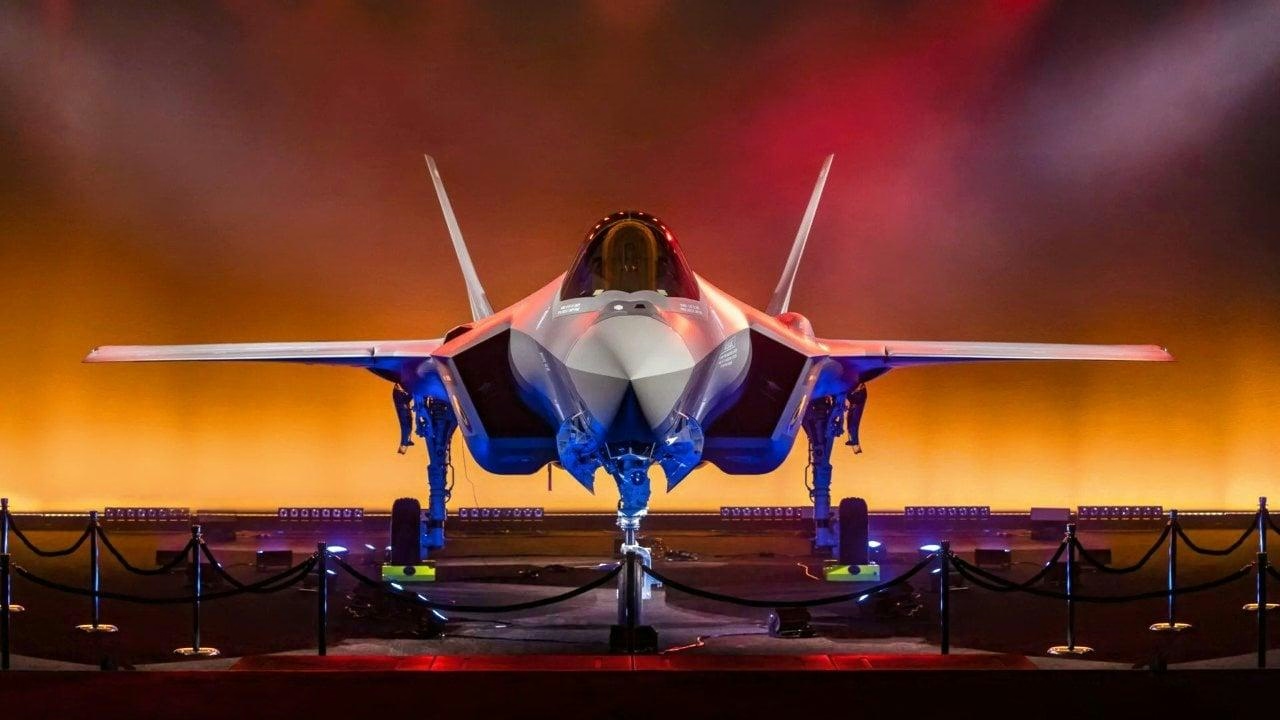
UK Completes Delivery of Initial F-35B Fighter Jet Fleet

LONDON — The United Kingdom has reached a pivotal milestone in its fifth-generation airpower capabilities with the completion of its initial fleet of Lockheed Martin F-35B Lightning fighter jets. On March 27, 2026, Defence Equipment & Support formally accepted the final aircraft from the original 48-unit order at RAF Marham in Norfolk. This delivery marks the culmination of a significant phase in the UK’s advanced fighter program, despite the earlier loss of one airframe during a carrier take-off accident in November 2021, which reduced the operational fleet to 47 jets.

Operational Role and Deployment

The F-35B jets, operated jointly by the Royal Air Force and Royal Navy, constitute the core of Britain’s carrier strike capability. These aircraft regularly deploy aboard the aircraft carriers HMS Queen Elizabeth and HMS Prince of Wales, utilizing their short take-off and vertical landing (STOVL) capabilities. Forward deployments include RAF Akrotiri in Cyprus, where 617 Squadron’s F-35Bs contribute to regional air defence and coalition operations across the eastern Mediterranean and Gulf regions.

Recent deliveries have incorporated the Technical Refresh 3 (TR3) configuration, which provides enhanced computing power and upgraded mission systems. However, this latest standard has yet to receive full operational clearance for combat missions, a factor that may influence short-term deployment and mission planning.

Future Procurement and Strategic Adjustments

The completion of the initial tranche underscores the UK’s ongoing commitment to advanced stealth fighter technology through its participation in the global F-35 program. The Ministry of Defence has indicated intentions to expand the fleet substantially, with a long-term target of acquiring up to 138 F-35 aircraft. Nevertheless, the precise timeline and procurement structure remain uncertain, pending the forthcoming Defence Investment Plan, which is expected to clarify funding and acquisition strategies for the coming decade.

A significant strategic shift was outlined in the 2025 Strategic Defence Review, where the Ministry of Defence announced plans to procure 12 F-35A variants—conventional take-off and landing aircraft—to support NATO’s dual-capable aircraft mission. This move restores a capability absent from the RAF in recent years and reduces the number of F-35Bs in the second batch order from 27 to 15. The adjustment reflects evolving defence priorities and alliance commitments, introducing greater flexibility into the UK’s fighter fleet composition.

Context Within the Global Fighter Market

The UK’s progress with the F-35B fleet occurs amid notable developments in the international fighter aircraft market. France’s Dassault Aviation recently delivered its 300th Rafale fighter and has secured a total of 533 orders, demonstrating robust global demand. Concurrently, Japan continues to advance its Global Combat Air Programme (GCAP) in partnership with the UK and Italy, aiming to field a next-generation fighter jet by 2035 despite ongoing program delays.

As the UK awaits further details on future procurement plans, its F-35B fleet remains central to both national defence and allied operations, reinforcing the country’s position at the forefront of modern airpower.

More news
Cessna 185 Crashes Due to Fuel Contamination

Cessna 185 Crashes Due to Fuel Contamination

Cessna 185 Crash Attributed to Fuel Contamination A Cessna 185 experienced a critical engine failure shortly after takeoff from a lake near Eveleth, Minnesota, leading to a forced landing that caused significant damage to the aircraft. The engine lost power at approximately 75 feet above ground level, prompting the pilot to execute an emergency touchdown on a grassy area at the seaplane base. The aircraft sustained a hard landing and skidded upright for roughly 150 feet before coming to rest. Fortunately, no serious injuries were reported. Investigation Findings and Fuel System Analysis Post-accident examination revealed that both wing fuel tanks remained intact. Recovery teams drained approximately 30 gallons of 100LL aviation fuel from the tanks, which utilized rubber bladders. Notably, the lower surfaces of these bladders exhibited wrinkling. While the fuel vents were found to be unobstructed, the seals on both the left and right wing fuel caps showed signs of deterioration and discoloration, with corroded sealing surfaces. Crucially, laboratory testing of the recovered fuel confirmed the presence of water contamination. Approximately one gallon of water was discovered at the bottom of the collection tank. The pilot reported that the aircraft had been parked outdoors during a heavy rainstorm several weeks prior and had flown only once since. Although the pilot conducted a preflight fuel drain and inspection for water contamination before the accident flight, no water was detected. On the day of the crash, gusty and turbulent weather conditions prevailed, and the pilot observed a significant yaw movement immediately before the engine failure. The investigation referenced Airworthiness Directive (AD) 84-10-01, which addresses the prevention of water contamination in bladder-type fuel cells. This directive requires either the installation of placards instructing pilots to check for contamination or the use of reduced diameter (raised filler neck) fuel caps. Although compliance with the AD was not clearly documented in the aircraft’s maintenance records, the Cessna 185 was equipped with the mandated reduced diameter fuel caps, which satisfy the directive’s requirements and eliminate the need for recurrent inspections. Regulatory and Industry Implications The National Transportation Safety Board (NTSB) concluded that the probable cause of the accident was water contamination in the fuel system, resulting in total engine power loss. The pilot’s inadequate preflight inspection was identified as a contributing factor. This incident has reignited regulatory scrutiny concerning fuel contamination risks, particularly in aircraft equipped with bladder-type fuel tanks. Aviation authorities are expected to review adherence to existing directives and may consider implementing additional oversight measures. In response to the crash, the market experienced a temporary decline in Cessna sales, while competitors highlighted their own safety protocols and reliability in marketing efforts to reassure customers and distinguish their products. As investigations proceed, the crash serves as a stark reminder of the critical importance of thorough preflight inspections and strict compliance with maintenance directives to uphold flight safety.
Top 7 Airbus A350-900 Routes by Frequency in 2026

Top 7 Airbus A350-900 Routes by Frequency in 2026

Top Airbus A350-900 Routes by Frequency in 2026 The Airbus A350-900 has solidified its reputation as one of the most versatile long-haul aircraft globally, valued for its fuel efficiency and enhanced passenger comfort. While it is commonly associated with ultra-long-haul intercontinental flights, an analysis of 2026 global schedules reveals a more complex deployment pattern. Airlines are utilizing the A350-900 not only on extensive transcontinental routes but also on shorter, high-frequency sectors, demonstrating the aircraft’s adaptability across diverse market demands. Data from Cirium covering January to December 2026 indicates that only seven city pairs, operated by Japan Airlines, Singapore Airlines, and Vietnam Airlines, exceed 1,300 annual flights using the A350-900. This highlights the aircraft’s dual role in serving both prestigious long-haul connections and dense domestic or regional routes where passenger volumes justify the use of a widebody aircraft. However, this operational flexibility introduces challenges, as airlines must carefully balance the A350-900’s long-range capabilities with the economic realities of shorter routes, where frequent operations can increase costs. For instance, Qatar Airways’ Doha to Bahrain service, though not among the top seven, exemplifies the strategic considerations carriers face when deploying a premium widebody on short-haul sectors. As fleet optimization continues, airlines may reassess aircraft assignments to ensure the A350-900 is deployed where it offers the greatest operational and commercial value. Competition in these segments is intensifying, with Boeing’s MAX series and other widebody models vying for the same lucrative long-haul and high-frequency markets. The forthcoming introduction of the Airbus A350-1000 ULR (Ultra Long Range) variant is expected to add further complexity to scheduling decisions, offering extended range capabilities that will require meticulous route planning to maximize efficiency. Highlights from the Top Seven Routes Singapore Airlines operates 2,605 A350-900 flights between Singapore Changi (SIN) and Hong Kong International (HKG) in 2026, maintaining nearly equal frequencies in both directions. Despite intense competition from carriers deploying aircraft ranging from narrowbody A320s to the A380, the A350-900 remains a cornerstone on this sub-four-hour route. Its fuel efficiency, quiet cabin environment, and consistent premium service appeal to a mix of corporate, leisure, and connecting passengers. For travelers transferring from Europe or Australia, the continuity of aircraft type enhances the overall travel experience, reflecting Singapore Airlines’ commitment to service excellence. Vietnam Airlines’ flagship domestic route between Hanoi (HAN) and Ho Chi Minh City (SGN) ranks among the top seven with 2,685 scheduled A350-900 flights in 2026. This corridor, linking Vietnam’s political and economic centers, underscores the aircraft’s capability to operate efficiently on dense, short-haul routes. The deployment of the A350-900 on this sector illustrates the airline’s strategy to meet high passenger demand while managing the cost implications of utilizing a widebody aircraft on shorter sectors. As airlines navigate evolving market conditions and technological progress, the role of the A350-900 across both long-haul and high-frequency routes will remain a critical consideration for network planners. The balance between operational efficiency, passenger experience, and competitive pressures will continue to influence how this versatile aircraft is integrated into global airline fleets.
PM Modi Highlights Aviation Growth and MRO Jobs in Independence Day Speech

PM Modi Highlights Aviation Growth and MRO Jobs in Independence Day Speech

PM Modi Highlights Aviation Growth and MRO Job Opportunities in Independence Day Speech In his Independence Day address from the Red Fort, Prime Minister Narendra Modi emphasized the rapid development of India’s aviation sector, underscoring its significant contribution to employment generation and economic expansion. He noted that India has emerged as one of the fastest-growing domestic aviation markets globally, driven by the establishment of new airports, the introduction of additional routes, and the creation of numerous job opportunities. Expansion of the Aviation and MRO Sectors Modi drew particular attention to the Maintenance, Repair, and Overhaul (MRO) segment, which is increasingly providing skilled employment as Indian airlines expand their fleets. The growth of this sector reflects the broader potential of aviation to contribute to the country’s economic progress. Highlighting a milestone in indigenous manufacturing, the Prime Minister celebrated the successful flight of the Made-in-India defence transport aircraft, the C295, describing it as a significant achievement in the nation’s push towards self-reliance in aerospace production. Despite these advancements, the aviation industry faces several challenges. Experts have pointed to regulatory complexities, high operational costs, and intense competition from established international players as key obstacles. Former Civil Aviation Minister Suresh Prabhu recently emphasized the necessity for stringent regulations that uphold safety standards and protect customer rights, which are essential for sustainable growth in the sector. The expanding aviation market has also attracted heightened investor interest, particularly in aviation and MRO-related employment. This competitive environment is expected to drive companies to adopt aggressive expansion strategies and invest in cutting-edge technologies to secure and grow their market presence. Broader Technological Initiatives and Economic Impact Beyond aviation, Modi highlighted the success of the SVAMITVA Scheme, which employs drone technology to map rural properties. He noted that approximately 3.25 crore families have benefited from this initiative, unlocking assets valued at around Rs 140 lakh crore. This asset mapping facilitates access to bank loans, enabling rural citizens to start businesses and improve their livelihoods. As India’s aviation industry continues its upward trajectory, the balance between innovation, regulatory oversight, and job creation will be crucial to ensuring that the sector’s growth translates into widespread economic benefits.
Indonesia Orders 60 AutoFlight Electric Air Taxis

Indonesia Orders 60 AutoFlight Electric Air Taxis

Indonesia Commits to 60 AutoFlight Electric Air Taxis Jakarta’s chronic traffic congestion, where a five-mile trip can extend to two hours, may soon be alleviated by an innovative solution: urban air mobility. On August 12, Whitesky Aviation, a prominent Indonesian helicopter air-taxi operator, signed a memorandum of understanding (MoU) to acquire 60 electric air taxis from Chinese developer AutoFlight. The aircraft, known as the V2000EM Prosperity, is a two-tonne, four-passenger electric vertical takeoff and landing (eVTOL) vehicle designed specifically for urban transport, boasting a range of approximately 250 kilometers. This agreement represents one of the largest advanced air mobility commitments announced globally in 2026, underscoring Southeast Asia’s emergence as a significant arena in the evolving air-taxi market, alongside established regions such as California and the Gulf. Details of the Agreement It is important to clarify that the MoU signifies an intention to purchase rather than a finalized contract. Under the terms of the agreement, Whitesky Aviation will oversee local operations, including the construction of vertiports, implementation of safety systems, and crew training. AutoFlight will be responsible for supplying the aircraft and associated technologies. Initial services are planned to cater to premium VIP customers, with ambitions to expand access to a broader market over time. Kellen Xie, Senior Vice President at AutoFlight, highlighted Indonesia’s strategic role in the partnership, stating, “Together with Whitesky Aviation, we look forward to developing practical eVTOL applications that address real transportation needs.” Whitesky’s existing experience operating helicopter air taxis in Jakarta positions the company well to transition toward quieter, more efficient electric aircraft, contingent on overcoming regulatory and economic challenges. Indonesia’s Strategic Position for Air Mobility Indonesia’s unique geography, comprising over 17,000 islands and a capital city plagued by severe traffic congestion, makes it an ideal candidate for air taxi services. The country’s expanding middle class and government support for innovative transportation technologies further bolster the potential for eVTOL adoption. Short-distance flights over water or congested urban areas align closely with the operational strengths of electric air taxis. Denon Prawiraatmadja, Founder of Whitesky Group, emphasized the practical value of the technology, noting, “For customers, the question is simple: does the journey become faster, more reliable, and more convenient? If the answer is yes, then the technology has real value.” Challenges to Commercialization Despite the promise of this initiative, significant obstacles remain. The V2000EM model has yet to secure regulatory certification required for passenger operations. While AutoFlight’s cargo variant has obtained a production license in China, the passenger version faces a more protracted certification process involving stringent safety evaluations and legal compliance. The path to commercial viability in the eVTOL sector continues to be more complex and capital-intensive than initially anticipated. Infrastructure development, including vertiports and charging facilities, will be critical to operational success, yet market readiness remains uncertain. Competition among manufacturers and operators is expected to intensify as they seek regulatory approvals and partnerships to establish the necessary commercial and regulatory frameworks. Although the MoU has generated heightened interest in electric air taxis, widespread adoption will depend on overcoming these substantial challenges. While the financial terms of the deal have not been disclosed, the agreement clearly signals a shift in global attention toward Jakarta, positioning the city as a potential leader in urban air mobility innovation.
What Business Class Passengers Experience That Economy Travelers Often Miss

What Business Class Passengers Experience That Economy Travelers Often Miss

What Business Class Passengers Experience That Economy Travelers Often Miss Flying business class on a widebody airliner presents a distinctly different experience compared to economy travel. While an economy ticket typically includes a standard seat, basic meal service, and limited amenities on long-haul flights, the overall experience is often likened to a long-distance bus or train journey at 35,000 feet. In contrast, business class offers a comprehensive range of upgrades that elevate the journey into a more comfortable and luxurious affair. Enhanced Comfort and Privacy A defining feature of business class is the seat itself. Passengers usually enjoy lie-flat seats that provide direct aisle access and often include sliding privacy doors. This configuration allows travelers to sleep fully horizontal, a significant improvement over the limited recline available in economy. The in-flight entertainment systems are larger and more sophisticated, while the service is markedly enhanced, featuring multi-course meals and full amenity kits designed to improve passenger comfort throughout the flight. Exclusive Amenities: Pajamas and More Among the unique perks available to business class travelers is the provision of complimentary pajamas, which help passengers rest more comfortably and keep their clothing fresh during extended flights. Although pajamas are traditionally associated with first class, several airlines—including Emirates, Etihad Airways, Qatar Airways, Virgin Atlantic, Qantas, American Airlines, United Airlines, Air India, EVA Air, Starlux Airlines, Oman Air, Air Serbia, and Gulf Air—offer them in business class on select long-haul routes. Some carriers, such as JetBlue and Condor, include pajamas as part of their premium business products, while Lufthansa provides pajama tops. Japanese airlines like All Nippon Airways and Japan Airlines offer cardigan sweaters instead, which must be returned at the end of the flight. These items may be distributed proactively or made available upon request, with some airlines collaborating with fashion brands to create distinctive designs that enhance the passenger experience. Flexibility and Personalized Service Business class passengers benefit from greater flexibility during the flight. Unlike economy, where meal service is delivered to all passengers at predetermined times, business travelers can often choose to skip meals in favor of uninterrupted rest. The option to dine on demand, combined with the comfort of a lie-flat seat, allows passengers to tailor their experience according to their individual needs, whether prioritizing sleep or productivity. Additional Perks Beyond the Cabin The advantages of business class extend beyond the aircraft itself. Passengers enjoy increased legroom, priority boarding and deboarding, and access to exclusive airport lounges. Airlines such as Delta and United have introduced more affordable business class options to attract travelers seeking a premium experience at a lower price point. Meanwhile, American Airlines is investing in enhanced service and expanding its Admirals Club lounges to better accommodate premium customers. Changing Trends in Premium Travel Airlines are also responding to evolving travel patterns. For instance, Air Canada has noted a shift in premium travel demand from the traditional summer peak to early fall, as travelers aim to avoid extreme heat and crowded airports during peak season. Business class thus offers a range of benefits—from superior comfort and privacy to exclusive amenities and personalized service—that economy travelers often do not experience. These enhancements not only improve the journey but also reflect the changing expectations of today’s premium passengers.
Airbus’s July Deliveries Stall, Raising Questions About 870-Jet Target

Airbus’s July Deliveries Stall, Raising Questions About 870-Jet Target

Airbus’s July Deliveries Stall, Raising Questions About 870-Jet Target Airbus is confronting increasing pressure as it approaches the final months of 2026, with July deliveries stagnating and casting doubt on the company’s ambitious target of delivering 870 aircraft this year. The European aerospace giant delivered 67 jets in July, matching the same figure from the previous year and bringing its total deliveries for the year to 418. To meet its full-year guidance of 820 to 870 aircraft, Airbus must now average approximately 90 deliveries per month through December, a substantial increase from its current pace. Delivery Performance and Market Reaction Despite the lack of growth in July’s delivery numbers, Airbus CEO Guillaume Faury remains optimistic about reaching, or even exceeding, the target, suggesting deliveries could ultimately total as many as 890 jets. Nevertheless, the flat delivery trend highlights the significant challenge Airbus faces in ramping up production to meet the calendar’s demands. Analysts have taken note of this development; Jefferies maintained a Hold rating on Airbus stock with a €200 price target, describing the July delivery figure as slightly below expectations. The market response, however, has been relatively muted. Airbus shares recently traded near €215.75, just 2.5% below their 52-week high and approximately 13% above the 50-day moving average. Orders and Supply Chain Constraints While deliveries have plateaued, Airbus’s order book remains robust. In July alone, the company secured 204 gross orders, pushing the year-to-date total to 1,024 aircraft. After accounting for cancellations—including 15 A330neo orders linked to AirAsia X’s agreement for 150 A220s—the net order tally stands at 1,090. Key customers in July included SMBC Aviation Capital, China Eastern Airlines, flynas, and Riyadh Air, with Airbus confirming that orders related to China were part of the month’s intake. Demand continues to be strong beyond headline deals. For instance, Vietnamese carrier Sun PhuQuoc Airways is scheduled to receive four A330 widebodies this year, with two expected as early as next month and an additional four planned for 2027 as the airline expands its international operations. The disparity between strong order intake and sluggish deliveries underscores ongoing supply chain challenges. Honeywell Aerospace, a critical supplier, has acknowledged that component shortages are forcing it to prioritize shipments to Airbus and Boeing, even at the expense of its more profitable aftermarket business. This bottleneck illustrates that Airbus’s production difficulties are not solely internal but reflect broader strains across the aerospace supply chain as the industry continues its recovery. Industry Context and Operational Concerns Meanwhile, Boeing’s delivery recovery is progressing, although its sales softened in July. Airbus currently holds a 51-aircraft lead over Boeing in deliveries for 2026, highlighting its relative strength despite recent setbacks. Adding to operational concerns, Airbus is assisting Air India in investigating an unexplained altitude loss involving an A320 on August 4. Preliminary findings indicate a brief failure of the elevator and ailerons, causing the aircraft to drop approximately 300 feet and experience forces beyond specified limits. Airbus has requested inspections of the hydraulic system and related components, though the root cause remains undetermined. The incident is being treated as a safety matter without immediate financial implications. As the year progresses, the critical question for investors is whether Airbus can overcome these supply chain hurdles and accelerate deliveries sufficiently to meet its ambitious year-end target.
Second AI-Related Flight Hydraulic Fault Reported in 10 Days

Second AI-Related Flight Hydraulic Fault Reported in 10 Days

Second AI-Related Flight Hydraulic Fault Reported in 10 Days Incident Overview In a troubling development for Air India, a second significant technical malfunction involving hydraulic failure has occurred within a span of ten days, intensifying concerns over the airline’s operational safety. On the evening of August 13, an Air India Airbus A320 flying from Bangkok to New Delhi was compelled to abort its landing approach after pilots detected a hydraulic system fault as the aircraft neared the runway at Bangkok airport. A business class passenger recounted that the pilot announced the hydraulic failure over the public address system, a disclosure later confirmed by an airline source who noted that such announcements were not standard protocol. The flight, carrying over 250 passengers, was originally scheduled to depart Bangkok at 6:25 pm local time but was delayed by nearly 24 hours, eventually taking off at 7 pm the following day. Technical and Passenger Impact Hydraulic malfunctions in aircraft involve failures within the fluid systems that control critical components, potentially leading to sluggish or complete loss of control over essential equipment. Rajiv Gambhir, a Delhi-based businessman and aircraft owner seated in 1C, described the unsettling experience: “The flight was moving for take-off when we heard a loud screeching halt. It was forceful, as if the brakes were being applied suddenly. The plane came to a complete stop. The pilot then announced there had been a hydraulic failure and that checks were underway. This filled me and many others with fear, especially after recent reports of a similar failure on the Air India Phuket flight.” The recurrence of such faults within a short timeframe has raised alarm across the aviation industry, prompting intensified scrutiny from regulators and casting a shadow over Air India’s safety record. Industry and Market Repercussions The back-to-back hydraulic failures have not only jeopardized passenger confidence but also triggered ripples in financial markets. Stocks related to Air India, particularly those of semiconductor manufacturers supplying critical components, have experienced declines amid investor apprehension about increased safety expenditures and mounting competitive pressures. In response, rival airlines are expected to bolster their safety protocols and enhance transparency to reassure both passengers and stakeholders. Analysts have cautioned that the broader artificial intelligence (AI) market, closely linked to aviation technology advancements, may face a market correction. Leading credit agencies have flagged the sector as a potential credit risk, underscoring the financial implications of these technical setbacks. As investigations into the incidents proceed, Air India and the wider aviation sector face mounting pressure to resolve these technical challenges promptly to restore trust and stabilize market confidence.
Airbus Produces A350s Faster Than Airlines Can Accept Them

Airbus Produces A350s Faster Than Airlines Can Accept Them

Airbus A350 Production Surpasses Airline Delivery Capacity Amid Supply Chain Challenges Production Growth Outpaces Airline Readiness The global widebody aircraft market is currently witnessing an unprecedented surge in demand, with order backlogs extending well into the next decade. However, within Airbus’s European assembly facilities, a notable operational challenge has emerged: A350 airframes are being produced at a faster rate than airlines are prepared to accept and deploy them. This unusual imbalance in the aviation sector signals a shift where manufacturing is no longer the primary obstacle; instead, the alignment of delivery schedules and completion of cabin installations have become critical bottlenecks. Central to this issue are intricate supply chain dependencies and integration difficulties stemming from recent acquisitions, alongside the need to balance Airbus’s ambitious production targets with the more cautious financial planning of its airline customers. Airbus aims to increase A350 assembly to 12 aircraft per month by 2028, intending to address a significant backlog of long-haul orders. Yet, this accelerated production pace has revealed a disconnect: while assembly output rises, actual deliveries to customers lag behind. Delivery Delays and Operational Constraints Data from the first half of 2026 highlights this disparity. Airbus delivered only 26 A350s during this period—averaging four to five per month—substantially below the production capacity at its Toulouse facility. This gap underscores a fundamental scheduling mismatch between the completion of structural assembly and the readiness of airlines to take delivery, often hindered by delays in cabin fit-outs and the coordination of operational slots. Airbus Chief Executive Officer Guillaume Faury has emphasized that increasing production rates does not automatically translate into higher delivery volumes. Airlines, constrained by strict capital expenditure plans and elevated fuel costs, are proceeding cautiously with fleet expansions. Some carriers are reevaluating their growth strategies in light of the surplus of available A350s, wary of overextending amid volatile operating conditions. Supply Chain Integration and Market Implications Compounding these challenges are supply chain bottlenecks. The integration of key aerostructure facilities—such as the central fuselage plant in Kinston, North Carolina, and wing spar production lines in Prestwick, Scotland, both formerly operated by Spirit AeroSystems—has introduced short-term operational friction as Airbus seeks to unify its manufacturing network. Managing these disparate workflows is critical to sustaining higher output, yet the assimilation of external assets into a cohesive system remains complex. Furthermore, engine availability continues to be a significant constraint, with delays in powerplant deliveries threatening to disrupt the overall production rhythm. The wider aerospace market is closely monitoring these developments. Boeing, having made progress in overcoming its own production and quality challenges, is positioning itself to capitalize on any prolonged delivery delays at Airbus. The American manufacturer’s improved performance in early 2026 could enable it to reclaim market share if Airbus’s supply chain and delivery issues persist. As Airbus pushes to accelerate A350 production, the company faces increasing pressure to synchronize its industrial capabilities with the operational realities of its airline customers. The coming months will be pivotal in determining whether Airbus can resolve these bottlenecks or if the current surge in widebody demand will be tempered by the limitations of supply chain integration and market absorption.
DeSantis Announces FDOT and Embry-Riddle Partnership to Advance Air Mobility in Florida

DeSantis Announces FDOT and Embry-Riddle Partnership to Advance Air Mobility in Florida

DeSantis Announces FDOT and Embry-Riddle Partnership to Advance Air Mobility in Florida Florida is embarking on a transformative journey toward integrating advanced air mobility into its transportation infrastructure. On Thursday, Governor Ron DeSantis revealed a strategic partnership between the Florida Department of Transportation (FDOT) and Embry-Riddle Aeronautical University aimed at accelerating research and workforce development in the emerging field of electric vertical takeoff and landing aircraft (eVTOLs). Advancing eVTOL Technology and Infrastructure The collaboration centers on eVTOLs, which state officials view as a promising solution to alleviate traffic congestion on Florida’s busiest roadways. Governor DeSantis expressed optimism about the near-term deployment of these vehicles, suggesting that vertical lift taxi services could become operational within the next year. Embry-Riddle and FDOT are already working together to tackle critical challenges such as passenger screening protocols, the design and construction of terminal infrastructure, and the management of increasingly complex air traffic systems. FDOT Secretary Jared Perdue outlined a long-term vision of establishing an “interstate-like network in the sky,” with a potential aerial corridor along the I-4 highway connecting Orlando and Tampa. This corridor could support the efficient movement of hundreds of eVTOLs, revolutionizing regional transportation. Expanding the Aerial Network Across Florida The initiative extends beyond Central Florida, with Tallahassee International Airport Director David Pollard confirming the capital’s inclusion in the state’s planned aerial highway network. Pollard emphasized the airport’s commitment to aligning closely with state efforts to develop this innovative transportation system throughout Florida. Governor DeSantis also highlighted the broader applications of eVTOL technology, noting its potential utility in medical transport, disaster response, emergency services, and law enforcement. These diverse uses underscore the multifaceted benefits that advanced air mobility could bring to the state. Challenges and Competitive Landscape Despite the promising outlook, significant obstacles remain. Regulatory approval processes, securing adequate funding, and overcoming technological barriers are critical challenges that Florida must address to realize its vision. The rapidly evolving air mobility sector is attracting growing interest from investors and aviation companies, intensifying competition among states and regions seeking to establish themselves as leaders in this emerging market. As Florida positions itself at the forefront of air transportation innovation, the partnership between FDOT and Embry-Riddle represents a pivotal step toward shaping the future of mobility in the state and beyond.
Norse Atlantic Airways Considers Leasing Boeing 787s to Two Airlines Amid Ongoing Challenges

Norse Atlantic Airways Considers Leasing Boeing 787s to Two Airlines Amid Ongoing Challenges

Norse Atlantic Airways Considers Leasing Boeing 787s to Asian Airlines Amid Financial Pressures Norse Atlantic Airways, the Norwegian low-cost carrier, is reportedly in advanced discussions to lease up to six of its Boeing 787 aircraft to two major Asian airlines, Pakistan International Airlines (PIA) and Biman Bangladesh Airlines. This strategic move aims to stabilize Norse Atlantic’s finances amid ongoing operational difficulties and a challenging market environment. Background and Leasing Strategy The airline’s decision follows the unexpected termination of a damp lease agreement with IndiGo, which had been operating six of Norse Atlantic’s 787s. IndiGo cited escalating geopolitical tensions and airspace restrictions as the primary reasons for ending the partnership, with the agreement set to conclude by October 31. The return of these aircraft has compelled Norse Atlantic to urgently seek new leasing partners to mitigate the financial impact and sustain revenue streams. Sources familiar with the negotiations indicate that Norse Atlantic is exploring various leasing arrangements, ranging from dry leases—providing only the aircraft—to wet leases, which include crew, maintenance, and insurance. These options are critical for the airline, which continues to face low cash reserves, rising fuel costs, and a significant decline in market value. The company recently conducted a discounted rights issue and withdrew its 2026 financial outlook, highlighting the severity of its current challenges. Leasing out its Boeing 787s could offer Norse Atlantic a vital source of stable income as it navigates a volatile aviation market. Concurrently, the airline is undertaking a broader strategic review, including potential sale or merger options, with the assistance of financial advisors such as JPMorgan. Prospective Lessees’ Expansion Plans For PIA, Pakistan’s largest airline, the timing of this opportunity is particularly strategic. The carrier is actively seeking to expand its widebody fleet to enhance long-haul operations, especially to Europe. Leasing Norse Atlantic’s ready-to-fly 787s would enable PIA to rapidly increase its international capacity without the delays associated with new aircraft deliveries. The airline’s board has recently approved plans to acquire additional widebody jets to address capacity shortfalls. Similarly, Biman Bangladesh Airlines has expressed strong interest in leasing Norse Atlantic’s 787s to bridge a significant capacity gap. Biman is currently awaiting the delivery of new Boeing jets, which are not expected until the next decade. The Bangladeshi flag carrier, which already operates 787-8 and 787-9 models and has further 787-9s and 787-10s on order, aims to lease up to ten aircraft to support its international expansion and alleviate ongoing fleet shortages. Challenges and Outlook Norse Atlantic’s efforts to lease its surplus 787s come amid mounting pressure to return to profitability. The airline has implemented significant cuts to its US route network, reducing transatlantic flights by 60% as part of a broader restructuring effort. Despite these challenges, Norse Atlantic remains focused on leveraging its fleet and flexible business model to withstand the current downturn. Securing long-term leasing agreements with PIA and Biman could provide a crucial financial lifeline as the airline evaluates its next strategic steps.
line









