
Orchestrate AI insights into action

Trending
Categories
United CEO Says 900 Jets Grounded Due to Engine Shortage, Impact to Last Years
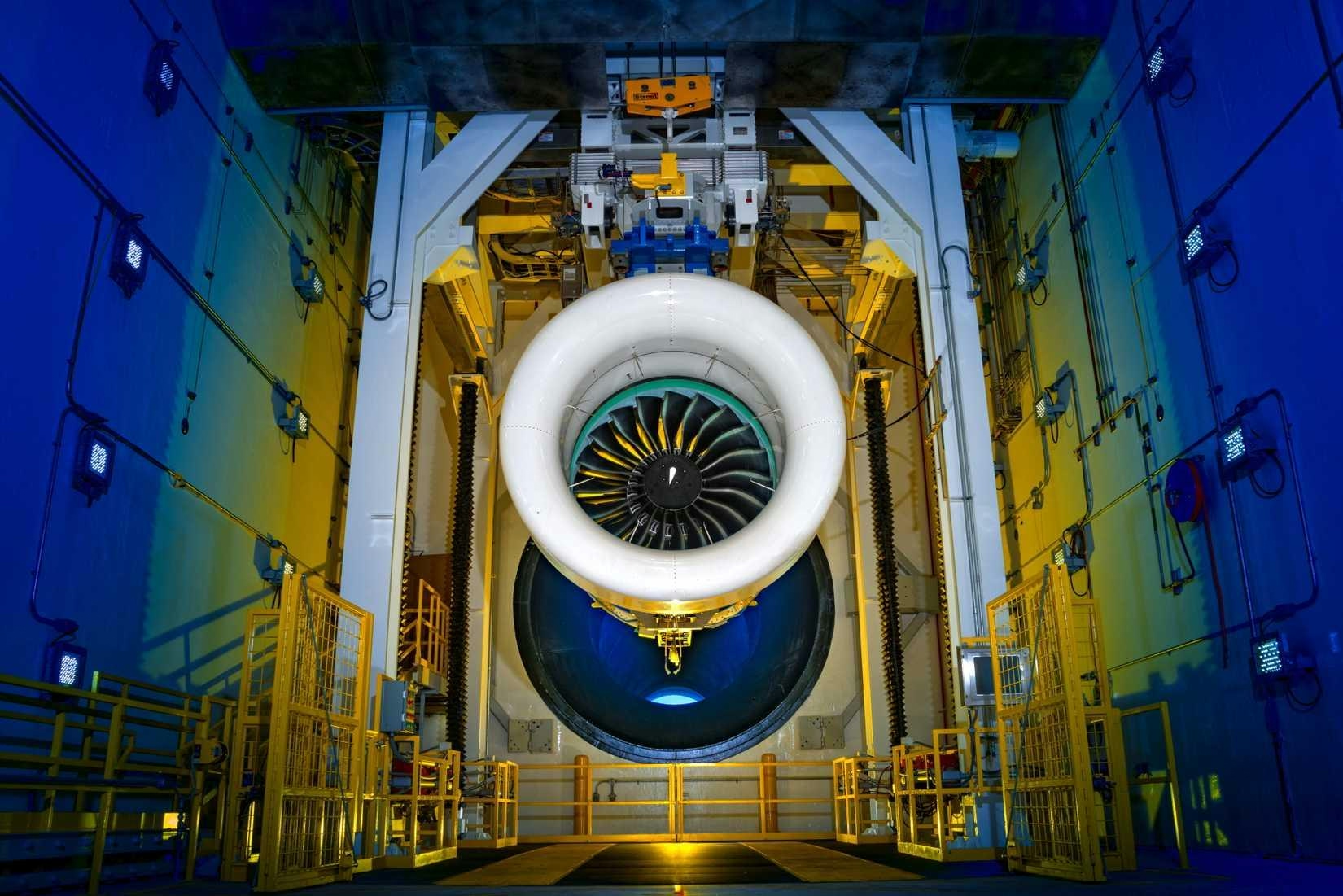
United CEO Highlights Severe Engine Shortage Grounding 900 Jets Worldwide
United Airlines CEO Scott Kirby has disclosed that a critical shortage of aircraft engines and essential components has led to between 800 and 900 jets being grounded or placed in storage globally. Speaking at Bernstein’s 42nd Annual Strategic Decisions Conference, Kirby described the situation as unprecedented, with disruptions expected to persist for several years, significantly impacting airline operations, manufacturing schedules, and passenger services.
Strained Supply Chains and Operational Challenges
Kirby emphasized the ongoing strain on the global aviation supply chain, noting that the shortage extends beyond grounded aircraft to delayed deliveries and rising operational costs. The most acute difficulties involve Pratt & Whitney’s PW1000G geared turbofan (GTF) engines, which power widely used models such as the Airbus A320neo, Airbus A220, and Embraer E2 jets. While some aircraft like the A320neo and Boeing 787 Dreamliner have alternative engine options, others—including the A220 and E2—lack such flexibility, forcing operators to ground affected planes. Additional engine families, including CFM International’s LEAP series and Rolls-Royce’s Trent engines, are also experiencing reliability and availability challenges.
This shortage has triggered a cascade of operational disruptions. Airlines face the difficult choice of grounding significant portions of their fleets, which threatens flight cancellations and reduced passenger capacity. Maintenance demands have increased in complexity, driving up costs as carriers seek alternative parts or engines. Furthermore, manufacturing and delivery timelines for new aircraft are being extended, complicating future fleet planning and expansion.
Industry Implications and Leadership Controversies
The ongoing crisis presents both challenges and opportunities within the competitive airline landscape. While United and other carriers contend with grounded jets and schedule disruptions, rival airlines may leverage the situation to expand their market share. Kirby’s recent personal travel choices, including flying first class on American Airlines rather than United, have attracted scrutiny and sparked debate regarding his leadership priorities amid the crisis.
Additionally, Kirby dismissed speculation about a potential merger with JetBlue, citing the unprofitable nature of JetBlue’s routes and reaffirming United’s commitment to independently managing the current challenges. The engine shortage highlights the fragility of the aviation supply chain and underscores the complex hurdles airlines must overcome to maintain reliable service. With no immediate resolution anticipated, industry leaders warn that the repercussions will continue to shape airline operations and competitive dynamics for years to come.

Etihad Airways Suspends Airbus A380 Flights on Key Route

Aditya Birla Group Seeks Approval for Aircraft Leasing in GIFT City

Qatar Airways Highlights Innovation and Connectivity at Arabian Travel Market 2026

Hong Kong's Five-Year Plan Includes Andrew Fan's Aircraft Parts Processing Hub Proposal

ACIA Aero Leasing Delivers ATR72-600 to Air Nostrum

RTX Appoints Jill Albertelli as Head of Pratt & Whitney

TAT Technologies Joins Beyond Aero Hydrogen Aircraft Program

AURAK Study Highlights Barriers to Air Taxi Adoption in Emerging Economies

Xiamen Air Selects Altitude for 787 Maintenance at Heathrow

Etihad and Swissport Extend Global Partnership
