
Orchestrate AI insights into action

Trending
Categories
United CEO Says Engine Shortage Grounds 900 Planes
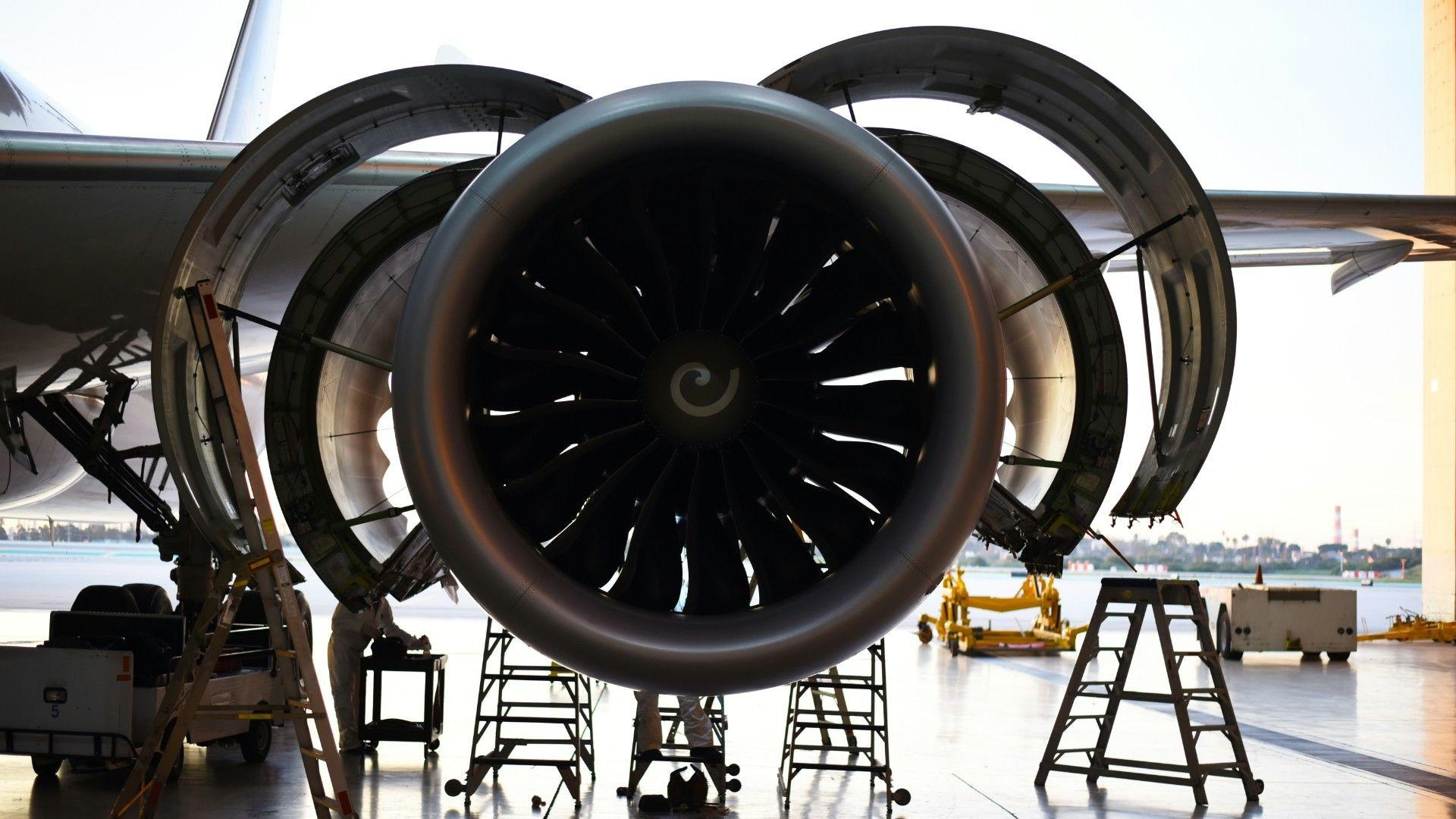
United CEO Highlights Severe Engine Shortage Grounding 900 Aircraft Worldwide
United Airlines Chief Executive Scott Kirby has disclosed that a global shortage of aircraft engines has resulted in up to 900 planes being grounded, a disruption expected to persist for several years. Speaking at the Bernstein Annual Strategic Decisions Conference in New York, Kirby emphasized the severity of the crisis, warning that the scarcity of engines is unlikely to ease in the near future.
Impact on Airline Operations and Industry Challenges
The shortage is significantly affecting airline operations worldwide, compounding the challenges posed by rising fuel costs amid geopolitical tensions, including the ongoing U.S.-Israeli conflict with Iran. The limited availability of engines is not only sidelining existing aircraft but also delaying the delivery of newer, more fuel-efficient models. This situation is intensifying airlines’ struggles to control costs and maintain operational efficiency.
The bottleneck centers on three principal engine manufacturers: CFM, Pratt & Whitney, and Rolls-Royce. Their engines power widely used aircraft such as the Airbus A320neo, Boeing 737 Max, and Boeing 787 Dreamliner. Persistent reliability issues have forced airlines to resort to cannibalizing engines from newer planes to keep older aircraft operational. While this strategy allows some planes to remain in service, it simultaneously leaves others grounded, increasing storage expenses and reducing revenue-generating capacity.
The ripple effects extend beyond individual airlines. To mitigate rising fuel and maintenance costs, carriers are raising fares and canceling flights, yet ongoing supply chain disruptions limit their ability to adapt effectively. Aircraft manufacturers Airbus and Boeing are also hindered, unable to deliver new jets without the necessary engines, thereby delaying fleet modernization efforts that could enhance fuel efficiency and reduce operational expenses.
Competitive and Strategic Implications
Market analysts suggest that the engine shortage may prompt increased scrutiny from competitors and regulators, potentially influencing consumer preferences. Rival airlines might leverage United’s operational difficulties to promote their own reliability, seeking to capture market share amid growing traveler demand for fewer disruptions.
Addressing industry speculation about potential mergers, Kirby dismissed the prospect of a United-JetBlue combination, citing JetBlue’s unprofitable route network as a deterrent. He also ruled out consolidation with American Airlines, following a recent rejection from the rival carrier.
As the aviation sector contends with the dual pressures of geopolitical instability and internal supply chain constraints, United Airlines and its competitors are preparing for an extended period of operational challenges. With no immediate resolution anticipated, the industry faces a complex environment marked by escalating costs, grounded fleets, and evolving competitive dynamics.

Etihad Airways Suspends Airbus A380 Flights on Key Route

Aditya Birla Group Seeks Approval for Aircraft Leasing in GIFT City

Qatar Airways Highlights Innovation and Connectivity at Arabian Travel Market 2026

Hong Kong's Five-Year Plan Includes Andrew Fan's Aircraft Parts Processing Hub Proposal

ACIA Aero Leasing Delivers ATR72-600 to Air Nostrum

RTX Appoints Jill Albertelli as Head of Pratt & Whitney

TAT Technologies Joins Beyond Aero Hydrogen Aircraft Program

AURAK Study Highlights Barriers to Air Taxi Adoption in Emerging Economies

Xiamen Air Selects Altitude for 787 Maintenance at Heathrow

Etihad and Swissport Extend Global Partnership
